Edge-detail texture reviewers
If you inspect texture joins, UV seams or tonal transitions across the whole screen, the image near the edges matters as well as the image at the centre.


Start with a 27-inch 4K monitor whose colour modes and factory-calibration claims suit the work you review, then give panel-wide consistency particular attention if you inspect seams near the screen edges. At a shared desk, check stand adjustment and the connected laptops’ USB-C video and charging requirements too; a wider colour gamut alone does not establish that an asset will appear correctly.
If you inspect texture joins, UV seams or tonal transitions across the whole screen, the image near the edges matters as well as the image at the centre.
Teams reviewing sRGB, Rec.709, DCI-P3 or Adobe RGB assets need to match the monitor mode and reviewing application to the project’s intended colour space.
People alternating between users or computers need a screen they can reposition and connections that work with each laptop’s video and charging requirements.
For texture-seam review, check panel-wide consistency and the intended colour mode before deciding how much stand adjustment or laptop connectivity the shared desk needs.
| Concern | What to check | Who this matters to |
|---|---|---|
| Panel-wide consistency | Look for model-specific uniformity provisions and a calibration report; check the colour mode used for review. | If I compare a subtle seam near the screen edge with one at the centre, I need the display itself not to confuse that judgement. Around 42% of consumers put panel-wide consistency first. |
| Shared-desk adjustment | Compare the stand’s height and swivel ranges, tilt, pivot and desk footprint for the exact model. | When several people use the same station, I want to reset the screen position without disrupting the review. Roughly 33% of consumers make physical adjustment their primary concern. |
| Laptop connections | Confirm USB-C video support, required charging power and how peripherals switch between computers. | If I regularly swap laptops, reconnecting video, power and peripherals can interrupt the handover. For around 25% of consumers, a workable connection setup comes first. |
Gamut describes the range of colours a display can show, not whether an sRGB, Rec.709, DCI-P3 or Adobe RGB asset is shown in the right mode.
Match the monitor and reviewing application to the deliverable’s colour space, then assess calibration and uniformity separately.
A factory-calibration claim does not establish continuing accuracy in your lighting, device and application workflow. ASUS support guidance notes that display colours can change over time.
Keep reference seam and gradient files, use consistent viewing conditions and plan recalibration if repeatable colour review is essential.
That process may require a compatible colour-measurement device or a calibration service.
A monitor’s stated power-delivery rating does not confirm that a particular laptop sends video through USB-C or receives enough power for its workload.
Check the laptop for USB-C DisplayPort Alt Mode or Thunderbolt video support and compare its charging requirement with the monitor’s rating.
The setup may still need a separate charger, dock, cable or adapter.
Adjustment ranges differ between models, which matters when users repeatedly change position at one desk. The Health and Safety Executive also identifies regular hot-desking as a reason to carry out a basic workstation risk assessment.
Measure the desk and compare the exact stand’s adjustment ranges; arrange the appropriate display-screen-equipment assessment for regular work use.
If the stand does not suit the users, a compatible monitor arm or workstation changes may be needed.
The Creative Pro PD2706U is a 27-inch 4K IPS option for reviewers interested in documented colour modes, a calibration report, KVM switching and panel-uniformity controls.
The ProArt PA279CRV is a 27-inch 4K IPS option for workflows that need declared Adobe RGB or DCI-P3 coverage alongside an adjustable stand.
The UltraSharp U2723QE is a 27-inch 4K IPS Black option for a desk where USB-C charging, Ethernet and downstream USB connections matter.
These monitors offer different ways to equip a shared texture-review desk, including 27-inch 4K formats and a larger 32-inch option. Check each model’s colour-management and panel-uniformity provisions against the seams you review; connection and stand requirements also depend on the computers and people using the desk.
 No image available
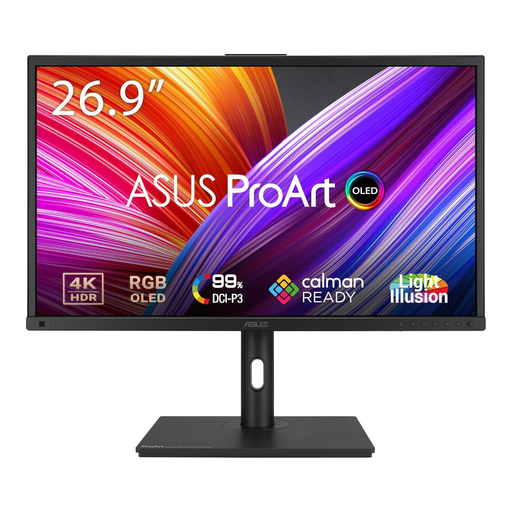
This 4K OLED option may suit a creative-review desk if its stated colour modes match your work. Before relying on it for edge-to-edge seam comparisons or a single-cable laptop setup, confirm its uniformity provisions and USB-C video, data and charging functions.
 No image available
The 27-inch 4K format and height-adjustable stand make this a candidate for review work at a changing desk. It is presented as a Mac monitor: check whether its Mac-oriented functions suit the computers in use, as well as its calibration and panel-uniformity provisions for seam review.
 No image available
Consider this larger format only if a 32-inch screen fits the desk and viewing position. Its name lists hardware calibration and a Delta E <1 claim; check the conditions behind that claim and the panel-wide uniformity provisions before using it to judge seams near the edges.
 No image available
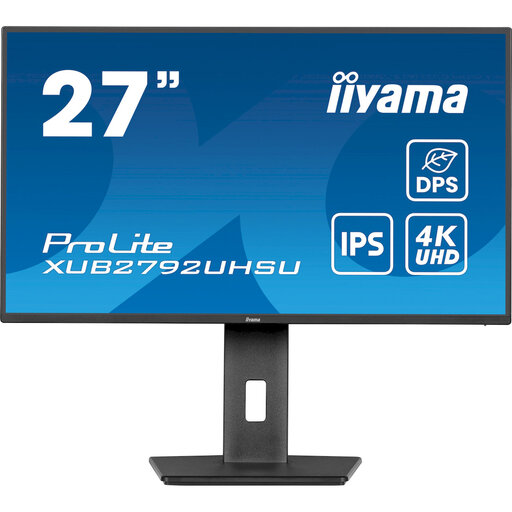
This 27-inch 4K option fits the screen format considered for fine-detail review. Check its calibration and panel-uniformity provisions before making colour-critical seam comparisons, and confirm the stand adjustment and laptop connections needed at your desk.
 No image available
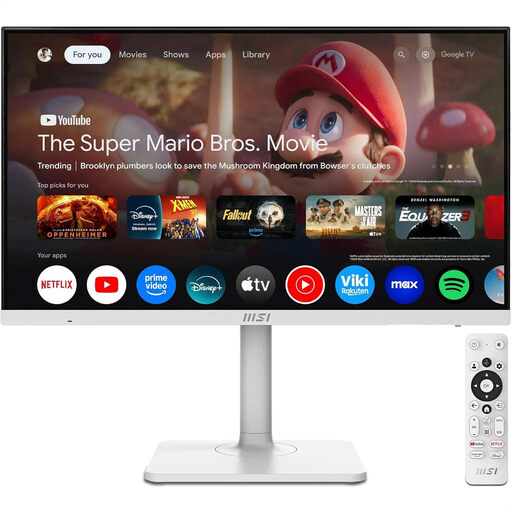
This model may interest a shared desk that needs device handoff as well as a 4K screen; its name lists multi-control and USB-C 65 W. Confirm the switching arrangement and laptop video and charging compatibility, then check its colour-management and uniformity provisions before choosing it for colour-critical seam review.
A 27-inch 4K monitor is a practical starting format when you want fine desktop detail without a larger screen. BenQ lists 3840 × 2160 resolution and 163 PPI for the PD2706U, but resolution cannot tell you whether colour and brightness stay consistent across the panel; check the exact model’s uniformity and calibration provisions too.
Choose the colour mode that matches the asset’s intended space rather than the widest gamut by default. For sRGB, Rec.709, DCI-P3 or Adobe RGB work, check both the monitor setting and the reviewing application; gamut coverage alone does not establish that every asset appears correctly.
One cable can carry the required connections on compatible equipment, but check that the laptop supports USB-C video and that the monitor supplies enough charging power. BenQ and Dell list up to 90 W for the PD2706U and U2723QE respectively, while ASUS lists up to 96 W for the PA279CRV; those ratings do not establish compatibility with every laptop.
No. Factory-calibration claims describe a supplied state under stated conditions, while ASUS support guidance notes that display colours can change over time. Use known reference files and, where repeatable colour control matters, an appropriate measurement device and recalibration process.
The workstation needs a display-screen-equipment risk assessment where the Great Britain requirements apply. The Health and Safety Executive says those requirements cover workers who use display screen equipment daily for continuous periods of an hour or more, and advises a basic assessment when hot-desking workers change desks regularly.