For a virtual hospital with maps, staff lists and menus to manage, start with a 27-inch QHD monitor if you want more pixel workspace than Full HD without moving to 4K. Consider 4K when fine interface detail matters most and your PC can handle it; prioritise high-refresh Full HD if you also play fast-paced games and can accept less workspace. Check game scaling, desk fit and the PC’s display outputs before choosing.
Who is this choice for?
Hospital-sim interface planners
If you want the hospital map visible alongside building controls, staff lists and finance panels, consider QHD or 4K resolution before prioritising an unusually high refresh rate. How much fits comfortably will still depend on the game’s interface scaling.
Long-session desk players
If you expect to sit at the same desk for extended sessions, check the stand’s adjustment range and where the screen will sit. The Health and Safety Executive’s workstation guidance places the top of a screen around eye level and the display about an arm’s length away.
Mixed management and action gamers
If the monitor will also serve fast-paced games, a higher refresh rate may matter more to you. Compare that benefit with the reduced pixel workspace of a 27-inch Full HD display when hospital-management menus are on screen.
What matters when choosing?
For a 27-inch screen used chiefly to manage a virtual hospital, choose the resolution and interface space you need first, then weigh desk fit and motion in other games.
27-inch QHD
Consider it: When hospital-management menus are the main use and you want more pixel workspace than Full HD.
Trade-off: QHD has fewer pixels than 4K; check that your PC and connection support the refresh rate you want.
27-inch 4K
Consider it: When fine interface detail is the priority and your PC can run the game at the intended settings.
Trade-off: The higher pixel count increases graphics workload, while small game text may call for scaling.
High-refresh Full HD
Consider it: When fast-paced games share the monitor and motion is a stronger priority than interface space.
Trade-off: At 27 inches, Full HD leaves fewer pixels for maps and management panels than QHD or 4K.
| Concern |
What to check |
Who this matters to |
| Map and menu space |
Compare native resolution and the game’s UI scaling; check whether the PC can run your chosen resolution. |
If I want the hospital map alongside staffing and finance menus, screen space is my main priority; around 50% of consumers put interface workspace first. |
| Desk fit and positioning |
Measure desk depth and monitor dimensions, then check stand adjustment or VESA mounting. |
For long sessions at one desk, I need a screen position that suits my seating and available space; roughly 30% of consumers prioritise workstation fit. |
| Motion in other games |
Check the refresh rate at your intended resolution and input, and whether the PC supports that mode. |
When I also play fast-paced games, fluid motion matters enough to weigh it against Full HD’s smaller workspace; about 20% of consumers place motion smoothness first. |
Buying pitfalls
-
Choosing by refresh rate alone
A 180Hz Full HD screen may suit motion-focused games, but it has fewer pixels for hospital maps and dense menus than QHD or 4K.
Compare resolution and the space your game’s interface needs before deciding how much refresh rate matters to you.
-
Ignoring the stand and desk depth
A large panel can be awkward to place if its stand cannot bring the screen to a suitable height and distance. The Health and Safety Executive advises positioning the top of a screen around eye level and the display about an arm’s length away.
Measure the desk and check the monitor’s dimensions, adjustment range and VESA compatibility before ordering.
A monitor arm or a different desk arrangement may be needed if the supplied stand cannot provide the position you need.
-
Assuming any USB-C port carries video
A USB-C connection does not by itself establish that a laptop can send video to a monitor. BenQ specifies DisplayPort Alt Mode for video with its GW2790QT, alongside 65W power delivery.
Check the laptop’s USB-C video capability and charging requirement against the exact monitor model.
-
Relying on a product marking as the only purchase check
An electrical marking does not identify the exact model in a listing or tell you which plug, documentation or support arrangements will arrive.
Confirm the model number, seller, supplied power arrangement and applicable returns information before purchase.
Monitor brands to consider
Dell
Dell’s cited 27-inch models offer a choice between QHD and 4K for a large management-game screen.
- Dell specifies the S2725DSM at 2560 × 1440 and 144Hz, and the S2725QS at 3840 × 2160 and 120Hz; both cited models have adjustable stands.
- Choose between their resolutions with your PC’s graphics capability and the game’s interface scaling in mind.
BenQ
The cited GW2790QT is relevant to a QHD desk setup where stand adjustment and laptop connectivity matter.
- BenQ specifies a 27-inch QHD IPS panel, an adjustable stand, USB ports and USB-C with 65W power delivery for this model.
- Its specified 75Hz refresh rate is lower than the cited higher-refresh gaming models; USB-C video also requires a compatible laptop port.
LG UltraGear
The cited 27GS60F-B is relevant when the monitor will also be used for fast-paced games.
- LG specifies a 27-inch Full HD IPS panel and 180Hz refresh rate for the 27GS60F-B.
- Its 1920 × 1080 pixel grid leaves less interface workspace than the cited QHD and 4K models.
Joybuy monitors for this setup
These QHD and 4K monitors offer different ways to prioritise interface detail, refresh rate and desk use for hospital-management games. The LG dual-mode model also lists a Full HD mode for other games; check which mode your PC can use.
 No image available
LG UltraGear G8 27G850A 27-inch 4K dual-mode monitor
Consider this model if you want a 4K screen for detailed hospital maps and also play games where a higher-refresh mode matters.
The product name lists 240Hz and 480Hz dual-mode operation. Check the resolution available in each mode and whether your PC and connection support the one you intend to use.
View on Joybuy
 No image available
Samsung Odyssey G6 S27DG612 27-inch QHD OLED 240Hz
Consider this QHD model if hospital-management workspace and a high refresh rate for other games both matter to you.
The product name specifies an OLED panel and 0.03ms response time. Check that your PC can output QHD at the refresh rate you want and that the game’s interface scales comfortably.
View on Joybuy
 No image available
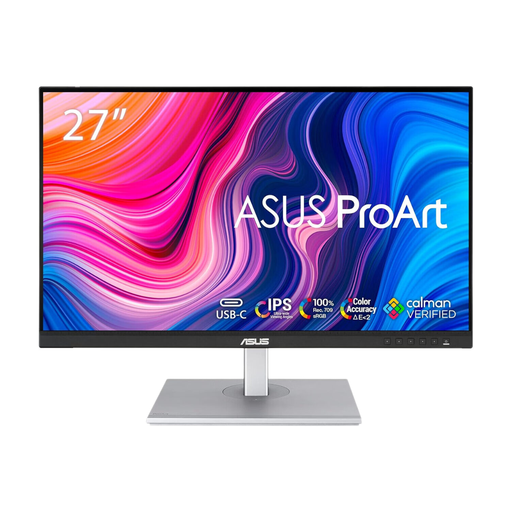
ASUS ProArt PA278CFRV IPS QHD 100Hz
Consider this QHD model when space for management-game panels matters more than selecting the highest refresh rate in this list.
Its product name specifies an IPS panel and 100Hz. If your desk setup requires USB-C video, confirm that capability for the specific unit before ordering.
View on Joybuy
 No image available
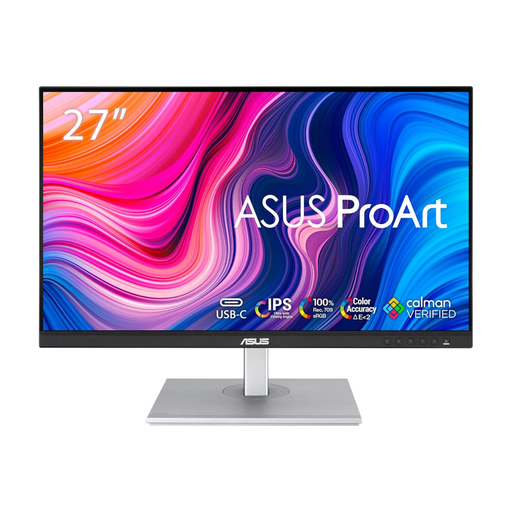
ASUS ProArt PA278CV IPS WQHD
Consider this model for a QHD management-game screen when an adaptable desk and laptop setup is also a priority.
The product name identifies an IPS WQHD display. If you plan to use USB-C for video or charging, check the connected laptop’s port and charging requirements against the monitor.
View on Joybuy
 No image available
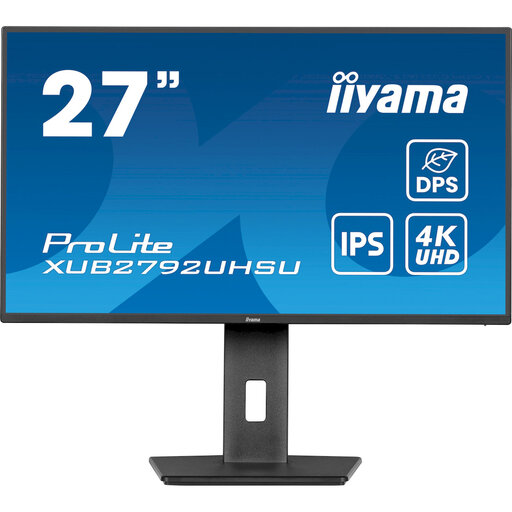
iiyama ProLite XUB2792UHSU-B6 27-inch 4K UHD
Consider this 4K model if fine map and interface detail take priority over high-refresh gaming.
Check how your game scales menus at 4K and whether your PC can run it at the settings you prefer.
View on Joybuy
Frequently asked questions
Is 27-inch QHD enough for a virtual hospital game?
A 27-inch QHD monitor is a sensible starting point when you want more pixel workspace than Full HD without choosing 4K. Dell specifies 2560 × 1440 at 144Hz for its S2725DSM; whether that resolution feels comfortable for your game still depends on its interface scaling, your viewing position and your PC.
When should I choose 4K instead of QHD?
Choose 4K when fine interface detail is your priority and your PC can run the game at your intended settings. Dell specifies 3840 × 2160 at 120Hz for its S2725QS, but check how the game scales small labels rather than assuming the extra pixels will make every menu easier to read.
Will a higher refresh rate give me more room for menus?
No: refresh rate affects how often the image updates, not the screen’s pixel workspace. If maps and menus are your main concern, compare resolution first; a higher refresh rate may carry more weight if you also play fast-paced games.
How should I position a large monitor for long sessions?
Start by checking whether the monitor can sit at a suitable height and distance on your desk. The Health and Safety Executive’s workstation guidance places the top of the screen around eye level and the display about an arm’s length away; check the stand’s range, desk depth and your seating position together.


