Start with a 27-inch QHD monitor if a standard-width screen and adjustable viewing position suit your small desk. Consider a 34-inch 21:9 ultrawide only after checking its footprint, your simulator’s display support and your PC’s performance; a compact QHD OLED is another route if panel characteristics matter more to you than extra width.
Who each format suits
Small-desk simulator pilots
If your keyboard, mouse and ship controls share a shallow desk, start with the monitor’s full width and stand depth, not its screen size alone. A 27-inch QHD display is a compact-format option; check whether its stand lets you place the screen comfortably in front of you.
Wide-view bridge enthusiasts
If you want more horizontal room for the sea view and on-screen instruments, a 34-inch 21:9 monitor is worth considering once you have measured the desk and checked that your simulator and PC can use its resolution.
Compact-format OLED shoppers
If you want to stay with a QHD screen around 27 inches while prioritising OLED panel characteristics, compare the exact model’s connections, panel-care instructions and warranty terms before choosing it.
What to check before choosing
For cargo-ship simulation on a small desk, establish the space available for the screen and controls before deciding whether extra width or a different panel type matters more.
27-inch QHD IPS
Choose when: A standard 16:9 layout is your starting point for a constrained desk.
Trade-off: It offers less horizontal screen space than a 34-inch 21:9 display.
Compact QHD OLED
Choose when: You want to retain a roughly 27-inch format while giving OLED panel characteristics priority.
Trade-off: OLED does not solve a stand-footprint problem; check the model’s panel-care guidance and warranty.
34-inch 21:9 ultrawide
Choose when: You have room for a wider display and want additional horizontal space for the simulator view.
Trade-off: Its footprint needs checking, and 3440 × 1440 gives the PC more pixels to render than 2560 × 1440.
| Concern | What to check | Who this matters to |
|---|
| Desk fit and viewing position |
Measure usable width and depth with your controls in place; compare them with the monitor and stand dimensions. Check height adjustment if you need it. |
If my controls take up much of the desk, I need space to centre the screen without bringing it too close. Around 42% of consumers put desk fit and viewing position first. |
| Horizontal view and interface space |
Check support for your preferred resolution in the simulator, then assess the display’s width and your PC’s performance at that resolution. |
When piloting and navigating, I would value more room across the screen for the view and interface. For around 33% of consumers, horizontal space is the primary concern. |
| Motion and panel characteristics |
Check the refresh mode you intend to use against the graphics card, monitor input and cable; compare panel characteristics for the scenes you play. |
I care most about how camera movement appears and which panel characteristics suit darker scenes. That is the leading need for around 25% of consumers. |
Buying pitfalls
-
Judging fit by screen size alone
The stand also occupies desk space. Dell lists its 34-inch AW3423DWF at 815.25 mm wide and 305.71 mm deep with its stand; BenQ lists the 27-inch EX2710Q at 614 mm wide and 252.5 mm deep with its stand. These are measurements of those models, not every monitor of either size.
Measure the usable surface after positioning your keyboard, mouse and simulator controls. The Health and Safety Executive’s display-screen guidance describes a screen positioned about an arm’s length away, with its top near eye level.
-
Assuming the headline refresh rate will work with any connection
A stated refresh mode can depend on the graphics card and cable. LG says the 27GS85Q-B needs a DisplayPort 1.4-capable graphics card and DisplayPort 1.4 cable for its 200Hz overclock mode.
Check the requirements for the exact monitor mode, the PC’s output and the simulator’s expected frame rate before choosing on refresh rate alone.
-
Choosing ultrawide without considering rendering load
A 3440 × 1440 image contains 4,953,600 pixels, compared with 3,686,400 at 2560 × 1440. That is about 34% more pixels to render, though the frame-rate effect depends on the PC and game.
Check how your simulator runs at the intended resolution before committing to a wider screen.
Relevant brands to consider
AOC
The AGON Q27G4XFAD is a reference point for a 27-inch QHD gaming setup.
- AOC lists a 2560 × 1440 panel and 180Hz refresh rate for this model.
- Its standard-width format does not provide the 21:9 screen space of an ultrawide.
LG UltraGear
The 27GS85Q-B and 34GX900A-B illustrate LG’s compact QHD and 34-inch ultrawide routes.
- LG specifies a 180Hz native refresh rate for the 27GS85Q-B and a 3440 × 1440, 21:9 display for the 34GX900A-B.
- The 27GS85Q-B’s 200Hz overclock mode has a specific DisplayPort 1.4 graphics-card and cable requirement; the wider model also needs more desk space.
Alienware
Dell’s AW2726DM offers a compact QHD QD-OLED reference, while the AW2725DM is a 27-inch QHD alternative.
- Dell lists the AW2726DM at 2560 × 1440 and 240Hz, and the AW2725DM’s DisplayPort connection at up to 2560 × 1440 and 180Hz.
- Check the chosen model’s panel-care terms, connections and stand measurements rather than assuming the two have identical requirements.
BenQ MOBIUZ
The EX2710Q provides published physical measurements for assessing a 27-inch QHD setup.
- BenQ lists the EX2710Q at 614 mm wide and 252.5 mm deep with its stand, with 100 mm of height adjustment.
- Those dimensions describe the EX2710Q specifically; measure the stand of any other model separately.
Joybuy monitor choices
These monitors offer compact QHD and wider ultrawide options for the desk-and-PC decision above. Compare each model’s actual stand dimensions and connection requirements before choosing.
 No image available
Samsung Odyssey G6 S27DG612 27-inch QHD OLED
Consider this compact-format option if you want to prioritise OLED panel characteristics for simulator play.
The product title specifies 240Hz and 0.03ms. Check the stand footprint, required connection and panel-care terms for your setup.
View on Joybuy
 No image available
LG UltraGear 34GX900A-B 34-inch OLED WQHD
Consider this wider route if horizontal simulator space matters and your desk and PC can accommodate it.
LG specifies a 21:9, 3440 × 1440 display; the product title states 240Hz. Check the stand footprint, game support, panel-care guidance and warranty terms.
View on Joybuy
 No image available
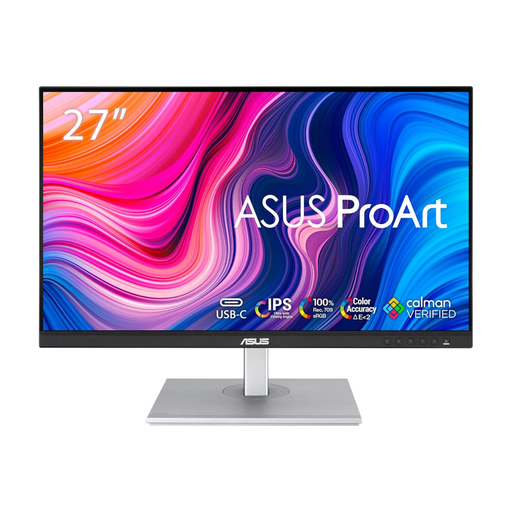
ASUS ProArt PA278CV IPS WQHD
This standard-format option is worth considering if the monitor will also serve uses beyond ship simulation.
Its title identifies an IPS WQHD display. Check its refresh rate, stand dimensions and available inputs against your gaming and desk requirements.
View on Joybuy
 No image available
Lenovo R34w-30 34-inch UWQHD gaming monitor
Consider this 34-inch option if a wider simulator display is your priority and you can make room for its stand.
Confirm the full stand dimensions, your simulator’s resolution support and the PC connection before deciding.
View on Joybuy
 No image available
HKC G27H2DPro 27-inch QHD Fast IPS
This standard-width gaming option suits a desk where a 27-inch screen fits more readily than a wider format.
The product title specifies 2560 × 1440 and 220Hz. Check stand adjustment and footprint, plus the connection needed for your intended refresh mode.
View on Joybuy
Frequently asked questions
Should I start with a 27-inch QHD monitor or a 34-inch ultrawide?
Start with the 27-inch QHD format if your usable desk width or depth is tight. Measure the stand as well as the screen: a 34-inch ultrawide becomes a practical choice only if it leaves room for your controls and a comfortable viewing position.
Will an ultrawide help with a cargo-ship simulator?
A 21:9 display can give you more horizontal room for the view and interface, provided your game supports the layout. A 3440 × 1440 image also contains about 34% more pixels than 2560 × 1440, so check performance on your PC before choosing it for the wider view alone.
Do I need a particular cable for a high-refresh monitor?
Check the requirements of the exact model and refresh mode. LG says its 27GS85Q-B requires a DisplayPort 1.4-capable graphics card and DisplayPort 1.4 cable for the 200Hz overclock mode; that requirement should not be assumed to apply unchanged to other monitors.


