
24/7 Customer Support

Free returns

Same-day & Next-day Delivery

Quality Guaranteed

Unlock Your Welcome Offers: FREE Delivery | Up to 80% OFF | Free 30-day JoyPlus trial
Download the APP
As a Joybuy Product Recommendation Officer, I see how UK households are becoming more dedicated to recycling. Yet, the reality in many kitchens is a messy pile of bags and boxes, a constant source of clutter and frustration. A dedicated waste separation bin seems like the obvious solution, but choosing the right one isn't as simple as it looks. Many are plagued by hidden flaws that only reveal themselves after a few months of use.
This guide cuts through the clutter. We'll look at the common pitfalls that lead to buyer's remorse and break down the essential features you need for a tidy, efficient and long-lasting kitchen recycling system.
Before you invest, be aware of these common design flaws that can turn a promising purchase into a daily annoyance:
To ensure your new bin is a help, not a hindrance, focus on these three non-negotiable parameters.
For a typical family in the UK, a 60L kitchen bin is often the ideal capacity to last between council collections. A 3 compartment recycling bin configuration, such as 3 x 20L, provides a practical rubbish and recycling bin combo. This allows you to designate separate sections for general waste, mixed recycling (plastics, cans, glass) and paper/cardboard, aligning with most local authority requirements. This makes it a truly functional large recycling bin for home use, eliminating the need for extra bags on the floor.
While plastic bins are lighter, a stainless steel pedal bin offers superior durability, hygiene and a more premium aesthetic. Look for models with a fingerprint-resistant coating, which is crucial for maintaining a clean look in a busy kitchen, especially with a popular choice like a black kitchen bin. Stainless steel is also less porous than plastic, meaning it's less likely to absorb odours over time and is easier to wipe clean.
The small details make a big difference. A soft close recycling bin is a must-have feature. The hydraulic mechanism prevents the lid from slamming shut, reducing noise and wear and tear. Equally important is a robust, wide pedal, preferably made of steel, which is built to withstand thousands of presses without failing. Independent lids for each compartment are also a significant advantage, as they provide better odour control by isolating food waste from dry recyclables.
Instead of a generic list, we've matched our recommendations to specific household needs, ensuring you find a solution that genuinely fits your lifestyle.
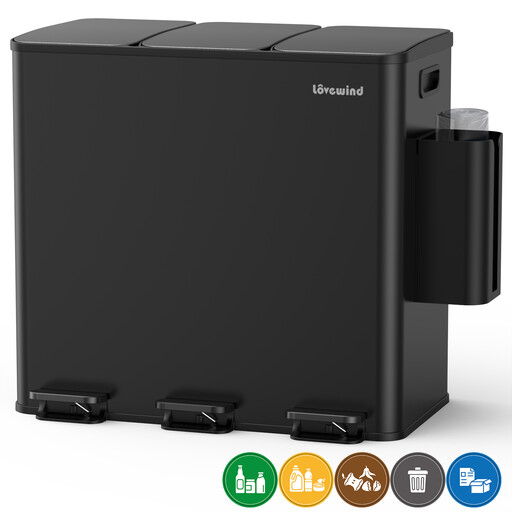
Why This Fits Their Persona: This all-in-one unit is built for the demands of a busy family. The 60L total capacity handles the high volume of waste and the three separate compartments make it easy for everyone, including children, to participate in recycling correctly.
It features a reinforced steel pedal designed for heavy use, independent lids to contain odours from each section and inner buckets with handles for easy, no-fuss emptying.
The three 20L compartments offer a practical, streamlined system for sorting waste as you go. It includes magnetic labels to clearly mark each section.
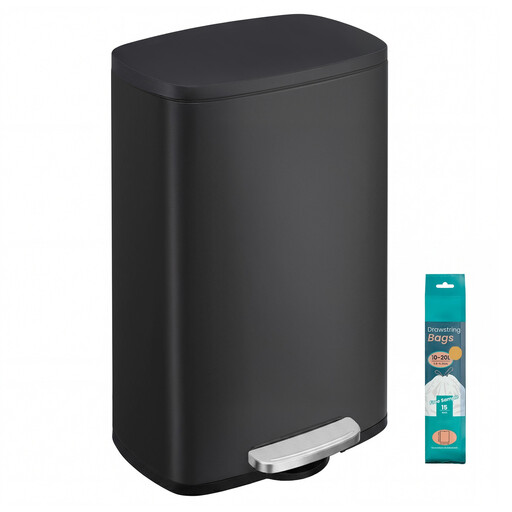
Why This Fits Their Persona: For those with a smaller footprint or who prefer a modular approach, this large 50L single-compartment bin offers a sleek profile. It can serve as a main bin for general waste or mixed recycling, paired with a small countertop caddy for food scraps.
It delivers the premium features of a high-end bin—a robust pedal, a quiet soft-close lid and a rust-resistant steel body—without the large footprint of a three-compartment model.
Its slim, modern design blends seamlessly into contemporary kitchens. The removable inner bucket features a clever hole to tuck away and secure the bin liner for a tidy look.
We have compiled a complete, real-time list of products that fully satisfy these strict selection criteria and UK safety regulations.
The key is isolation and maintenance. Choose a bin with separate, well-sealed lids for each compartment to prevent odours from food waste contaminating dry recyclables. Some models, like the 60L bin featured, include activated carbon filters in the lid to neutralise odours. Regular cleaning of the inner buckets with warm water and a mild detergent is also essential.
A total capacity of 50-60 litres is generally a good starting point for a family of four. This provides enough space to hold a week's worth of waste and recycling without overflowing before your local council's collection day. A 60L bin split into three 20L compartments is a very popular and practical configuration.
While standard stainless steel can be a magnet for fingerprints, many modern kitchen bins now use a fingerprint-resistant or brushed steel finish. This significantly reduces smudges and marks. For general cleaning, a simple wipe with a soft, damp cloth is usually all that's needed to keep the surface looking pristine. Avoid using abrasive scourers, which can scratch the finish.