
24/7 Customer Support

Free returns

Same-day & Next-day Delivery

Quality Guaranteed

Unlock Your Welcome Offers: FREE Delivery | Up to 80% OFF | Free 30-day JoyPlus trial
Download the APP
As our collection of personal gadgets grows, so does the tangle of cables on our nightstands and desks. A 3 in 1 wireless charging station seems like the perfect solution to declutter and simplify. Yet, many UK buyers find their new charger is a source of frustration, not convenience. Misleading marketing and hidden design flaws can lead to slow charging, damaged devices or a product that stops working after a few months.
Before you buy, it’s crucial to understand the common pitfalls. Many shoppers are caught out by chargers that promise more than they deliver. Here are the three most frequent traps to watch for:
To avoid these issues, focus on a few key technical specifications. Understanding these will help you choose a reliable and effective multi-device wireless charger.
Don't just look at the headline wattage. Check the power distribution for each charging pad. A good station will clearly state the output for the phone, watch and earbuds.
Also, verify the required input power. A 3-in-1 station often needs a 20W or 30W PD (Power Delivery) wall adapter to power all pads simultaneously at full speed. Check if this is included.
In the UK, never purchase an electronic device without a CE mark. This indicates it meets health, safety and environmental protection standards. Additionally, look for RoHS (Restriction of Hazardous Substances) compliance.
Materials matter for both durability and heat management. Chargers with an aluminium alloy frame or built-in cooling vents are better at dissipating heat than all-plastic models. A quality build with ABS + PC flame-retardant materials provides an extra layer of safety against overheating.
Consider where you will use the charger most.
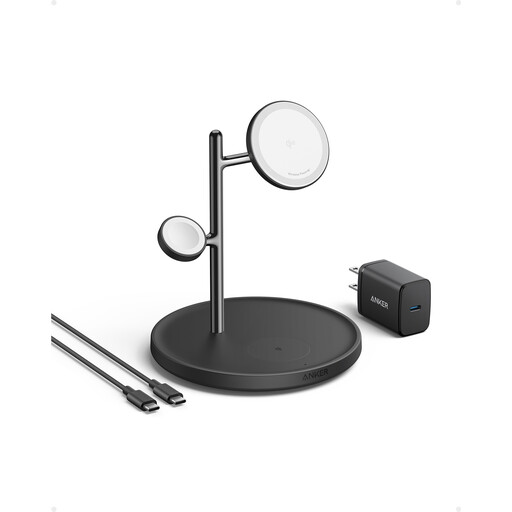
Why This Fits Their Persona: This user has an iPhone, Apple Watch and AirPods and demands reliable, fast performance. This station is designed specifically for the Apple ecosystem, offering certified compatibility and speed.
It is Qi2 and MFW certified, guaranteeing 15W fast charging for the phone and rapid charging for the Apple Watch. The bundle also includes the necessary power adapter, avoiding the "fast charging illusion".
Features Anker's ActiveShield safety system which monitors temperature to prevent overheating. The "tree-like" design ensures devices don't interfere with each other while charging.
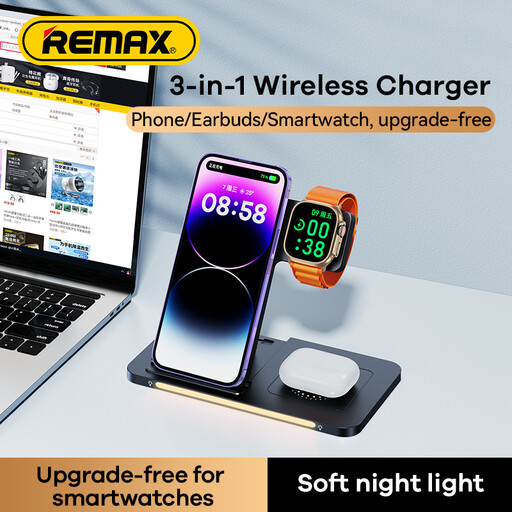
Why This Fits Their Persona: For those constantly on the move for work or leisure, packing multiple chargers is a hassle. This user needs a single, compact solution that fits easily into a carry-on or backpack.
Its primary feature is its foldable design, making it a true travel charger. It also features a smart chip for low-temperature charging, directly addressing the overheating risk common in compact chargers.
Delivers 22W of total power and doubles as a phone stand, which is useful for watching media on a train or at a hotel desk. Smart current matching optimises power for each device.
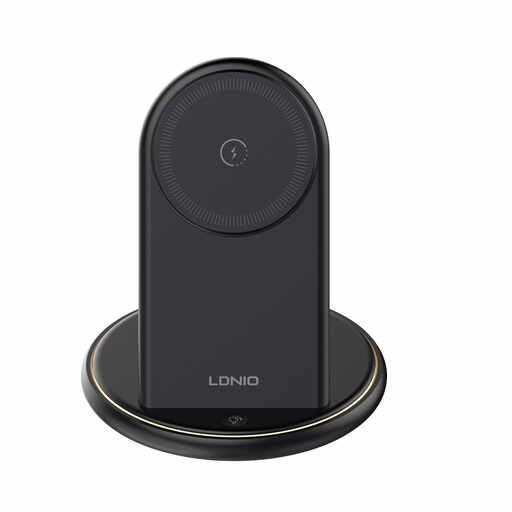
Why This Fits Their Persona: This user wants to charge everything—phone, earbuds, a second phone, a smartwatch, a fitness tracker—from one hub. Their main goal is maximum utility and decluttering a busy workspace.
Instead of over-promising, it offers a practical solution: three wireless pads plus two wired USB-A ports. This acknowledges that not all devices are wireless and provides a genuine all-in-one hub.
Its ability to charge five devices simultaneously is its main strength. The upright phone stand is also angled for easy viewing during video calls or while working.
The convenience of cutting cables isn't limited to your desk. The same principle of powerful, untethered technology is transforming how we manage our homes and gardens. For DIY enthusiasts and homeowners, the move to cordless power tools offers freedom from extension leads and petrol fumes.
Products like a battery-powered leaf blower make quick work of autumn leaves, while a cordless circular saw provides the precision and power for woodworking projects anywhere you need it. Even smaller tasks are made easier with tools like a mini cordless chainsaw for pruning branches. This ecosystem approach, where one battery often powers multiple tools, brings the same simplicity and efficiency as a multi-device charger.
We have compiled a complete, real-time list of products that fully satisfy these strict selection criteria and UK safety regulations.
A quality charger with built-in temperature controls and the proper UK safety certifications (like the CE mark) is designed to protect your device's battery. The main risk comes from overheating, which is why choosing a model with good heat dissipation and from a reputable brand is important. Cheap, uncertified chargers can degrade battery health over time.
In most cases, yes. To achieve the maximum advertised charging speeds (e.g., 15W), the station itself needs a sufficient power source. This usually means a separate USB-C wall adapter with a 20W or 30W Power Delivery (PD) rating. Always check the product description to see if a compatible adapter is included in the box to avoid slow charging speeds.