
24/7 Customer Support

Free returns

Same-day & Next-day Delivery

Quality Guaranteed

Unlock Your Welcome Offers: FREE Delivery | Up to 80% OFF | Free 30-day JoyPlus trial
Download the APP
Choosing the right scooter for an active toddler or young child involves balancing early coordination skills with reliable pavement stability. When moving from push-along ride-ons to kick scooters, young riders often need extra ground contact to build spatial confidence before they tackle narrow, two-wheeled balance frames. Finding a design that provides intuitive handling without frustrating wobbles ensures morning school runs and trips to the local park remain fun and reassuring.
Modern junior models incorporate features such as wider footplates, lean-to-steer geometry, and height-adjustable handlebars that adapt as your child grows. This guide examines how three-wheel configurations support natural physical development, highlights key structural safety details for British pavements, and presents reliable options suited to toddlers and growing primary schoolers.
For toddlers around age three, three-wheeled platforms provide essential balance support. Lean-to-steer mechanisms rely on shifting body weight rather than sharp handlebar twists, encouraging natural coordination.
A secure stance gives children the confidence to push off and maintain momentum. Inspect the footplate surface texture and the positioning of the braking system.
Children shoot up quickly between ages three and ten, making adjustability vital to avoid premature replacements as they gain height and stamina.
These selected models deliver dependable pavement balance, user-friendly controls, and adaptable builds for toddlers and growing children.
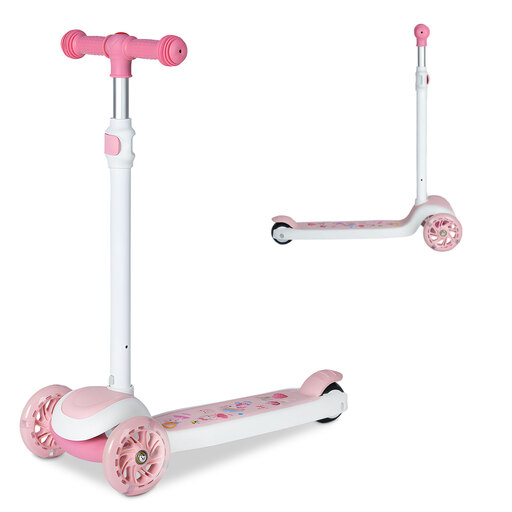
Why It Stands Out: Constructed specifically for early riders from age three upwards, this model prioritises straightforward physical balance with its three-wheel platform. The extra-wide deck makes it easy for little ones to mount and dismount securely, while integrated light-up wheels add engaging visual feedback during movement. It features a straightforward foot-activated brake and carries a 30kg user weight capacity.
Pros:
Who is it for? Young children aged three and over who are stepping onto a kick scooter for the very first time and need an ultra-stable footing.
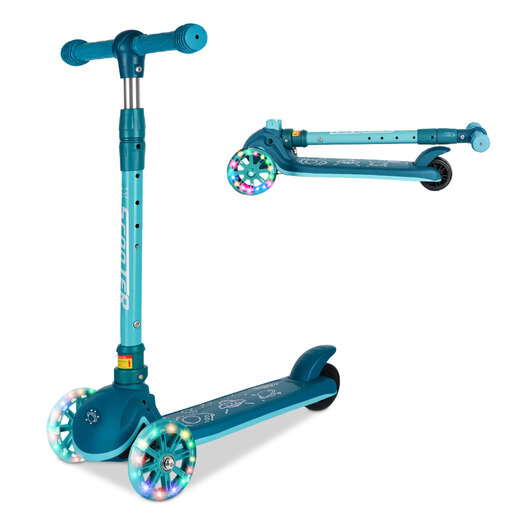
Why It Stands Out: Spanning an age range from 3 to 10 years, this green kick scooter blends long-term utility with daily travel convenience. The adjustable-height handlebar grows alongside your child, while intuitive lean-to-steer controls help develop balance on family walks. An anti-slip deck maintains reliable traction underfoot, and the foldable design packs neatly away into cupboards or car boots.
Pros:
Who is it for? Families looking for a single versatile scooter that will adapt across several years of park outings and primary school commutes.
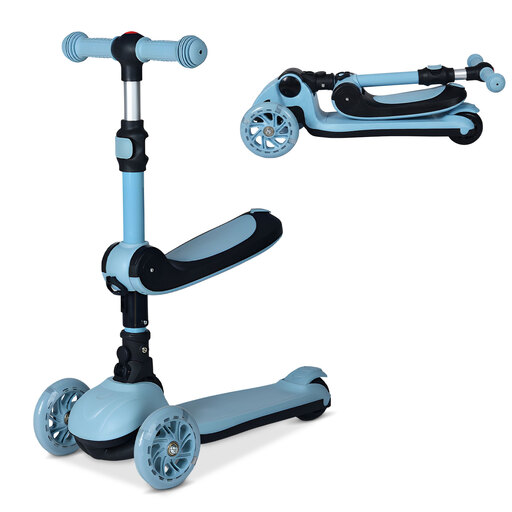
Why It Stands Out: The Neuleb KS002 introduces a versatile swivel seat alongside a traditional kick-scooter deck, giving children aged 3 to 10 the choice between sitting and standing as energy levels vary. With two adjustable handlebar heights and responsive lean-to-steer action, it accommodates varied developmental phases. Illuminated wheels and a light-up deck enhance visible excitement on evening pavement journeys.
Pros:
Who is it for? Toddlers and younger primary children who tyre easily during long strolls and benefit from an instant sit-down ride option.
If you are exploring intermediate two-wheeled trick designs, lightweight commuter models for older children, or specialised balance bikes, explore the complete outdoor riding range. Explore All Kids Scooters & Ride-Ons
Yes, a three-wheel design provides steady self-standing support that helps a three-year-old grasp basic balance and forward kicking without frequent spills. The twin-wheel front setup keeps the deck level, allowing beginners to concentrate entirely on mastering foot placement and gentle braking.
Rather than turning the handlebars like a bicycle, riders gently shift their upper body weight towards the direction they wish to travel. Internal pivot bearings tilt the front wheels slightly, delivering smooth, predictable curves that prevent handlebars from locking up sideways.
Position the handlebar grips so they rest roughly between your child's waist and belly button when they stand upright on the deck. Their elbows should maintain a slight, relaxed bend rather than reaching high near shoulder level, ensuring full steering leverage and comfortable control.