
24/7 Customer Support

Free returns

Same-day & Next-day Delivery

Quality Guaranteed

Unlock Your Welcome Offers: FREE Delivery | Up to 80% OFF | Free 30-day JoyPlus trial
Download the APP
A 30W USB-C fast charger can be a sensible everyday choice for phones, tablets and selected USB-C accessories. It is small enough for a work bag, powerful enough for many smartphones and generally more versatile than an older USB-A plug.
However, wattage alone does not tell you whether a charger will suit your devices. A compact plug may have the right number on the box but still lack the required charging protocol, use an unsuitable travel plug or provide less power when multiple ports are occupied. Before buying, check the details that affect real-world use.
The 30W figure usually describes the charger’s maximum output under particular conditions. Your phone or tablet decides how much power it accepts, while the cable and charging protocol also affect performance.
A USB-C PD charger is generally more useful than a plug that only advertises a high wattage without identifying its supported standards. Power Delivery allows compatible devices to negotiate an appropriate voltage and current. It does not turn a device that accepts 18W into a 30W device.
An international adapter may accept UK, EU, US and Australian sockets, but its output ports do not necessarily provide power conversion for every appliance. Most compact travel adapters are designed for USB charging rather than high-wattage electrical equipment.
If you mainly charge at home in Britain, a UK USB-C charger with a suitable three-pin plug may be simpler. If you travel abroad, check whether the adapter includes the plug formats you need and whether the USB-C output remains available when other ports are used.
A multi-port charger may advertise 30W overall, but that power can be divided between connected devices. A USB-C cable is also not automatically suitable for every charging level. Use a cable in good condition and check its rated capabilities, particularly for tablets and laptops.
Avoid using a charger that becomes excessively hot, emits an unusual smell or shows physical damage. Keep charging products dry, ventilated and away from children, pets and flammable materials.
For a phone, look for USB-C Power Delivery (PD) and confirm the voltage profiles listed by the manufacturer. Some Samsung devices may also benefit from compatible fast-charging protocols, while iPhones and iPads require a suitable USB-C connection and cable.
A 30W output is commonly appropriate for smartphones and many smaller tablets. It may charge a lightweight laptop slowly or maintain its battery during light use, but laptops that require 45W, 65W or more need a higher-output charger.
A GaN charger uses gallium nitride components rather than traditional silicon components. This can support a compact design and efficient power conversion, although GaN alone does not guarantee faster charging or better build quality.
Compare the plug’s dimensions, weight and shape. A small charger that blocks the neighbouring socket can be inconvenient in UK extension leads and hotel rooms. Foldable pins, where included, can also make a compact travel charger easier to pack.
Look for clearly stated protection against over-voltage, over-current, short circuit and overheating. Product documentation should also identify input range, output profiles and connector types.
For UK use, check the plug format and the relevant conformity markings supplied with the product. A UKCA marking appears in the specifications of the ACEFAST PD30W UK charger listed below. Markings should not replace sensible checks of the seller’s instructions, warranty information and product condition.
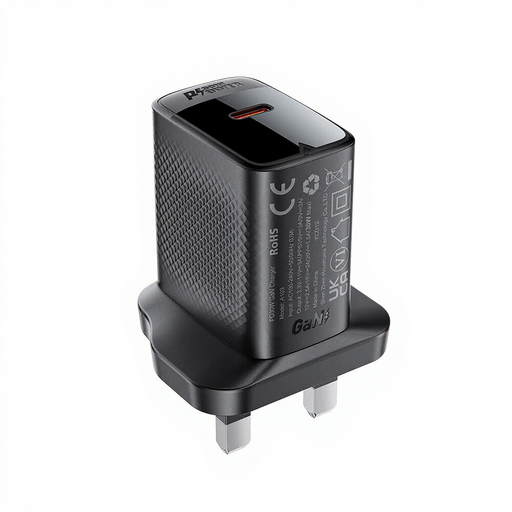
Why This Fits Their Persona: A practical option for UK residents who want one compact wall charger for a phone, tablet or other USB-C device without adding travel-adapter features they may not use.
The listing identifies 30W USB-C PD output, a UK three-pin plug and protection against over-voltage, over-current and over-power.
GaN construction; supports PD, QC, AFC and FCP protocols; listed dimensions are 74 x 48 x 43.7 mm.
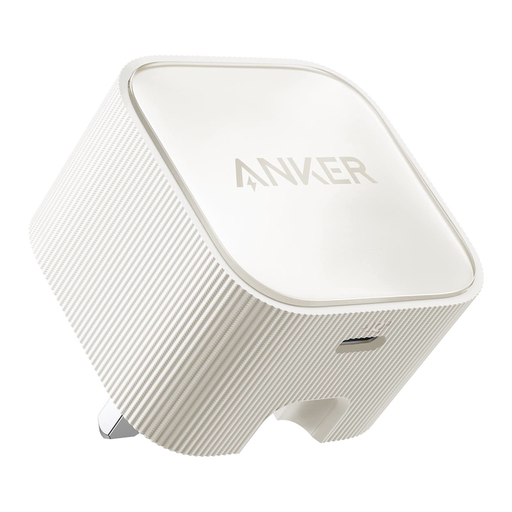
Why This Fits Their Persona: Suits commuters and mobile users who value a recognisable compact format and a foldable design for carrying between home, office and train journeys.
Its stated 30W output is paired with USB-C fast charging and a foldable format, so the portability feature is clearly defined rather than implied.
Foldable design; listed weight of 1.6 ounces; intended for dry indoor use.
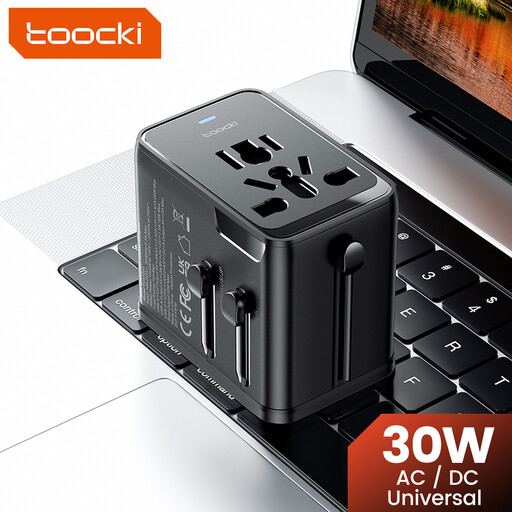
Why This Fits Their Persona: Designed for travellers moving between UK, EU, US and Australian socket formats who want a single international plug adapter with several USB charging ports.
The product name specifies international plug support and identifies one USB-A plus two USB-C ports, helping buyers check port needs before travelling.
30W PD charging; two USB-C ports and one USB-A port; suitable as an EU travel charger where the destination plug format is supported.
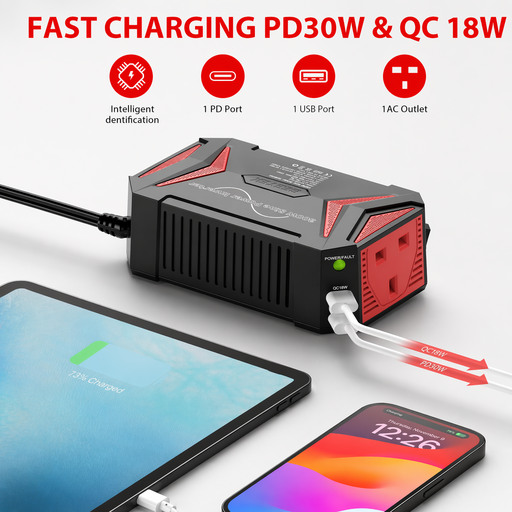
Why This Fits Their Persona: More suitable for drivers, caravanners and outdoor users who need AC power as well as USB charging from a standard 12V vehicle system.
It is clearly a vehicle power solution rather than a standard wall plug. Check the detailed listing carefully: the USB-C port is specified as up to 20W, despite the product title referencing PD30W.
300W continuous AC output; pure sine wave design; built-in protection against short circuit, over-temperature, under-voltage and over-voltage.
We have compiled a complete, real-time list of products that fully satisfy these strict selection criteria and UK safety regulations.
It can be suitable for compatible iPhone models when paired with a suitable USB-C cable and the correct charging protocol. The phone controls the power it accepts, so a 30W charger does not mean every iPhone will draw 30W continuously.
Many Samsung phones can charge from a USB-C PD source, but charging speed depends on the specific model and supported protocol. Check the phone’s specifications and use a reliable, compatible cable. A charger listing support for additional protocols such as AFC may be useful, but it does not guarantee the same result on every Samsung device.
Electricity use depends on charging time, the device’s battery level and the charger’s efficiency. The charger only approaches its maximum output when the connected device requests it. Unplug it when not needed for extended periods and avoid leaving damaged or unusually hot equipment in use.