PC pilots with limited desk space
You want a wider cockpit view on one screen, but need room for controls and a suitable viewing distance. Check the monitor’s width, stand depth and mounting options before deciding that a 34-inch model will fit.


A 34-inch, 3440 × 1440 ultrawide is worth considering for a compact PC space-trading cockpit if the game displays properly at 21:9 and the screen and stand fit your desk. Choose OLED if dark-scene picture quality matters enough to accept the risk from persistent HUD elements; compare VA or IPS ultrawides for long sessions with fixed interfaces. If width or 21:9 compatibility is the obstacle, keep a 16:9 monitor in consideration.
You want a wider cockpit view on one screen, but need room for controls and a suitable viewing distance. Check the monitor’s width, stand depth and mounting options before deciding that a 34-inch model will fit.
You place particular importance on dark-scene picture quality and are considering OLED. Persistent cockpit displays and trading panels make static-image care part of that decision; RTINGS identifies burn-in risk with prolonged exposure to fixed elements.
You expect HUDs or desktop windows to remain visible for extended periods and want to compare LCD ultrawides as well as OLED. Check the connection and variable refresh rate (VRR) features you need rather than choosing by panel type alone.
Decide whether 21:9 works for your game and desk before comparing panel types. The three screen routes then differ chiefly in picture priorities, static-interface use and the space they require.
Consider it when: Dark-scene picture quality is a priority and your PC game works well at 21:9.
Trade-off: RTINGS identifies burn-in risk when OLED displays show the same HUD or desktop elements for long periods.
Consider it when: You want the wider 3440 × 1440 cockpit layout and regularly leave trading panels or other interfaces on screen.
Trade-off: Do not assume that an LCD model will reproduce the dark-scene picture quality of an OLED; compare the exact displays for your priorities.
Consider it when: A 34-inch ultrawide will not fit, your game handles 21:9 poorly, or console play is central.
Trade-off: You give up the wider 21:9 canvas that can show more of a compatible PC game’s surroundings, as described by RTINGS.
| Concern | What to check | Who this matters to |
|---|---|---|
| Physical fit | Measure the available width and stand depth, then check mounting if controls occupy the desk. ASUS lists the PG34WCDN at 81.28 cm wide and 27.61 cm deep with its stand; other models need their own measurements. | I need the screen to clear my flight controls without sitting too close to me. Around 36% of consumers would put physical fit first. |
| Dark-scene picture | Compare the exact OLED and LCD models, including their HDR specifications and the effect of persistent HUD elements. RTINGS notes OLED’s picture-quality advantage over LCD alongside static-image burn-in risk. | Dark space scenes matter most to me, and I am willing to manage a fixed cockpit interface. Roughly 29% of consumers would prioritise dark-scene picture quality. |
| Motion and connections | Check 3440 × 1440 output, VRR compatibility and the refresh limit of the port you will use. BenQ lists the EX3415R at up to 144Hz via DisplayPort but 120Hz via HDMI. | During manoeuvres, I want smooth motion from the PC and connection I actually use. About 21% of consumers would make motion and compatibility their primary concern. |
| Static-interface use | Consider how long trading panels and desktop windows stay in place, and compare VA or IPS options with OLED. Check the exact model’s panel-care features if choosing OLED. | I leave maps, trading screens or other fixed windows open for long stretches and want that habit to guide my panel choice. Around 14% of consumers would put static-interface use first. |
A 34-inch label does not tell you how much room the screen and base will occupy. ASUS lists the PG34WCDN at 81.28 cm wide and 27.61 cm deep with its stand.
Measure the space around your flight controls, keyboard and speakers. If you plan to use an arm, check the monitor’s VESA pattern and the arm’s load rating.
A monitor arm or a desk rearrangement may be needed if the supplied stand obstructs your controls.
RTINGS identifies burn-in risk when OLED screens display the same elements over time, which matters if a cockpit HUD or trading panel stays fixed during long sessions.
Assess your mix of gameplay and desktop use, and follow the exact monitor’s panel-care guidance without treating those features as a guarantee against burn-in.
Port limits can differ: BenQ specifies up to 144Hz via DisplayPort and 120Hz via HDMI for the EX3415R.
Check the stated resolution and refresh rate for your intended port against your graphics card’s output and connection.
Using a different port or cable may be necessary to reach the connection’s stated limit.
RTINGS notes that consoles do not support ultrawide aspect ratios, so a console game may not fill a 21:9 screen.
If console use is central, check how the specific monitor displays its signal and consider whether a 16:9 screen suits that use better.
The ROG Swift OLED PG34WCDN is a 34-inch, 3440 × 1440 OLED ultrawide for buyers comparing high-refresh PC connections and monitor-arm placement.
The 34GX900A-B is LG’s 34-inch, 3440 × 1440 OLED ultrawide option for a compatible 21:9 PC setup.
The CU34G2XP/BK is a 34-inch Fast VA ultrawide to compare when the 3440 × 1440 format matters but OLED is not your preferred panel route.
Samsung’s 34-inch G85SD is a 3440 × 1440 QD-OLED ultrawide for buyers considering an OLED cockpit display.
The EX3415R is a 34-inch, 3440 × 1440 IPS ultrawide with desk and mounting features that may matter in a shared gaming setup.
These 34-inch monitors are options for the ultrawide PC cockpit route. Check game support and physical fit before comparing individual models; the 16:9 alternative remains a separate decision.
 No image available
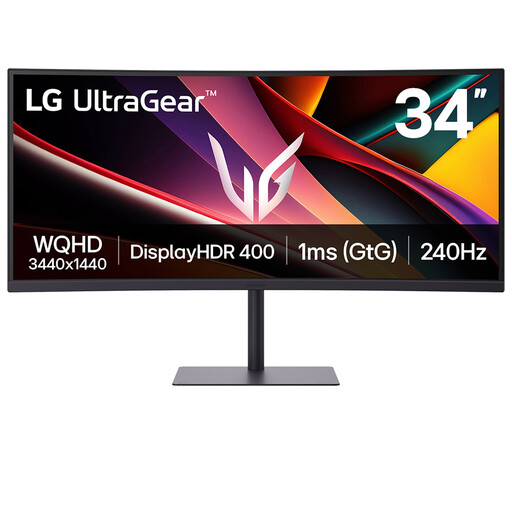
Consider this VA model if you want an ultrawide cockpit screen without choosing OLED. Its product title specifies a 34-inch WQHD display and 240Hz refresh rate; check the stand footprint and whether your PC and chosen connection can use the output you want.
 No image available
Consider this OLED model if dark space scenes are a priority and you can accommodate its 34-inch ultrawide format. LG specifies 3440 × 1440 resolution and 240Hz for the 34GX900A-B; persistent HUD use still calls for attention to OLED panel care.
 No image available
Consider the R34w-30 if a 34-inch UWQHD screen suits your PC cockpit. Confirm its dimensions with stand, available connections and per-port refresh limits against your desk and graphics card.
 No image available
Consider this 3440 × 1440 model if its adjustable stand and connection choices suit your cockpit. Its product title lists 175Hz via DisplayPort but 100Hz via HDMI, so choose the port with your intended refresh rate in mind. Check the stand dimensions before purchase.
 No image available
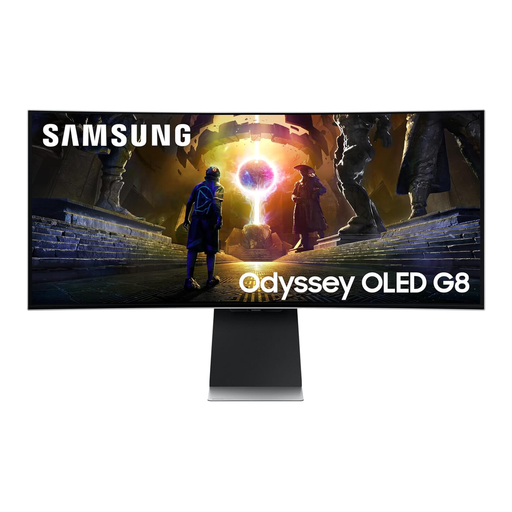
Consider this OLED ultrawide if dark-scene viewing is important and your setup can accommodate a 34-inch screen. Samsung lists 3440 × 1440 resolution and 175Hz for the G85SD variant; check the exact model’s VRR compatibility if your PC setup requires it, and account for prolonged static HUD use.
It can suit a PC cockpit if the game works well at 21:9 and the monitor fits around your controls. RTINGS notes that ultrawides can show more game surroundings than standard 16:9 screens; measure the particular model and its stand rather than relying on the 34-inch diagonal.
OLED is still an option if dark-scene picture quality matters most, but a persistent HUD makes its ownership trade-off more important. RTINGS identifies burn-in risk from prolonged static elements; compare VA or IPS ultrawides if fixed trading panels and desktop windows dominate your use.
No; choose a rate your PC can deliver at the resolution and through the port you intend to use. Check VRR compatibility too. BenQ, for example, specifies a 144Hz DisplayPort maximum but a 120Hz HDMI maximum for the EX3415R.
It can display console output, but do not assume a console game will use the full 21:9 width. RTINGS notes that consoles do not support ultrawide aspect ratios; check how the specific monitor presents a 16:9 signal before making console play your reason to choose it.