
24/7 Customer Support

Free returns

Same-day & Next-day Delivery

Quality Guaranteed

Unlock Your Welcome Offers: FREE Delivery | Up to 80% OFF | Free 30-day JoyPlus trial
Download the APP
A 36-inch mini trampoline for kids can offer an appealing way for children aged around three to six to enjoy supervised movement at home. Its compact footprint suits many UK homes, particularly flats, terraces and rooms where a full-size garden trampoline would be impractical.
However, product listings can make similar-looking models seem interchangeable. A low price may hide exposed springs, a handlebar that does not adjust or a frame that is difficult to store. Before buying a kids' indoor trampoline, check the details that affect everyday usability rather than relying on phrases such as “extra safe” or “professional quality”.
A trampoline listed as 36 inches measures approximately 91.6cm across, but the jumping area may be smaller once the frame and padding are included. Measure the intended floor space and leave clearance from walls, furniture and light fittings. The trampoline should sit on a level, stable surface with sufficient overhead room.
A toddler trampoline with handle can help a young child maintain balance, but only if the bar is firmly secured and positioned appropriately. Check whether the height is adjustable and whether the base remains stable when the child holds the bar. A handle is not a substitute for adult supervision or a controlled play area.
A 25kg capacity trampoline is designed for children or lighter users within that limit. It is not suitable for multiple children jumping together, regardless of how spacious the mat appears. Always follow the one-user rule and compare the child’s current weight with the stated maximum, allowing for future use only where appropriate.
A springless resistance band trampoline uses elastic bands in place of metal springs. This construction can reduce mechanical noise, which may be useful in a living room or upstairs flat. It may also provide a gentler-feeling bounce, although the actual experience depends on the frame, mat and user weight.
Steel springs can provide a more traditional rebound. If choosing a spring model, look for a full-coverage spring pad that prevents direct contact with the springs. Padding should remain securely attached and be checked regularly for movement, tears or deterioration.
A steel frame with a powder-coated finish is a practical specification for regular domestic use. Polypropylene jumping mats are common, but the material alone does not determine stability or longevity. Inspect the stitching, attachment points and surrounding pad before each session.
Foam padding can cover a handlebar or frame edge, but it should not be treated as a guarantee against falls or impact. Look for secure attachment, rounded contact areas and a design that minimises exposed hard components.
A foldable kids' trampoline can be useful when the equipment needs to be stored after every use. Check the folded dimensions, product weight and whether the folding mechanism requires tools. A lightweight model is easier for an adult to move, but it still needs to be unfolded fully and checked before each use.
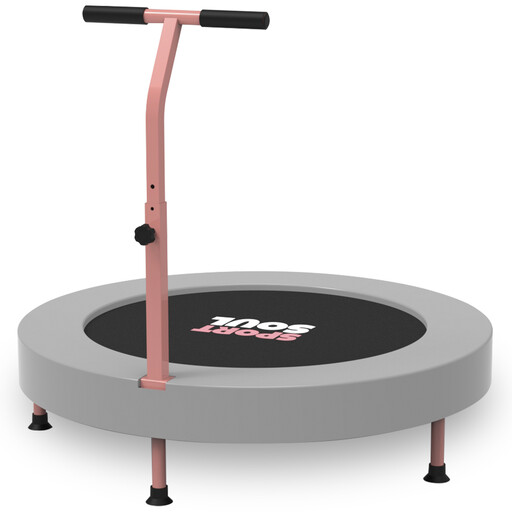
Why This Fits Their Persona: Its 36-inch format and 4.77kg net weight suit households wanting a compact starting point for supervised indoor play and simple storage.
The 24 elastic resistance bands avoid exposed steel springs, while the foam pad and adjustable T-shaped bar address two common concerns in compact children’s rebounders.
Foldable design; pre-assembled bands, mat and foam pad; maximum user weight of 25kg.
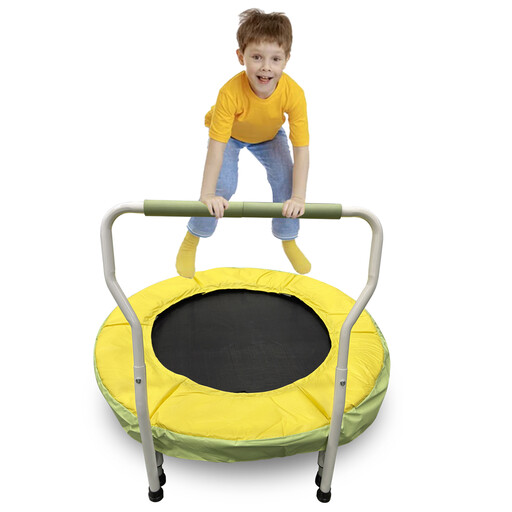
Why This Fits Their Persona: Families prioritising covered components may prefer a spring-based design with a foam handlebar and full-coverage spring pad.
The 24 steel springs are covered by a full spring safety pad, reducing direct access to the spring area during supervised use.
Adjustable handlebar; foam handle; 25kg maximum user weight; suitable for indoor or outdoor use when positioned correctly.
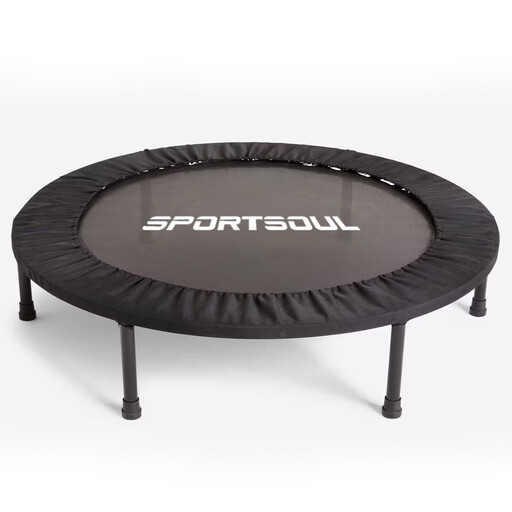
Why This Fits Their Persona: This is more appropriate for a household seeking a higher-capacity rebounder for adult home fitness rather than a dedicated toddler trampoline.
Its 100kg limit makes the capacity clear, avoiding the mistake of treating a 25kg children’s trampoline as a shared adult product.
36 steel springs; 100kg maximum user weight; silent non-slip feet; fold-and-store format. It has no children’s handlebar, so it should not be selected as a substitute for a child-focused model.
We have compiled a complete, real-time list of products that fully satisfy these strict selection criteria and UK safety regulations.
Before allowing a child to use a children's rebounder trampoline:
It can be considered for supervised play only when the product’s stated age guidance, weight limit and safety instructions are suitable for the child. A three-year-old should not use it independently, and the surrounding area must be clear.
They can produce less mechanical noise than steel springs, making a springless model a practical option for indoor use. Noise will still vary according to flooring, movement and the child’s weight. A rubber or non-slip floor layer may help protect hard flooring.
There is no fixed lifespan. Storage, frequency of use, moisture and impact all affect wear. Inspect the bands or springs, mat, frame, handle and foam before every session, and stop using the trampoline if any structural or padded component is damaged.