
24/7 Customer Support

Free returns

Same-day & Next-day Delivery

Quality Guaranteed

Unlock Your Welcome Offers: FREE Delivery | Up to 80% OFF | Free 30-day JoyPlus trial
Download the APP
Capturing dynamic action, whether you're mountain biking in the Peak District or vlogging your travels through London, presents a unique challenge. Traditional cameras force you to frame the shot, meaning you can easily miss the most exciting moments happening just out of view. A 360 action camera solves this by recording everything around you, giving you the creative freedom to reframe your footage later and never miss a second of the action.
Navigating the market for these cameras can be confusing, with a lot of technical jargon and marketing noise. This guide is designed to cut through the clutter. We will walk you through the key features to look for and provide our top recommendations for 2026 to help you find a camera that truly fits your needs.
Choosing the right camera comes down to understanding a few core specifications and how they apply to your intended use. Here are the most important factors to consider.
With a 360 camera, you are capturing a full sphere that you will later crop into a standard flat video. This is why high resolution is so important. A model advertised as an 8K 360 camera provides significantly more detail, allowing you to zoom in and reframe your shots without a noticeable loss in quality. For an action camera for sports, look for higher frame rates (like 60fps or 120fps) as this will enable you to create smooth, cinematic slow-motion clips of fast-paced moments.
Shaky footage can ruin an otherwise perfect shot. A 360 camera with stabilisation uses advanced software algorithms to smooth out bumps, shakes and vibrations, producing gimbal-like results without any extra equipment. Many modern cameras also feature 360° Horizon Lock, which keeps the horizon perfectly level even if the camera is tilted or completely rotated. This is a crucial feature for maintaining a professional look in your videos, especially during high-intensity activities.
If you plan to use your camera for adventures in the UK, a rugged and waterproof action camera is essential. Check the manufacturer's specifications for its waterproof depth rating and whether it requires an additional housing. A durable build that can withstand drops, dust and cold weather will give you the confidence to take your camera anywhere, from the surf in Cornwall to the snowy peaks of Scotland.
Here are a few standout models that offer a compelling combination of features, performance and value for different types of users.
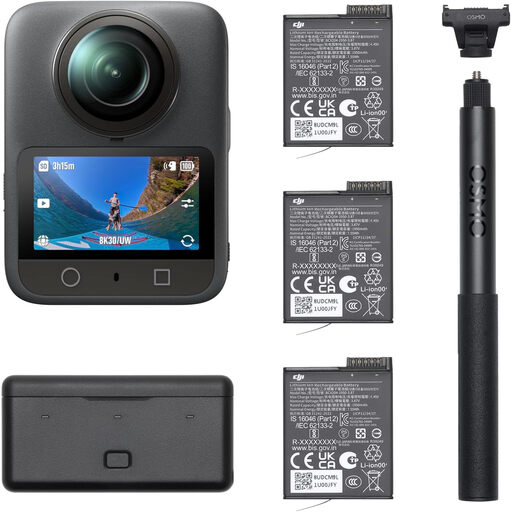
Why It Stands Out The DJI Osmo 360's main advantage is its large 1-inch 360° imaging sensor, which delivers impressive image quality, particularly in low-light conditions. It captures native 8K 360° video, ensuring your footage is crisp and packed with detail. The Adventure Combo is particularly practical, as it includes three batteries and a multifunctional charging case, addressing the common issue of limited battery life during long days of shooting.
Pros
Who is it for? This camera is well-suited for content creators and travel vloggers who prioritise cinematic image quality and require a reliable power solution for extended shoots.
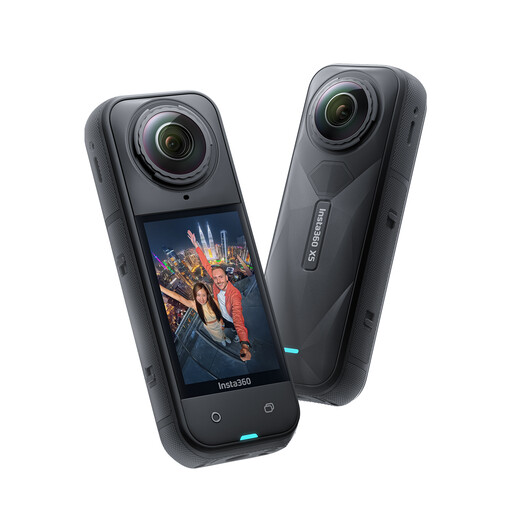
Why It Stands Out Insta360 has built a reputation for its powerful and user-friendly software. The X5 continues this tradition with advanced AI-assisted reframing and the signature invisible selfie stick camera effect, which creates stunning third-person perspectives. A practical update is the introduction of tougher, replaceable lenses, offering peace of mind for those engaging in more extreme sports where damage is a real possibility. This focus on software and practical durability makes it a strong contender in the GoPro vs Insta360 discussion.
Pros
Who is it for? Ideal for action sports enthusiasts and social media creators who value creative flexibility, powerful editing tools and the unique invisible selfie stick effect.
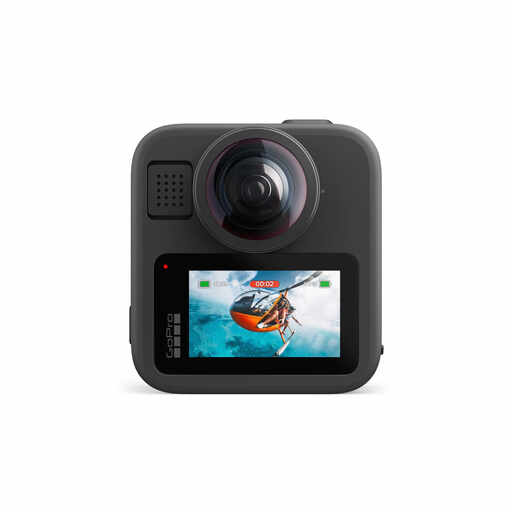
Why It Stands Out The GoPro Max 2 builds on the brand's legacy of creating tough, reliable action cameras. Its standout feature is the Max HyperSmooth 360 stabilisation, which provides exceptionally smooth video in even the most chaotic conditions. The camera's rugged and waterproof design means it's ready for any adventure straight out of the box. Furthermore, its six-microphone array captures immersive spatial audio that intelligently follows the reframed video, enhancing the viewing experience.
Pros
Who is it for? A great choice for adventurers, athletes and anyone needing a dependable and easy-to-use camera for vlogging in challenging environments where durability and stability are paramount.
While these three models represent some of the most compelling options available, the right camera is a personal choice. If you're still exploring or have different requirements, there are many other excellent devices to consider.
If you'd like to compare more models, browse our full collection of handheld cameras to find the perfect fit for your adventures.
Yes, particularly if you plan to reframe your footage. Capturing in 8K gives you a much larger canvas to work with. When you crop a portion of the 360° sphere to create a standard 16:9 video, the higher initial resolution ensures the final clip remains sharp and clear. It effectively future-proofs your content.
This clever effect is achieved through software. The camera uses two back-to-back fisheye lenses to capture a full 360-degree view. The selfie stick is positioned in the small blind spot directly below the camera, where the images from the two lenses are stitched together. The software automatically identifies and removes the stick from the final footage, creating a seamless, drone-like shot.
Absolutely. Most modern 360 cameras feature a single-lens mode, allowing them to function just like a traditional wide-angle action camera. This makes them incredibly versatile. You can use the single-lens mode for straightforward vlogging and switch to 360° mode to capture immersive scenes, making it an excellent all-in-one camera for vlogging.