
24/7 Customer Support

Free returns

Same-day & Next-day Delivery

Quality Guaranteed

Unlock Your Welcome Offers: FREE Delivery | Up to 80% OFF | Free 30-day JoyPlus trial
Download the APP
As a Joybuy Product Recommendation Officer, my role is to help you navigate the crowded market of 3D printing materials. Choosing the right 3D printer filament 1.75mm can be the difference between a flawless creation and a frustrating failure. Many UK makers, from hobbyists to engineers, find themselves wasting time and money on spools that don't live up to their marketing claims. This guide cuts through the clutter, focusing on what truly matters for a successful print.
Before you add another spool to your basket, let's look at the common pitfalls that can lead to disappointment:
To ensure you get reliable results, focus on these non-negotiable parameters. They are far more important than flashy packaging or marketing buzzwords.
The two most common types of FDM filament are PLA and PETG. Choosing between them depends entirely on your project's requirements.
This is perhaps the most critical technical specification. It measures how consistent the filament's diameter is along its entire length.
Once you've mastered the basics, you can explore materials designed for specific outcomes.
Here are a few selections matched to common user profiles, helping you find the right material for your specific needs.
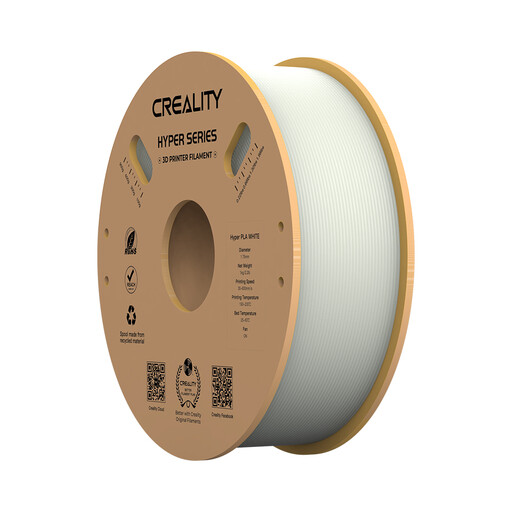
Why This Fits Their Persona: For engineers and makers on a deadline, speed is everything. This filament is specifically formulated for high-speed FDM printers, allowing for rapid iteration of designs and functional prototypes without the long wait times of standard PLA.
It directly counters the inconsistent diameter trap. Its stated +/-0.02mm dimensional accuracy is essential for preventing clogs and maintaining quality when printing at speeds up to 600mm/s.
Optimised for high-speed printing, enabling faster project completion. Excellent dimensional stability for reliable, repeatable results.
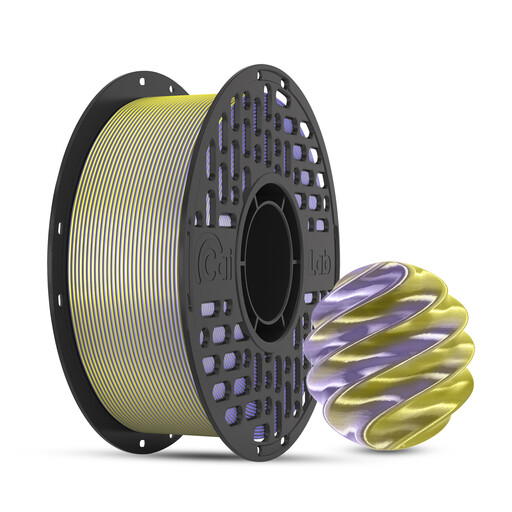
Why This Fits Their Persona: For artists and designers, the final look is paramount. This filament creates a striking visual effect straight off the print bed, with a high-gloss, silky finish and a colour-shifting appearance that makes any model stand out.
It avoids the trap of misleading properties. This filament delivers on its promise of a unique aesthetic, providing the advertised dual-colour silk effect without compromising the fundamental ease-of-use of PLA.
Produces a unique, eye-catching dual-colour sheen. The silk finish helps to obscure layer lines for a smoother final appearance.
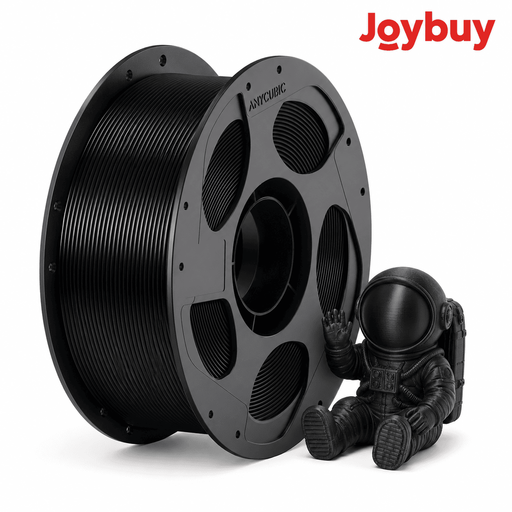
Why This Fits Their Persona: When creating parts that need to withstand mechanical stress or higher temperatures, PLA often falls short. PETG is the practical choice for durable items like custom brackets, jigs, or protective cases that require better performance than a standard PLA can offer.
This avoids the pitfall of using the wrong material for the job. By choosing PETG, you get the strength and heat resistance needed for functional parts, preventing the failures that would occur if a more brittle PLA were used.
Offers superior strength, durability, and temperature resistance compared to standard PLA. It is a reliable choice for creating robust, long-lasting functional components.
We have compiled a complete, real-time list of products that fully satisfy these strict selection criteria and UK safety regulations.
Here are answers to a few common questions from the UK 3D printing community.
The longevity of a 1kg filament spool depends entirely on what you print. A standard 1kg spool of 1.75mm PLA contains approximately 330 metres of material. This could be enough to print hundreds of small miniatures or just a few large, dense objects. For reference, a standard 28mm tabletop gaming miniature might use 5-10 grams of filament, meaning you could print 100-200 of them from a single spool. A large architectural model, however, could easily consume the entire spool in one go.
It is only worth investing in high speed PLA if your 3D printer is specifically designed for high-speed operation (typically with print speeds exceeding 150mm/s). These printers often feature more powerful hotends, improved cooling and vibration compensation technology. Using high speed filament on a standard, slower printer will not provide any benefit and is not a cost-effective choice. If you do have a fast printer, using a specialised filament is essential to achieve good quality at top speed.
Proper storage is crucial for maintaining filament quality, especially for materials like PETG and Nylon, which are hygroscopic (they absorb moisture from the air). Damp filament can cause popping and sizzling sounds during printing, leading to weak, brittle prints with a poor surface finish. The most effective way to store your spools is in an airtight container or a vacuum-sealed bag with a desiccant sachet (the small silica gel packs) to absorb any moisture. This will keep your 3D printing material in prime condition, ready for your next project.