
24/7 全天候客户支持

免费退货

当日/次日达

品质保障

开启新人专享福利: 全场免邮 | 低至 2 折 | 免费试用 30 天 JoyPlus 会员
下载 Joybuy
Navigating the market for 3D printer filament in the UK can feel overwhelming. A promising spool arrives, only to result in a stringy, warped or failed print. The frustration isn't just about wasted material; it's about the time and effort lost. Many makers find themselves caught out by common purchasing pitfalls that aren't immediately obvious from a product page.
As the Joybuy Product Recommendation Officer, my role is to help you sidestep these issues. We will look past the marketing buzz and focus on the practical details that separate a reliable spool from a reel of trouble. Before you add another spool to your basket, let's examine the frequent traps that lead to disappointing results:
To ensure your FDM printer supplies deliver the quality you expect, focus on a few core parameters. These specifications are the foundation of a successful print, regardless of the project.
The most common size for desktop FDM printers is PLA filament 1.75mm. However, the crucial specification is the dimensional accuracy, often stated as a tolerance like +/- 0.02mm. A tighter tolerance means the filament diameter is highly consistent along its entire length. This consistency is vital for your printer's extruder to push through a predictable amount of material, resulting in clean layers and preventing jams. A spool with a poor tolerance of +/- 0.05mm or worse is a frequent cause of printing headaches.
While there is a vast range of materials, most UK hobbyists and prosumers will primarily use PLA and PETG.
A neatly wound spool is non-negotiable. Poorly wound filament can easily snag or tangle mid-print, ruining hours of work. Reputable manufacturers invest in machinery that ensures the filament is laid down perfectly on the spool. The standard 1kg 3D printer filament spool is the most common size, offering a good balance of material quantity and price. Always check that the spool is sealed in a vacuum bag with a desiccant sachet to prevent moisture absorption, particularly in the damp UK climate.
Based on these practical criteria, here are some filament options matched to specific types of users.
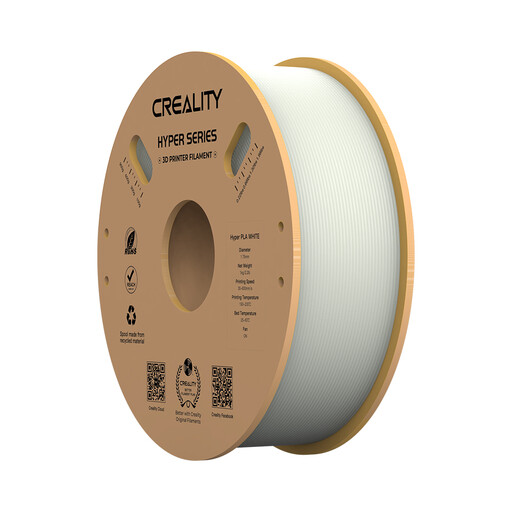
Why This Fits Their Persona: For makers who need to iterate on designs quickly, speed is paramount. This filament is specifically formulated to handle the high flow rates and rapid movements of modern high-speed printers, turning a 10-hour print into a 2-hour job.
It directly counters the "misleading claims" trap. While standard PLA would under-extrude and fail at high speeds, this high speed PLA is engineered with higher fluidity and faster cooling to maintain quality and strength, even at speeds up to 600mm/s.
The primary advantage is the significant reduction in print time. It features a tight dimensional accuracy of +/- 0.02mm, ensuring reliability during long, fast prints.
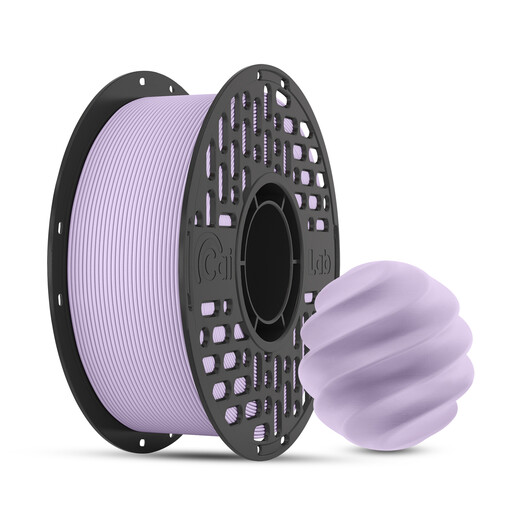
Why This Fits Their Persona: For those creating display pieces, miniatures or architectural models, the final look is everything. A matte finish diffuses light, which helps to conceal layer lines and gives the object a more premium, less "plastic" appearance.
This matte PLA filament avoids the "inconsistent finish" pitfall. Its formulation is specifically designed to produce a uniform, non-glossy texture from the start of the spool to the end, ensuring your finished model has a consistent and professional look.
The key advantage is the superior aesthetic finish that minimises visible layering. It maintains the ease-of-use of standard PLA, making it accessible even for those new to aesthetic filaments.
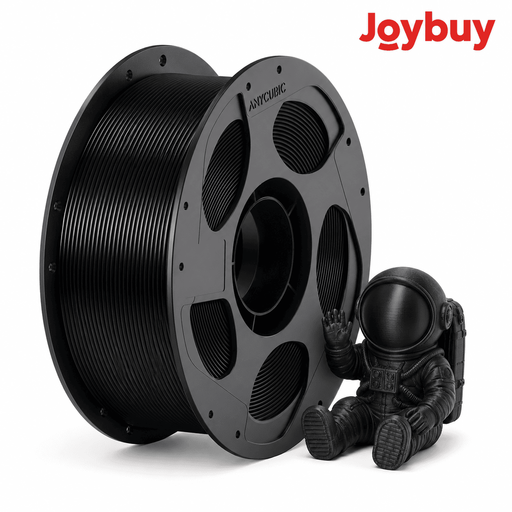
Why This Fits Their Persona: When you need to print parts that will be handled, used or put under light stress, PETG is a significant upgrade from PLA. It's perfect for creating custom workshop organisers, durable enclosures for electronics or replacement parts for household items.
This avoids the "brittle PLA" trap by offering a material with inherently better durability and slight flexibility. A well-formulated PETG filament like this provides reliable strength for functional prints where standard PLA would crack or snap under pressure.
Its main advantage is its superior strength and temperature resistance compared to PLA. This makes it suitable for parts that may be exposed to warmer environments (like inside a car) or require greater impact resistance.
We have compiled a complete, real-time list of products that fully satisfy these strict selection criteria and UK safety regulations.
The UK's humid climate can be detrimental to 3D printer filaments, especially PETG and Nylon. Moisture absorption leads to popping sounds during printing, weak and brittle parts and a poor surface finish. It is advisable to store your spools in an airtight container or a resealable bag with the included desiccant sachets. For long-term storage, dedicated filament dry boxes are a worthwhile investment.
PETG is slightly more challenging than PLA but is very manageable with a few adjustments. It typically requires higher nozzle and bed temperatures. It can also be prone to "stringing," which can usually be minimised by fine-tuning retraction settings in your slicer software. For most users with a modern FDM printer, the transition from PLA to PETG is a straightforward step up.
Yes. As long as the filament diameter matches what your printer is designed for (almost always 1.75mm for consumer models), you can use filament from any brand. Brands like Creality and Anycubic produce filament that is compatible with the vast majority of FDM printers on the market. The key is to match the material type (e.g., PLA, PETG) to the correct print settings, not the brand of the printer to the brand of the filament.