
24/7 全天候客户支持

免费退货

当日/次日达

品质保障

开启新人专享福利: 全场免邮 | 低至 2 折 | 免费试用 30 天 JoyPlus 会员
下载 Joybuy
Choosing the right 3D printer filament can feel like a complex task. With a growing market of materials, colours and technical specifications, finding the ideal spool for your project—one that prints reliably and delivers the desired finish—is crucial. A mismatched filament can lead to clogged nozzles, warped prints and wasted time.
As a Joybuy Product Recommendation Officer, my role is to help you navigate these choices. This guide is designed to provide clear, practical advice on selecting the right material for your needs. We will explore key factors to consider and present a few standout options available today, helping you make an informed decision for your next creation.
Before diving into specific products, let's cover a few essential points. Understanding these basics will ensure you select a filament that is compatible with your printer and suitable for your project's requirements.
The two most common materials for FDM 3D printing are PLA and PETG, and each has distinct advantages.
PLA (Polylactic Acid): This is often the go-to material for hobbyists and beginners. PLA filament is derived from renewable resources like corn starch, making it a more environmentally friendly option. It prints at lower temperatures, has minimal warping and is known for its ease of use. It's an excellent choice for detailed models, prototypes and decorative objects that won't be subjected to high stress or temperatures. For those prioritising aesthetics, a matte PLA can provide a sophisticated, non-glossy finish that helps conceal layer lines.
PETG (Polyethylene Terephthalate Glycol): If your project requires durability, flexibility and heat resistance, PETG filament is a strong contender. It combines some of the strength of ABS with the printing ease of PLA. PETG is more robust, less brittle and has better chemical resistance, making it suitable for functional parts, mechanical components and items that need to withstand wear and tear.
Modern FDM printer filament technology has evolved alongside printer hardware. With the rise of high-speed 3D printers, specialised filaments have been developed to keep up. If you own a machine capable of printing at speeds above 150mm/s, using a high-speed 3D printer filament is recommended. These filaments are formulated for faster melting and smoother flow, ensuring consistent extrusion and quality even at accelerated rates. Using standard filament at high speeds can often lead to under-extrusion and poor layer adhesion.
The vast majority of consumer FDM 3D printers use 1.75mm filament. It is vital to check your printer's specifications to confirm this, as using the wrong diameter will cause printing failures. Additionally, most filaments are sold on a 1kg spool, which is a standard size that fits the spool holders on most printers.
Here are a few filament options that cater to different printing needs, from high-speed prototyping to artistic creations.
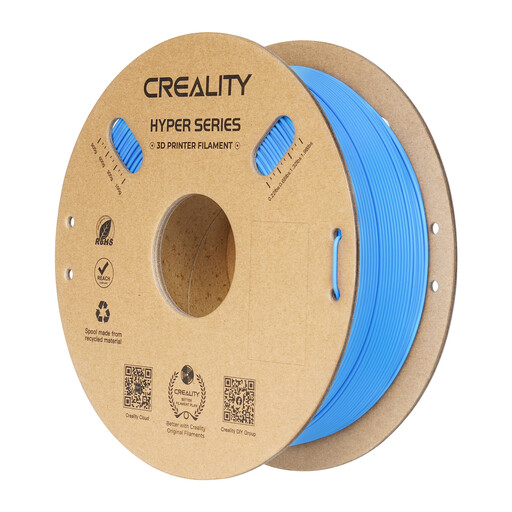
Why It Stands Out: This filament is specifically engineered for speed. Designed to work at print speeds from 30mm/s up to an impressive 600mm/s, it’s built to maximise the efficiency of modern, high-speed 3D printers without sacrificing quality. Its high dimensional accuracy of +/- 0.02mm promotes consistent and reliable extrusion.
Pros:
Who is it for? This is an ideal choice for users with high-speed 3D printers who focus on rapid prototyping, batch production or simply want to complete their prints faster.
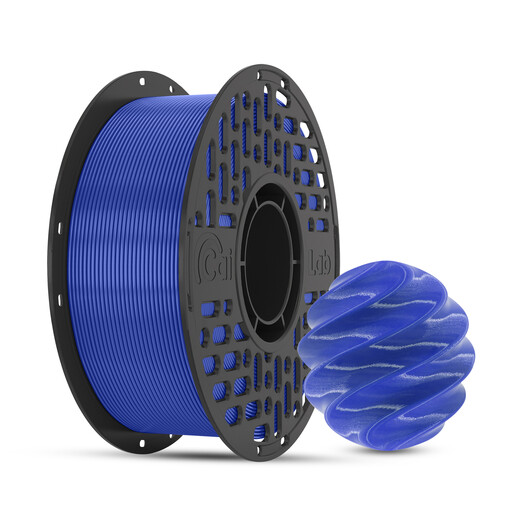
Why It Stands Out: This PETG filament offers a balanced profile for projects that demand more than what standard PLA can offer. It provides the toughness and heat resistance needed for functional parts while remaining relatively easy to print with, exhibiting low shrinkage and warping. Its resistance to oils and common chemicals makes it a practical choice for real-world applications.
Pros:
Who is it for? Makers, engineers and hobbyists who are creating functional components, protective casings or any object that requires enhanced durability and longevity compared to PLA.
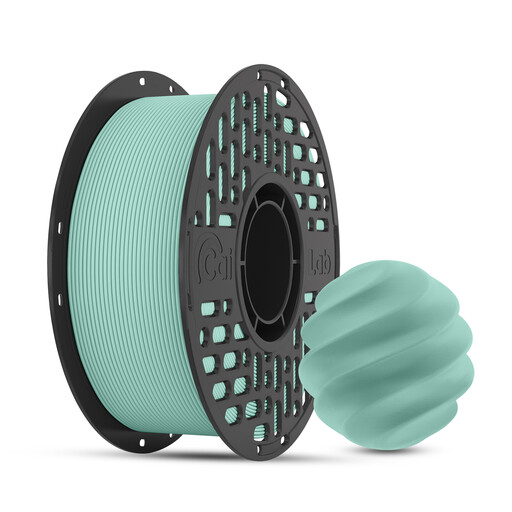
Why It Stands Out: The defining feature of this matte PLA is its beautiful, non-reflective finish. This surface texture minimises the visibility of layer lines, giving prints a more professional and artistic appearance straight off the print bed. The new formula is engineered for smooth, clog-free printing and excellent bed adhesion, making it accessible even for beginners.
Pros:
Who is it for? Designers, artists and creators who prioritise aesthetics. It's perfect for printing architectural models, figurines, decorative items and any project where a high-quality surface finish is paramount.
If the recommendations above aren't quite what you're looking for, or if you're simply searching for a different shade, there are many other filaments to explore.
Discover more options in our curated collection. Explore our full range of blue 3D printer filament to find the perfect match for your next project.
The primary difference lies in their properties and use cases. PLA filament is easier to print, more rigid and ideal for aesthetic or low-stress applications. PETG filament is more durable, flexible and resistant to heat and chemicals, making it better suited for functional parts that need to withstand mechanical stress.
Yes, you can. High-speed 3D printer filament is versatile and will print perfectly well at standard, slower speeds on any compatible FDM printer filament machine. You simply won't be taking advantage of its fast-flow properties. However, using standard filament in a high-speed printer at its maximum speed is not recommended, as it may lead to poor print quality.
Most filaments, especially PLA and PETG, are hygroscopic, meaning they absorb moisture from the air. This moisture can cause popping sounds during printing, leading to a poor surface finish and brittle prints. To prevent this, store your 1kg spool in a sealed, airtight container or bag, preferably with a desiccant packet (like silica gel) to keep it dry. Proper storage is key to maintaining filament quality and ensuring successful prints.