
24/7 Customer Support

Free returns

Same-day & Next-day Delivery

Quality Guaranteed

Unlock Your Welcome Offers: FREE Delivery | Up to 80% OFF | Free 30-day JoyPlus trial
Download the APP
As a Joybuy Product Recommendation Officer, my role is to help you navigate the crowded market of 3D printing materials. A successful print starts long before you press 'go' on your machine; it begins with choosing the right 3D printer filament. A poor choice can lead to hours of wasted time, tangled spools and disappointing results.
Many UK makers and hobbyists fall into a few common traps when buying filament. Let's look at how to avoid them.
To ensure you get a material that performs reliably, focus on a few core parameters instead of just marketing claims. These specifications are the true indicators of a quality FDM filament.
The two most common materials for FDM printers are PLA and PETG, and each serves a different purpose.
PLA (Polylactic Acid) Filament: This is the go-to for most hobbyists. It's easy to print with, requires lower temperatures and doesn't need a heated bed. It's ideal for producing detailed models, decorative items and prototypes that won't be subjected to high stress or heat. Speciality types like silk PLA filament offer a glossy, smooth finish perfect for aesthetic prints.
PETG (Polyethylene Terephthalate Glycol) Filament: If you need parts that are stronger, more durable and have better heat and chemical resistance, PETG filament is an excellent choice. It's a step up from PLA in terms of toughness, making it suitable for functional parts like brackets, mechanical components or phone cases. It requires slightly higher printing temperatures and can be trickier to dial in, but the results are worth it for demanding applications.
Always check the filament's dimensional accuracy. This is usually stated as a tolerance, such as +/- 0.02mm. A tighter tolerance means the filament diameter is more consistent along its entire length. This consistency is vital for your printer's extruder to push through a predictable amount of material, resulting in cleaner layers and a significantly lower risk of jamming. A filament with a poor tolerance is a primary cause of failed prints.
The quality of the spool itself is often overlooked. A standard 1kg filament spool should be wound neatly and evenly. Messy, overlapping winding is a red flag and a direct cause of tangles that can ruin a long print job. Furthermore, the filament should arrive in a vacuum-sealed bag with a desiccant pouch to ensure it is dry and ready to use.
Based on these practical criteria, here are a few recommendations matched to different types of users in the UK.
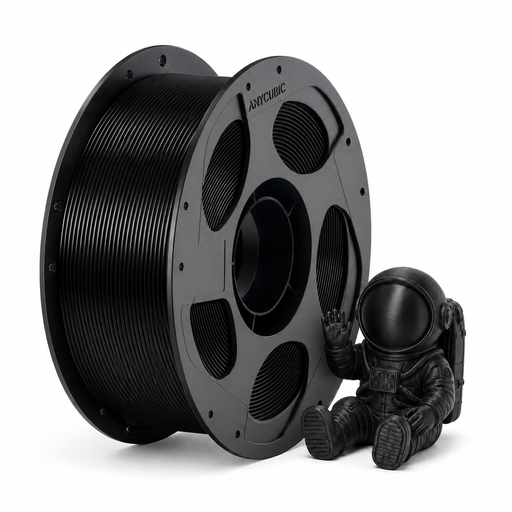
Why This Fits Their Persona: This PETG is a workhorse material for creating durable, functional parts that need to withstand more stress and heat than PLA. It's ideal for UK makers building practical items, from custom workshop jigs to replacement parts for household appliances.
It offers the strength of PETG without the brittleness of poorly made filaments. Good winding and packaging ensure it arrives dry and ready to print, avoiding moisture-related issues.
Excellent layer adhesion and low shrinkage lead to strong, dimensionally accurate functional prints. It is a reliable choice for parts that need to perform.
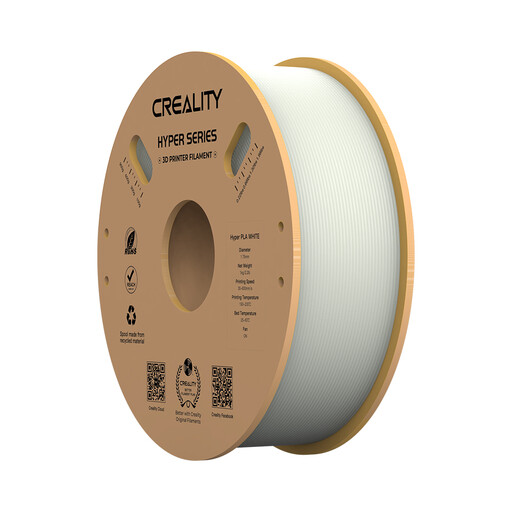
Why This Fits Their Persona: For users with modern, fast FDM printers, this filament is designed to keep up. It allows for rapid prototyping and production without sacrificing print quality, helping you get the most out of your high-performance machine.
This is a genuine high-speed material, not just a label. It directly counters the "high-speed hype" trap by being formulated for high flow and fast cooling. The stated +/- 0.02mm accuracy is essential for preventing jams at speed.
According to Creality, this filament supports print speeds up to 600mm/s. Its high fluidity and precise diameter ensure smooth extrusion even when the printer is moving quickly.
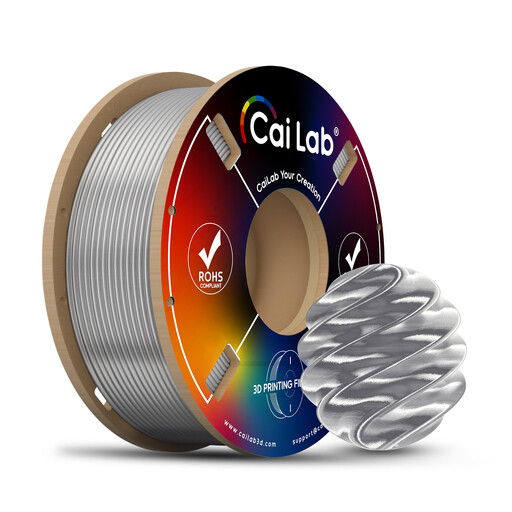
Why This Fits Their Persona: This silk PLA filament is for those who prioritise visual appeal. It's perfect for printing decorative objects, cosplay accessories or models that need a premium, metallic-like sheen without any painting or post-processing.
It delivers on its promise of a high-sheen finish, avoiding the dullness of standard PLA. It prints with the ease of regular PLA, sidestepping the difficulties that can come with other exotic filaments.
Produces a striking, glossy finish that effectively hides layer lines and gives prints a smooth, high-quality appearance straight off the build plate.
We have compiled a complete, real-time list of products that fully satisfy these strict selection criteria and UK safety regulations.
The primary difference lies in their physical properties. PLA is easier to print, more rigid and better for detailed, low-stress models. PETG is more flexible, durable and resistant to heat and chemicals, making it a better choice for functional parts that need to withstand mechanical stress.
Proper storage is essential to prevent filament from becoming brittle. Keep your spools in a sealed, airtight container or a resealable bag with the included desiccant pouches. For long-term storage in a damp environment like a garage, consider a dedicated dry box with a humidity sensor to maintain a low-moisture atmosphere.
While you can use high-speed filament on a standard printer at normal speeds, you will only see the benefit on a machine designed for high-speed printing. These printers have powerful hotends that can melt the plastic quickly enough and motion systems that can move the print head at high velocity. Using it on a standard printer won't cause harm, but you won't achieve the advertised speeds.