
24/7 Customer Support

Free returns

Same-day & Next-day Delivery

Quality Guaranteed

Unlock Your Welcome Offers: FREE Delivery | Up to 80% OFF | Free 30-day JoyPlus trial
Download the APP
3D wooden puzzles and building toys can become engaging craft projects, working mechanical models or attractive bookshelf decorations. However, product photos often hide the details that determine whether a kit feels satisfying or frustrating.
Before buying, look beyond the finished image. Check the recommended age, number of parts, assembly time, finished dimensions, power source and whether glue or tools are required. These details help you choose a suitable project rather than paying for a model that is too small, too delicate or difficult to complete.
Some DIY model kits are designed mainly for display. Others include gears, lights, moving parts or a music mechanism. A rotating feature may require manual winding, while a book nook kit may need batteries for its lighting.
Read the operating instructions before purchase. Confirm whether the model:
A mechanical wooden puzzle can provide more interaction than a static ornament, but it may also need careful assembly and maintenance.
Laser-cut pieces and illustrated instructions can make construction more accessible, but small components and tight-fitting sections still require patience. A kit marked for ages 14 and over is generally aimed at teens and adults, not young children.
Check the piece count and estimated assembly time. A model with 84 pieces and a three-hour assembly may suit a weekend hobby session, while a 294-piece marble run could be more appropriate for someone who enjoys a longer project.
Online product images can make a miniature model look much larger than it is. Measure your intended display area before ordering, particularly for a book nook, London landmark model or children’s art easel.
Allow additional clearance for:
Most wooden 3D puzzle kits use pre-cut plywood. Look for clear information about the material and whether pieces are designed to pop out without excessive force. Smooth, burr-free edges can make assembly more comfortable, although every kit still requires careful handling.
ABS building block sets use interlocking plastic parts rather than wood. They may be more suitable when you want a larger structural model, such as a landmark replica, and can offer a different building experience from wooden mechanical puzzles.
A kit that requires no glue or additional tools can be convenient for a tidy UK home workspace. Even so, some projects may benefit from a small amount of wax on moving joints, as specified by the manufacturer. Always follow the supplied manual rather than improvising with household adhesives.
For family projects, consider whether the build can be divided into manageable stages. Children’s educational construction toys should be selected according to the stated age range, supervision guidance and small-parts warning.
Small parts present a choking risk and should be kept away from infants and toddlers. For children’s products, review the stated age suitability and available safety information, including relevant EN71 references where supplied. The AIYAPLAY easel listing, for example, specifies EN71-1-2-3 and EN717-1 certification information.
For teenagers and adults, a “14+” label does not mean the model is suitable for unsupervised young children. Finished models can still contain small, sharp or fragile components. Store them securely, particularly in homes with children or pets.
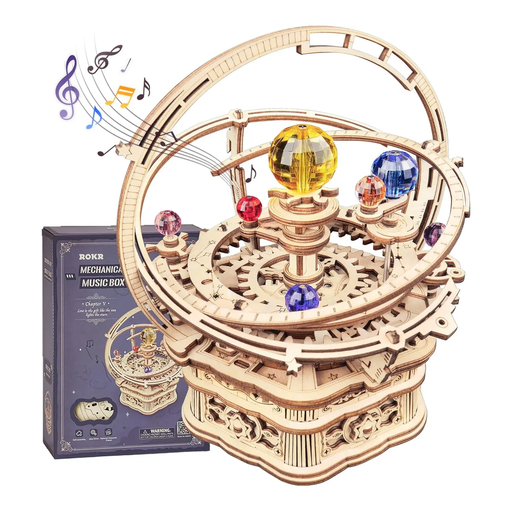
Why This Fits Their Persona: Its compact 13.5 x 13.5 x 15.5cm format and listed three-hour assembly time offer an approachable introduction to wooden 3D puzzle kits for a small footprint, shelf or dressing table.
The listing clearly states manual winding, no batteries and an age recommendation of 14 years and over, helping buyers understand what is included.
It combines a rotating mechanical music box with a solar-system-inspired display and weighs approximately 520g.
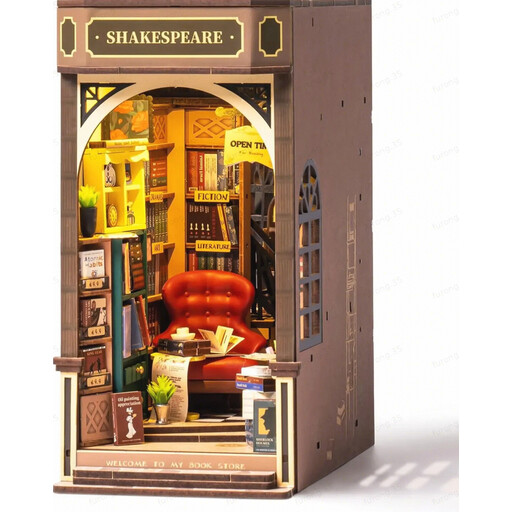
Why This Fits Their Persona: Designed for display between books, this miniature bookstore suits collectors and decorators who value detail, atmosphere and a finished bookshelf scene.
The product information identifies the assembled size, touch-sensitive lighting and requirement for two AAA batteries, which are not included.
The 11.4 x 19.5 x 21.8cm model includes wooden inserts, book dividers, lighting and customisable miniature elements.
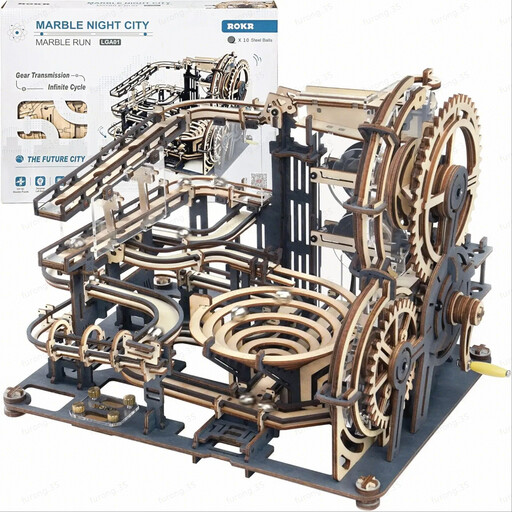
Why This Fits Their Persona: This larger mechanical build is suited to adults and teens who want a substantial project with a moving marble-run mechanism rather than a small static ornament.
Its listing states 294 pieces, approximately four to five hours of assembly, a 32.5 x 21.4 x 22.8cm finished size and no glue or additional tools.
The hand-operated crank runs marbles through spiral ramps, lifts, slides and switches once assembled.
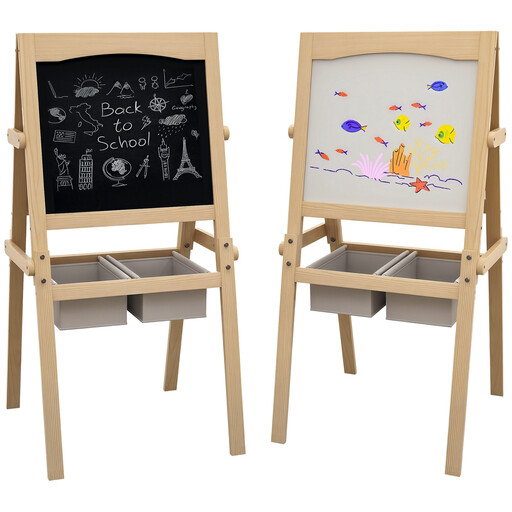
Why This Fits Their Persona: Families looking beyond model building can create a dedicated drawing and early-writing area for children aged 3 to 6, with space for two children to use it.
The age range, 109cm height, A-frame design and EN71 certification information are stated, while chalk, markers and erasers are identified as separate purchases.
It combines a chalkboard, whiteboard and five-metre paper roll with two storage baskets.
Choose a dry, well-lit workspace with enough room to sort parts. Keep the instruction booklet nearby and separate pieces into groups before starting. Do not force a component if it does not align; check the previous step for an incorrectly positioned section.
For finished wooden models:
A wooden music box puzzle or mechanical model may need gentle operation rather than repeated force. For battery-powered products, remove batteries during long-term storage where appropriate and follow the product instructions.
We have compiled a complete, real-time list of products that fully satisfy these strict selection criteria and UK safety regulations.
Many are recommended for ages 14 years and over because they contain small parts and may involve several hours of detailed assembly. Adult supervision is sensible for younger teens, particularly when the model includes fragile components, gears or lighting.
Not always. Several kits listed here are designed to assemble without glue or additional tools. However, always check the individual product description. Some mechanical joints may require a small amount of wax for smoother movement, while other DIY model kits may have different requirements.
Manual models such as hand-cranked projectors, marble runs and wind-up music boxes do not require mains electricity or batteries during normal operation. A lighted book nook uses batteries, so check the required type and whether they are included before purchase.