
24/7 Customer Support

Free returns

Same-day & Next-day Delivery

Quality Guaranteed

Unlock Your Welcome Offers: FREE Delivery | Up to 80% OFF | Free 30-day JoyPlus trial
Download the APP
A compact food waste container can make separating peelings, coffee grounds and leftovers much easier. However, the wrong 4.5L kitchen compost caddy may create more work than it saves. UK households should consider where the caddy will sit, how often it will be emptied and whether its liners are accepted by a local council collection scheme or home composting system.
A caddy that is too small may need emptying several times a day, particularly in a family kitchen. A larger container may hold more waste, but food scraps can sit for longer and become less pleasant to manage.
A 4.5-litre kitchen food waste bin offers a practical middle ground for many homes. It can hold daily peelings and plate scrapings while remaining compact enough for a worktop, cupboard or under-sink space. If your council requires frequent food-waste collections, check that the capacity suits your collection schedule.
“Compostable” does not automatically mean suitable for home composting or kerbside food-waste collections. Some products are designed for industrial composting, while others are made for suitable home compost conditions. Local councils can also have specific requirements about liner materials and certifications.
Before buying compostable food waste liners, check:
Addis compost liners are made from corn starch and supplied in rolls of 20. Their listed dimensions are approximately 18cm long, 24.5cm wide and 17.5cm high, making them suitable for Addis 4L kitchen and compost caddies. Composting results can vary according to moisture, temperature and the composting environment.
A worktop compost bin is handled frequently, so a smooth plastic surface, a usable handle and a manageable footprint can be more valuable than decorative features. Check whether the container can be wiped with a damp cloth and mild detergent, and whether the handle is positioned comfortably for carrying it outside.
The Addis 4.5L caddies measure approximately 18cm x 25cm x 19cm, depending on how the dimensions are listed. This compact size can work in flats and smaller kitchens, but measure your intended storage area before ordering.
For most households, capacity should match the amount of food waste produced between emptying trips. A busy family may prefer regular emptying, while a single-person household may value a smaller footprint more than additional volume.
Plastic is lightweight and practical for a reusable kitchen caddy. Look for a smooth, non-porous interior that is straightforward to wipe clean. Empty the caddy regularly and allow it to dry fully between uses. Avoid harsh abrasives if you want to protect the finish.
A reusable caddy can reduce the need to buy a new container repeatedly. Liners are optional, but they may help reduce residue and make transferring food scraps less messy.
A kitchen compost caddy is generally intended for food scraps such as:
It is not automatically suitable for garden waste, general rubbish or pet waste. For larger amounts of grass, leaves and plant trimmings, an outdoor home composting bin is more appropriate. Pet-waste bags should only be composted where the product instructions and local facilities permit it; do not flush them down the toilet.
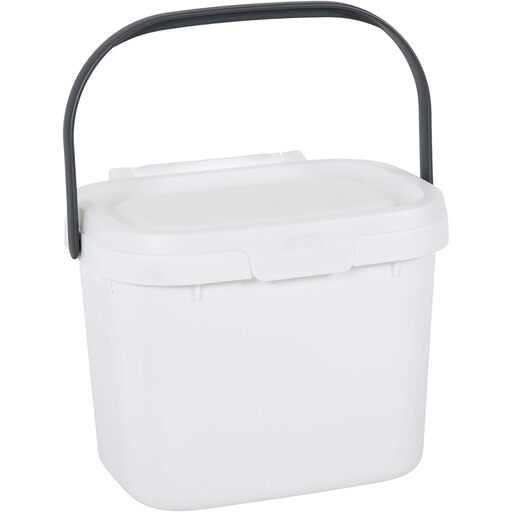
Why This Fits Their Persona: A straightforward choice for households starting food-waste separation, with a 4.5L capacity and a neutral finish that can sit on a worktop or under the sink.
The stated dimensions and capacity make it easier to check whether it will fit your available space before purchase.
4.5L capacity, durable plastic construction, wipe-clean care and an integrated carry handle.
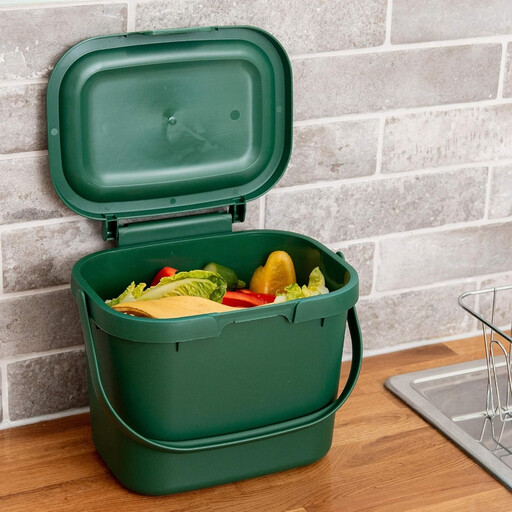
Why This Fits Their Persona: Suitable for shoppers who want everyday practicality with a softer colour that can remain visible in a modern or traditional kitchen.
It combines a compact footprint with a carry handle and wipe-clean plastic, rather than relying on appearance alone.
4.5L everyday capacity, compact dimensions and multi-purpose use as a cleaning or utility caddy.
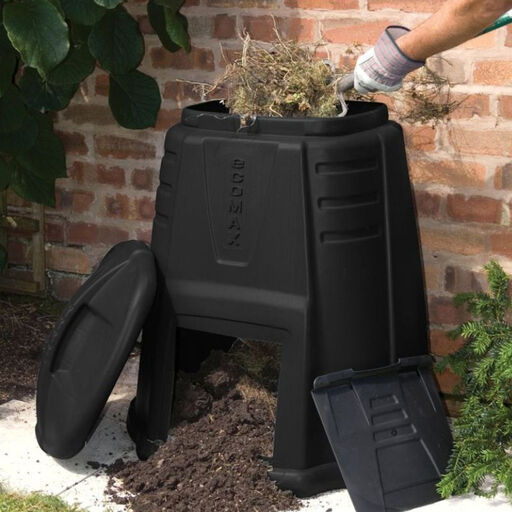
Why This Fits Their Persona: Gardeners producing regular volumes of kitchen and garden waste may need an outdoor compost bin rather than a small worktop container.
Its 220L capacity is clearly intended for outdoor composting, avoiding the mistake of overloading a small kitchen caddy with garden waste.
Recycled plastic construction, locking lid and lower access door for removing finished compost.
For households that prefer liners, Addis Compost Liners - Green are listed as corn-starch liners supplied in a 20-count roll. They are designed to fit Addis 4L caddies and can help reduce food residue inside the container.
Use liners only in accordance with the instructions, local council rules and the requirements of your composting system. Do not place conventional plastic bags in compost, and do not assume that a liner accepted by one council will be accepted by another.
We have compiled a complete, real-time list of products that fully satisfy these strict selection criteria and UK safety regulations.
It is suitable for many single-person, couple and family kitchens when emptied regularly. The right size depends on how much food waste your household produces and how often your council collection or outdoor composting routine takes place.
Empty it regularly, wipe it with mild detergent and a damp cloth, and let it dry completely. A correctly sized liner can also reduce residue. Avoid leaving wet food scraps in the caddy for extended periods.
Some food scraps can, but local composting guidance matters. Balance wet “green” material with dry “brown” material such as leaves or shredded cardboard, and follow accepted-material guidance. Meat, dairy and pet waste may require different handling depending on the composting method.