
24/7 Customer Support

Free returns

Same-day & Next-day Delivery

Quality Guaranteed

Unlock Your Welcome Offers: FREE Delivery | Up to 80% OFF | Free 30-day JoyPlus trial
Download the APP
As your little one starts showing signs of wanting to be on the move, a baby walker can seem like the perfect next step. The market is filled with options, especially the popular 4-in-1 baby walker models that promise to be a long-lasting investment. However, many parents find that these multi-functional products can sometimes fall short, leading to disappointment and wasted money.
As the Joybuy Product Recommendation Officer, my role is to help you see past the marketing claims. Before you make a decision, let's look at a few common purchasing traps and how to sidestep them.
To ensure you choose a product that is both safe and offers genuine value, focus on these non-negotiable features.
A key feature that separates a good walker from a great one is its range of adjustment. For a walker to be genuinely useful from 6 to 18 months, it must adapt.
A worthwhile multi-mode walker should transition between genuinely useful configurations. Analyse what each "mode" offers:
Safety should always be the primary consideration. Look for walkers made from durable, non-toxic materials like PP plastic. Key safety components to check for include:
Instead of a single "top" pick, we match products to different family needs and priorities. Here are a few options that align with the practical criteria we've discussed.
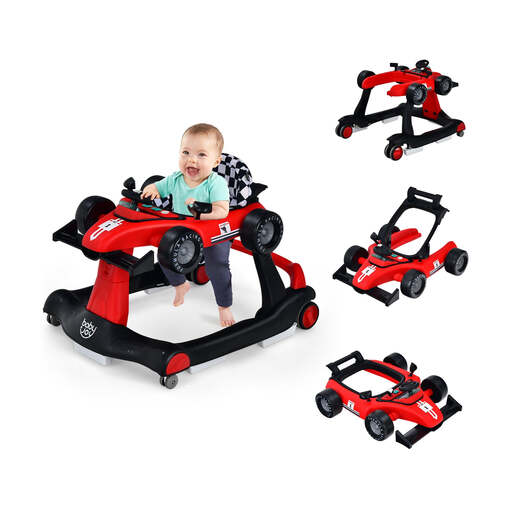
Why This Fits Their Persona: This is for the parent who wants a single, adaptable product to cover multiple developmental stages. Its foldable design is ideal for UK homes where space can be a premium, and its transformation from a seated walker to a push-along toy offers excellent long-term value.
It directly counters the "gimmicky modes" pitfall by offering four genuinely distinct and useful functions: a seated walker, a push-behind walker, a push car and a rolling toy car.
Features 3-level height adjustment and adjustable rear wheel speed, providing genuine longevity and safety customisation that many fixed-setting models lack.
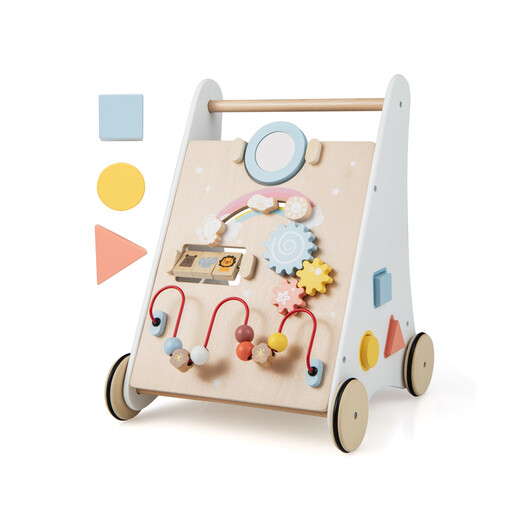
Why This Fits Their Persona: Ideal for families who prefer traditional wooden toys and want to focus on the sit-to-stand and push-along motion from the outset. It encourages independent movement without a seated phase, appealing to a Montessori-style approach to play.
It avoids the trap of over-hyped electronics by focusing on tactile, cognitive activities like a shape sorter, gears and a bead maze. This promotes fine motor skills alongside gross motor development.
The stable triangular structure and anti-slip rubber rings on the wheels offer excellent stability for early push-along practice on various floor types, from carpet to wood.
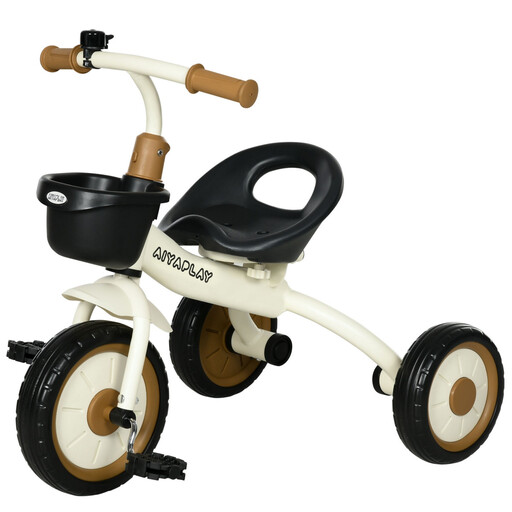
Why This Fits Their Persona: This is a great choice for children who have mastered walking and are ready for the next challenge (around 2 years old). It's for the parent planning ahead, investing in a toy that will build confidence, balance and coordination for years to come.
It sidesteps the "short lifespan" pitfall of many baby-specific items. With a recommended age of 2-5 years, this trike provides a much longer period of use than any walker.
The adjustable seat allows the trike to grow with your child, ensuring a comfortable fit. It actively prepares them for the skills needed to ride a two-wheeled bicycle later on.
We have compiled a complete, real-time list of products that fully satisfy these strict selection criteria and UK safety regulations.
Most manufacturers recommend their walkers for babies from 6 to 18 months. However, it is more important to go by your child's developmental stage rather than their age. For a seated walker, your baby should be able to hold their head up steadily and have good neck control. For a push-along or sit-to-stand walker, they should already be pulling themselves up to a standing position. Always check the specific product's guidelines.
This depends on the wheel design. Look for models with rubberised, non-slip rings on the wheels. These provide better grip and control on smooth surfaces like wood or laminate and move more easily over low-pile carpets. For homes with stairs, a walker with integrated anti-slip stair pads is an important safety feature to look for, as they are designed to stop the walker at the edge of a step.
Most modern foldable baby walkers are designed for convenience. They typically feature a button or latch that, when pressed or released, allows the frame to collapse into a much flatter profile. This compact size is ideal for sliding under a sofa, standing in a cupboard or placing in the boot of a car, making them a practical choice for many households.