
24/7 Customer Support

Free returns

Same-day & Next-day Delivery

Quality Guaranteed

Unlock Your Welcome Offers: FREE Delivery | Up to 80% OFF | Free 30-day JoyPlus trial
Download the APP
A 4-slice toaster can make busy mornings considerably easier, but capacity alone does not guarantee a suitable purchase. Families may need four slices at once, while couples might prefer independent controls so they can toast different shades. Bread size, worktop space, cleaning and safety features also make a noticeable difference.
If you are searching for the “best 4-slice toaster”, be cautious with rankings that focus only on appearance or the number of functions. A practical choice should match your bread habits, household size and available space.
A standard four-slot toaster may accommodate ordinary sliced bread but struggle with thick farmhouse slices, crumpets, bagels or artisan loaves. Check whether the appliance has wide slots, long slots, or both. Slot dimensions are often more useful than a generic “family toaster” label.
Defrost, reheat and cancel buttons are useful, but extra controls do not automatically mean better everyday performance. If you frequently freeze bread, a toaster with defrost and reheat functions can save time. If you regularly toast crumpets or small pieces, a toaster with high-lift function is more relevant than decorative controls.
Crumbs accumulate inside any toaster. A model without a removable crumb tray can be awkward to maintain and may allow debris to build up. Also check the appliance’s width, depth and cable arrangement before buying. A stylish kitchen toaster that leaves little clearance around hot surfaces may be unsuitable for a crowded worktop.
A four-slice model is useful for families, shared breakfasts and entertaining. However, some products use two independent pairs of slots, while others operate all four slices together. Independent controls let two people choose different browning levels or toast only two slices when required.
For smaller households, a 2-slice toaster may take less room and use less power for a small serving. The trade-off is that preparing four slices requires two cycles.
A wide-slot toaster is generally suitable for thicker bread, bagels, crumpets and muffins. A long-slot toaster uses fewer, longer openings and may handle larger slices or artisan loaves more conveniently. Some long-slot models are described as four-slice appliances because each slot accommodates two standard slices.
Measure your usual bread rather than relying on the product title. Also consider the toaster’s external dimensions: a long-slot model may be narrow from front to back but longer across the worktop.
An adjustable browning toaster gives you more control than a simple fixed cycle. Five to seven settings provide useful choice, although the numbered dial is not a universal shade guarantee between models.
A high-lift mechanism helps remove small items without reaching towards hot slots. Look for a clearly accessible cancel button, stable feet and cool-touch areas where specified. Always operate the toaster on a flat, heat-resistant surface with space around it, away from curtains, wall cupboards and water.
In the UK, check that the appliance is supplied for the appropriate mains supply and use it according to the manufacturer’s instructions. Never insert a metal utensil into a toaster, even when trying to release stuck bread. Unplug the appliance and allow it to cool before cleaning or moving it.
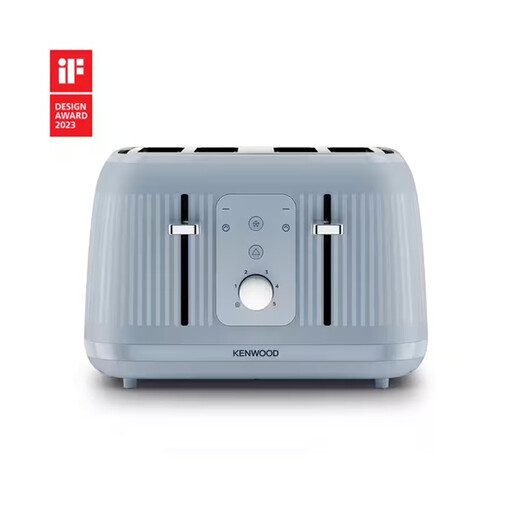
Why This Fits Their Persona: A straightforward family toaster for households that want four slices, useful controls and a manageable worktop design without moving into a more specialised format.
Its wide slots address thicker items, while the removable crumb tray avoids the maintenance problem found on less practical designs.
Four-slice capacity, five browning levels, defrost, reheat, cancel, high-lift eject and built-in cord storage.
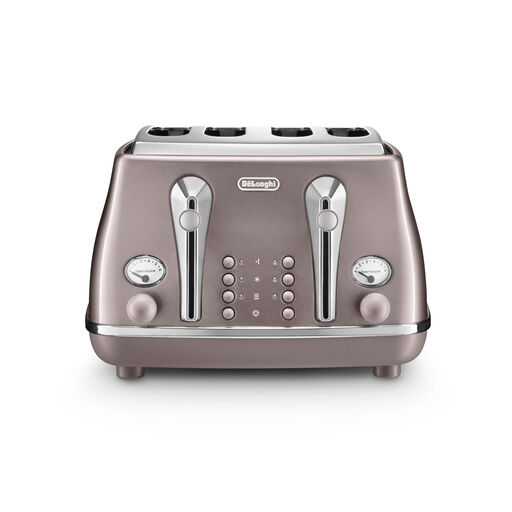
Why This Fits Their Persona: Suits shoppers who want a coordinated, design-led appliance with four-slice capacity and practical controls for regular breakfasts.
Extra-wide slots make the decorative finish more practical for thick bread and bagels, while dual crumb trays support routine cleaning.
Independent pairs, extra-wide slots, variable browning, defrost, reheat, cancel and high-lift position.
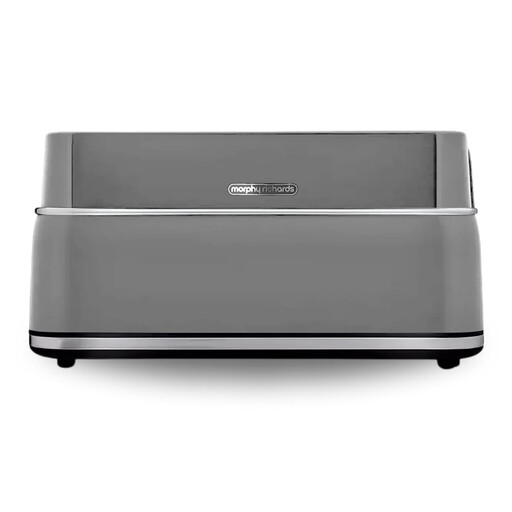
Why This Fits Their Persona: A suitable option for bread enthusiasts who regularly buy artisan loaves, larger slices or varied bread products and want a long-slot toaster.
The two long slots reduce the need to force oversized slices into standard openings, and defrost, reheat and cancel cover common daily use cases.
Two long slots, variable browning control, 1,800W power, high-lift lever, cool-touch housing and removable crumb trays.
We have compiled a complete, real-time list of products that fully satisfy these strict selection criteria and UK safety regulations.
It can be, particularly when both people want breakfast at the same time or prefer different browning levels. Independent pair controls are useful because they allow two slices to be toasted without necessarily operating all four slots. If worktop space is limited and servings are usually small, a 2-slice toaster may be more practical.
Running cost depends on the toaster’s wattage, cycle length and electricity tariff. A toaster rated at 1,800W uses 1.8 kilowatt-hours if operated continuously for one hour, but a normal cycle is only a few minutes. To reduce unnecessary use, select a model with independent controls when you only need two slices and avoid repeated cycles caused by unsuitable slot sizes or incorrect settings.
There is no universal lifespan because usage frequency, cleaning, storage and component quality vary. Regularly removing crumbs, avoiding overloading and following the manufacturer’s safety instructions can help maintain safe operation. Stop using a toaster if its cable, plug or casing is damaged, or if it shows signs of malfunction.