Home workers planning repeat lunches
If you keep soup in the cupboard for workdays, compare tin size and labelled servings before deciding how many lunches a pack will cover.


For a working-from-home lunch, choose tinned soup by the portion you will eat and the exact recipe, rather than assuming a 400g tin is one meal. A multipack is worth considering if you will use several tins and its ingredients suit you; for a more substantial lunch, check the serving information, protein and fibre on the label and plan accompaniments if needed.
If you keep soup in the cupboard for workdays, compare tin size and labelled servings before deciding how many lunches a pack will cover.
Milk, wheat, egg and celery appear in different soups in this selection. Check the exact flavour and its current label if an allergen or vegetarian suitability matters to you.
If soup needs to stand in for lunch rather than accompany it, check the serving count, protein and fibre on the recipe you choose. You can then decide whether to serve something alongside it.
Start with the portion you expect to eat, then check the recipe and label details that matter for your usual lunch.
| Priority | What to check | Your needs |
|---|---|---|
| Pack and portions | Compare tin weight, the number of tins and the labelled servings per can. Do not treat a multipack as one portion. | I want to know how many workday lunches the pack will cover and how much soup I will use at a time. |
| Salt | Read salt per 100g and per serving, noting the serving size used on the label. Account separately for anything served with the soup. | If soup is a regular lunch for me, I want to compare the amount of salt in the portion I actually eat. |
| Ingredients and allergens | Read the ingredient and allergen declarations for the exact flavour and pack. Check any vegetarian or vegan statement on that product. | A soup name alone will not tell me whether its ingredients fit my dietary requirements. |
| Lunch composition | Check the stated serving size, protein and fibre for the exact recipe. Consider what, if anything, you will serve alongside it. | I need to decide whether the portion of soup I plan to eat is enough for my lunch or whether to add something else. |
Joybuy labels its Heinz Cream of Tomato 400g cans in the four-pack as two servings each. Eating a different amount changes how the per-serving figures apply to your lunch.
Check the serving statement on your chosen tin and use the nutrition information for the portion you intend to eat.
Asda lists milk in Heinz Carrot & Coriander soup, while its Heinz Chicken Noodle listing identifies wheat, egg and celery. Ingredients differ by recipe.
Read the current ingredient and allergen declaration for each flavour, even when you have bought another soup from the same brand before.
Recipe details can change, so a saved listing may not describe the tin you are about to use.
Check the label on the actual can, particularly its ingredients, allergens, serving information and preparation instructions.
Tesco lists an own-brand Cream of Tomato Soup in a 400g tin.
Sainsbury's lists its own-brand Cream of Tomato Soup in a 400g tin.
Heinz appears in the supplied listings with tomato, vegetable and chicken-noodle soups, including a Cream of Tomato four-pack.
Tesco lists Campbell's Condensed Cream of Tomato Soup in a 295g tin.
Asda carries the Heinz Carrot & Coriander, Vegetable and Chicken Noodle soups referenced here.
M&S lists a 400g Cream of Tomato Soup marked suitable for vegetarians.
These Joybuy options cover several 400g recipes for a working-from-home lunch, including vegetable, mushroom, broth and meat-based soups. Compare the exact labels and the portion you plan to eat rather than assuming the recipes meet the same needs.
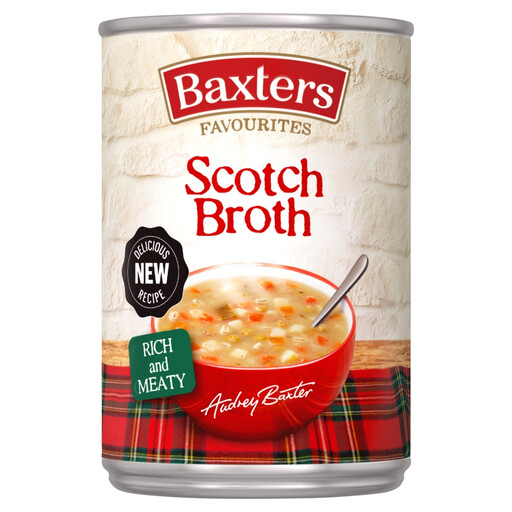 No image available
Consider this broth if you want barley, vegetables and meat in your lunch. It contains barley; check the current label if that allergen matters to you. The listing gives 1.91g salt per can, so use the portion you intend to eat when reviewing the nutrition information.
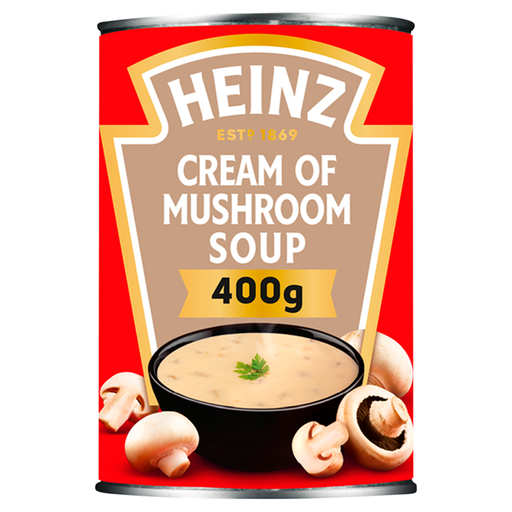 No image available
This mushroom soup is labelled suitable for vegetarians, and its 400g can is described as two servings. It contains milk and wheat; check the current label if either allergen is relevant to you.
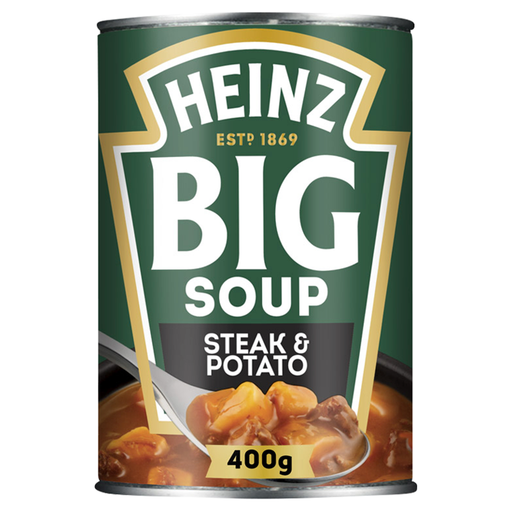 No image available
Choose this recipe if beef, potato and carrots appeal for lunch. Check the can's serving information and its protein, fibre and salt figures for the amount you plan to eat; follow the pack directions when heating it.
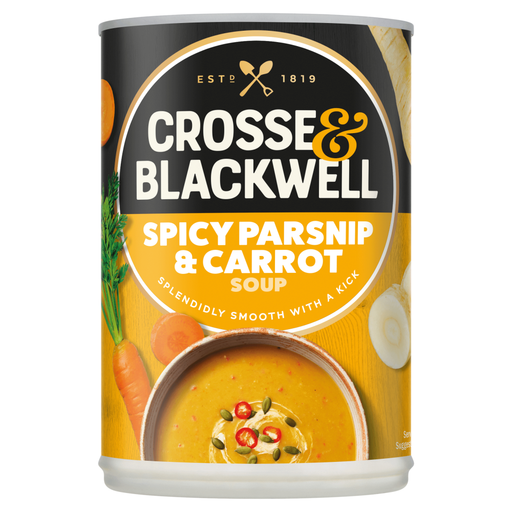 No image available
This 400g parsnip-and-carrot recipe offers a spiced vegetable flavour. It contains celery, milk and wheat; read the current label for allergens, serving information and heating directions.
 No image available
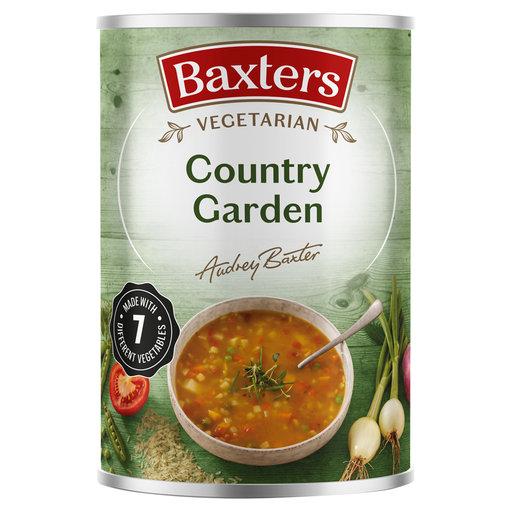
This vegetarian-labelled soup contains vegetables and cooked rice. It also contains milk, so check the current label if you need to avoid it, along with the serving and heating instructions for your lunch.
Not necessarily: Joybuy labels each 400g can in its Heinz Cream of Tomato four-pack as two 200g servings. Check the serving statement on the soup you choose, then decide whether to eat a different portion or serve something alongside it.
Compare salt on the same basis, such as per 100g, and then check the amount in the portion you will eat. Joybuy lists 0.50g salt per 100g for Heinz Cream of Tomato, while Asda lists 1.2g per half-can serving for its sampled Heinz Vegetable and Chicken Noodle soups; the different label bases should not be compared as though they were equal portions.
Read the allergen declaration for the exact flavour. Asda identifies milk in Heinz Carrot & Coriander and wheat, egg and celery in Heinz Chicken Noodle; M&S lists milk ingredients in its Cream of Tomato Soup. Check the can itself before eating because recipes can change.
Follow the instructions on that product's label. The sampled Heinz and M&S listings direct shoppers to transfer unused soup to a suitable container, refrigerate it and eat it within two days.