Large-family batch cooks
If you make sauces, chilli, soups or casseroles for several people, add up the tomato weight across your recipes before deciding how many 400g tins to buy. Plan for any opened tin you will not use straight away.


Choose 400g chopped tomatoes when a recipe calls for pieces of tomato, or finely chopped tomatoes when you want a more even sauce base without breaking down larger pieces. Whole plum tomatoes suit recipes where you can crush them during cooking; for a large family shop, work out the total tomato weight your planned meals require rather than assuming one tin will cover a meal.
The useful choice depends on how many meals you are planning and whether the recipe needs chopped, fine or whole tomatoes.
If you make sauces, chilli, soups or casseroles for several people, add up the tomato weight across your recipes before deciding how many 400g tins to buy. Plan for any opened tin you will not use straight away.
Individual tins let you buy the quantities and tomato formats needed for different meals without committing to a multipack. Check that the particular tin you plan to use is available.
Choose between chopped pieces, finely chopped tomato pulp and whole plum tomatoes according to the texture your recipe calls for and whether you are willing to crush the tomatoes yourself.
Start with the recipe’s required tomato weight and texture, then check the exact tin’s label and availability.
| Priority | What to check | Your needs |
|---|---|---|
| Meal quantity | Check the tomato weight in each recipe and the tin’s net weight. Napolina describes its 400g tin as approximately two 200g portions; Sainsbury’s labels its 400g tin as two servings. | I’m cooking for several people, so I need enough tomatoes for the planned meals rather than relying on one tin to serve everyone. |
| Tomato texture | Check whether the tin contains chopped tomatoes, finely chopped pulp or whole plum tomatoes. Consider whether the recipe allows time to crush or break down larger pieces. | For this sauce, I’d rather start with a fine texture; for another dish, I can crush whole plum tomatoes as they cook. |
| Ingredients and label | Read the ingredients and nutrition information on the exact tin, including any stated salt value per 100g. Check allergen information where it matters to your household. | I want to know what is in the particular tin I’m buying, rather than assuming every tomato product has the same ingredients. |
| Opened-tin storage | Follow the product’s instructions for transferring and refrigerating leftovers. The stated use-within period differs between the Sainsbury’s, Napolina and M&S products described here. | If a recipe uses only part of a tin, I need a plan for the remainder within that tin’s stated storage period. |
| Availability | Confirm stock for the specific single tin and your chosen store or delivery slot before planning a meal around it. | I’m buying ingredients for several meals and need to know whether the tomato format on my list can be added to the shop. |
Sainsbury’s describes its 400g tin as two servings, while Napolina describes approximately two 200g portions. The amount your meal needs depends on the recipe.
Add up the required tomato weight for each planned dish before choosing the number of tins.
A product can appear in a listing without being available for the shop you are placing.
Confirm availability for your store or delivery slot before relying on a particular tomato format for a meal.
The cited Sainsbury’s, Napolina and M&S product instructions say to transfer leftovers to a non-metallic container and refrigerate them. Their stated use-within periods are not identical.
Follow the instructions on your tin and plan when you will use the remainder.
These ranges offer different tomato formats; check the individual product rather than treating a brand name as a guarantee of texture or ingredients.
Tesco lists 400g Italian chopped tomatoes alongside finely chopped and organic options in its tinned-tomato range.
Sainsbury’s lists a 400g single tin of chopped tomatoes and a separate 4 × 400g multipack, both described as chopped tomatoes in tomato juice.
Napolina’s 400g product is a branded chopped-tomato tin; Tesco’s product page describes chopped tomatoes in tomato juice.
Mutti Polpa is a 400g finely chopped tomato-and-pulp format.
M&S has 400g Italian chopped tomatoes and an organic Italian plum-tomato option.
These 400g single tins cover two preparation choices: whole plum tomatoes to crush or leave intact, and chopped tomatoes for recipes calling for a chopped base.
 No image available
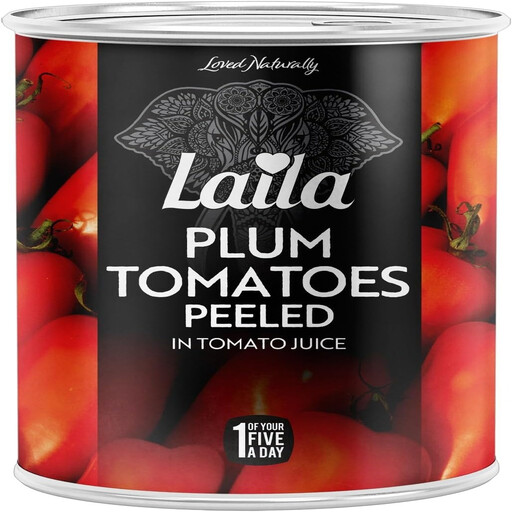
Choose this 400g plum-tomato tin for a recipe in which you can use whole tomatoes or crush them during cooking. If you need a fine sauce base, allow for that extra preparation; check the tin’s label for ingredients and opened-tin storage instructions.
 No image available
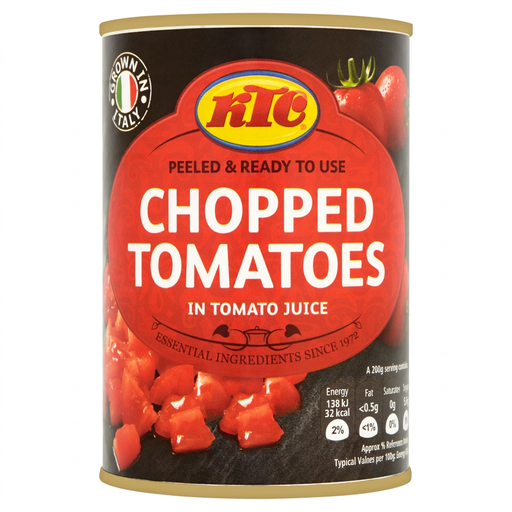
This 400g chopped-tomato tin fits a recipe that calls for a chopped base without first crushing whole tomatoes. Check its label for ingredients, nutrition information and instructions for storing any remainder.
Check the particular tin and your recipe rather than assuming 400g will serve a large family. Napolina describes its 400g tin as approximately two 200g portions, and Sainsbury’s labels its 400g chopped-tomato tin as two servings; a meal may need more than one tin.
Choose chopped tomatoes when the recipe calls for chopped pieces, finely chopped tomato pulp when you want a more even starting texture, or whole plum tomatoes when you can crush or break them down during cooking.
Follow the instructions on the exact tin: the cited Sainsbury’s, Napolina and M&S products say to transfer leftovers to a non-metallic container and refrigerate them. Their use-within periods differ: the cited Sainsbury’s, Napolina and M&S organic products state two days, while the M&S standard chopped product states three days.
Yes, particularly if ingredients, allergens or salt content affect your choice. UK food-labelling guidance from the Department for Environment, Food & Rural Affairs and the Food Standards Agency covers information including ingredients, allergens, net quantity and date marking; read the label on the tin you are buying.