
24/7 Customer Support

Free returns

Same-day & Next-day Delivery

Quality Guaranteed

Unlock Your Welcome Offers: FREE Delivery | Up to 80% OFF | Free 30-day JoyPlus trial
Download the APP
A 4K action camera can record sharp, detailed footage in a compact body, but the headline resolution is only one part of the buying decision. UK shoppers often discover that a camera advertised as “4K” may have limited frame rates, short battery life or waterproofing that only applies when a separate case is fitted.
The right choice depends on where and how you will use it: cycling around the UK, skiing abroad, filming underwater, creating YouTube videos or recording family trips.
Check the frame rate alongside the resolution. 4K/30fps is suitable for standard travel and everyday footage, while 4K/60fps can look smoother when recording cycling, motorcycling or fast-moving subjects. Some cameras offer 4K/120fps or higher, but these modes may be restricted to slow motion, require more storage and consume more battery.
For example, the Osmo Pocket 4P supports 4K/240fps in slow-motion mode only, rather than as a standard recording setting. Reading the specification in full helps prevent disappointment after purchase.
Water resistance varies significantly. Some cameras can be used without a case at a stated depth, while others require a waterproof housing. The SJCAM C300, for example, is rated to 30 metres with its included waterproof case, whereas the GoPro HERO is specified as waterproof to 10 metres without extra housing.
Always check that ports are closed, inspect case seals and rinse equipment with fresh water after saltwater use. A waterproof camera is not automatically suitable for prolonged diving, high-pressure water or damaged housing seals.
A bundle may include mounts, batteries or a memory card, but check whether the advertised battery time applies to the camera alone or to an auxiliary battery handle. Also budget for high-speed microSD storage, spare batteries, a charging case and replacement waterproof housings where needed.
A 4K file can be large, particularly when recording at high frame rates. Confirm the supported card capacity and speed rating before buying.
For most travellers and vloggers, 4K at 30fps provides a practical balance between image detail, storage use and battery consumption. A 4K camera with slow motion is more suitable for skiing, skateboarding, water sports and action sequences.
The DJI Osmo Action 4 Adventure Combo records 4K at up to 120fps, while the SJCAM SJ10 Pro supports 4K at 60fps and 1080p at 120fps. Do not assume that a higher frame rate is available in every mode; check whether electronic stabilisation, HDR or other features are disabled at the selected setting.
An action camera with stabilisation is important for handlebars, helmets and body mounts. Electronic image stabilisation, such as 6-axis gyro systems, can reduce visible shake during movement. Mechanical 3-axis stabilisation, found on compact gimbal cameras such as the DJI Osmo Pocket 3, physically controls the camera movement and is designed for smoother handheld vlogging.
For cycling and motorcycling, secure the mount carefully and consider a safety tether. Do not adjust the camera while riding or driving.
Compare the stated recording time at a named resolution rather than relying on “long battery life” wording. The DJI Osmo Action 6 lists up to four hours under normal conditions, while the SJCAM C300 lists up to 460 minutes when used with its handle and auxiliary battery.
Cold conditions can reduce battery performance, which matters for skiing and winter travel. Carry charged spare batteries and keep them protected from extreme temperatures. For storage, a camera supporting 128GB, 256GB or 512GB may be more practical for extended trips, but use a compatible Class 10/U3 microSD card where required.
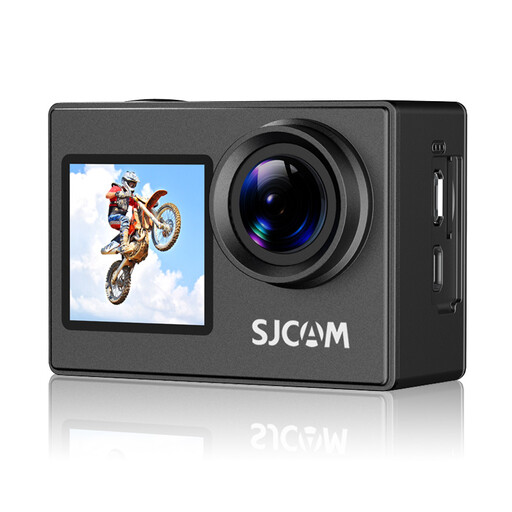
Why This Fits Their Persona: A compact option for students, families and first-time users who want travel, cycling or holiday footage without a large camera setup.
The listing states that the 30-metre waterproof rating applies with the included housing, making the protection requirement clear.
Dual screens, 4K video, 170° wide-angle lens, EIS and an included 64GB memory card.
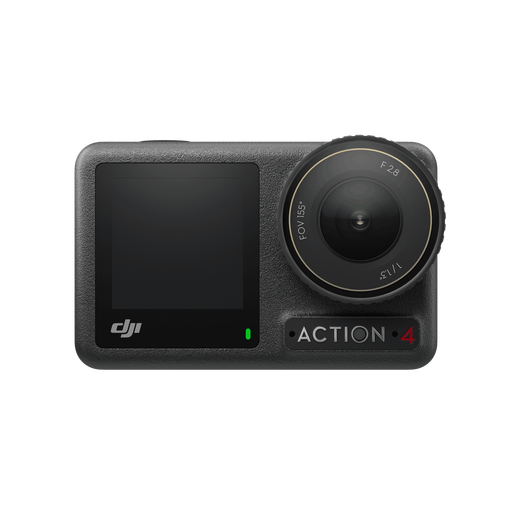
Why This Fits Their Persona: Suitable for travellers, creators and outdoor users who need stabilised footage, high frame rates and extra batteries for full-day activities.
Its specifications state both the 18-metre bare-camera waterproof depth and the included three-battery adventure configuration.
4K/120fps recording, 1/1.3-inch sensor, 155° field of view and direct DJI microphone transmitter connectivity.
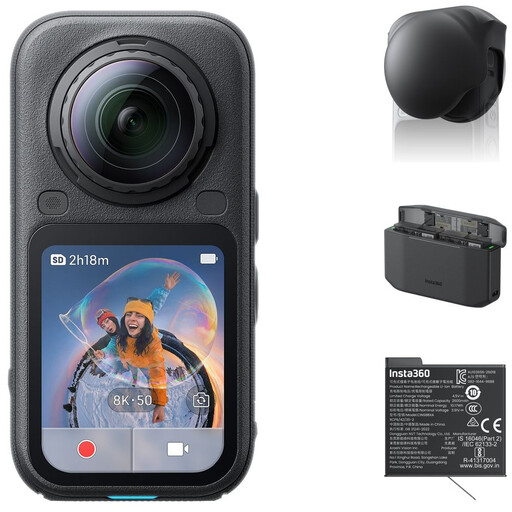
Why This Fits Their Persona: Designed for cyclists, motorcyclists and creators who prefer to record first and choose the viewing angle later.
Its 360-degree format reduces the need to frame every moment during fast movement, while replaceable lenses help address accidental lens damage.
Dual 1/1.1-inch sensors, 8K/50fps 360° video, 5K traditional action-camera mode and up to 140 minutes at 8K/30fps.
We have compiled a complete, real-time list of products that fully satisfy these strict selection criteria and UK safety regulations.
Yes, provided it offers reliable stabilisation, usable audio options and a screen that helps with framing. A compact gimbal vlog camera such as the DJI Osmo Pocket 3 may be more suitable for indoor talking-head videos, while an action camera is more practical outdoors and in wet conditions.
The exact amount depends on bitrate, frame rate and encoding. High-frame-rate 4K and 360-degree video use more space than standard 4K/30fps footage. A compatible high-speed microSD card, regular file transfers and spare storage are sensible for longer holidays.
No. Stabilisation reduces movement during handheld or mounted recording, but it cannot prevent a loose mount, severe vibration or poor positioning. Secure the camera properly, use a safety tether for fast activities and select a tripod or handle when recording stationary scenes.