Colour-critical reference users
If you compare artwork with client files, photographs or print-oriented assets, look for colour-space and calibration information that fits your work, rather than relying on the 4K label.


Choose a 4K monitor whose stated colour coverage and modes fit the reference artwork you use; resolution alone does not establish colour accuracy. For a standing desk, check whether its stand or a compatible arm can put the screen at a workable height and distance. A 27-inch screen takes up less room, while a 31.5- or 32-inch screen gives you a physically larger reference view if your desk has space for it.
If you compare artwork with client files, photographs or print-oriented assets, look for colour-space and calibration information that fits your work, rather than relying on the 4K label.
Your screen needs to fit at a usable height and distance when you stand. Stand travel, desk depth and mounting options can therefore matter as much as panel size.
If you want video, peripherals and laptop charging through one monitor connection, check both the monitor's USB-C or Thunderbolt capabilities and your laptop's compatible video output and charging needs.
Start with the artwork's intended colour space, then measure the screen position you can achieve at the standing desk. Check laptop connections and screen size against the way you arrange your references.
| Concern | What to check | Who this matters to |
|---|---|---|
| Colour fidelity | Match the stated gamut and selectable mode to your artwork's colour space; check the exact model's calibration documentation. | If I must judge artwork against a supplied colour target, I need to know which display mode and calibration information apply. Around 36% of consumers put colour fit first. |
| Standing-desk fit | Compare your standing eye height and desk depth with the stand's adjustment range and screen dimensions; check arm, monitor and desk compatibility if mounting. | When I stand, the screen must remain at a workable height and distance without taking over the desk. Standing-desk fit comes first for around 29% of consumers. |
| Laptop connection | Check the laptop's video-output and charging requirements against the monitor's USB-C or Thunderbolt functions and cable. | If my laptop is the centre of the workstation, I want its display connection and charging arrangement to work together. Around 21% of consumers prioritise that connection. |
| Size and layout | Compare 27-inch and 31.5- or 32-inch screen dimensions with your available space and preferred artwork layout. | I may prefer a compact screen, or need a larger physical view for references beside my tools. For around 14% of consumers, that size-and-layout choice is the main concern. |
Resolution tells you how many pixels the screen has, not whether its colour mode suits your reference files. The cited BenQ and ASUS models state different gamut and calibration characteristics.
Identify the artwork's intended colour space, then check the exact monitor's coverage, available modes and calibration documentation.
Ongoing colour verification may call for a compatible calibration device or a calibration service.
BenQ states 110 mm of height adjustment for the PD2706U and 150 mm for the PD3225U; Dell states 150 mm for the U3225QE. None of those travel measurements alone tells you where the screen will sit relative to your eyes.
Measure your desk and standing eye height before buying. If you plan to use an arm, check its load rating, the monitor's mounting pattern and the desk's mounting requirements.
Achieving the intended position may require a compatible arm or a different desk layout.
A USB-C connector alone does not establish compatible video output and enough charging power for your laptop.
Check the laptop's port capabilities and charging requirement against the exact monitor's video input, power delivery and required cable.
You may still need a separate charger, dock, cable or adapter if those requirements do not match.
A 31.5- or 32-inch screen gives artwork a larger physical display area but also occupies more desk space. The Health and Safety Executive advises placing the screen about an arm's length away.
Check the monitor's dimensions and stand footprint against your desk. A 27-inch option may fit better if the larger screen would sit too close for your setup.
The cited DesignVue and Creative Pro models offer 27-inch and 31.5-inch 4K options for buyers comparing colour specifications and standing-desk placement.
The cited UltraSharp U3225QE is a 31.5-inch 4K hub-monitor option for a laptop-centred desk.
The cited PA279CRV is a 27-inch 4K option for workflows that call for stated Adobe RGB or DCI-P3 coverage.
These 27-inch and larger 4K monitors offer different screen sizes and panel types for displaying reference artwork. Compare each one's stated features with your colour workflow, available desk space and standing screen position; a product title alone cannot establish calibration suitability.
 No image available
Consider this larger screen if you have room to position a 32-inch reference display at a workable distance. Its title identifies a 4K IPS Mini LED panel and Thunderbolt 3; check the colour modes and calibration documentation for your workflow, and measure the height you need at the desk.
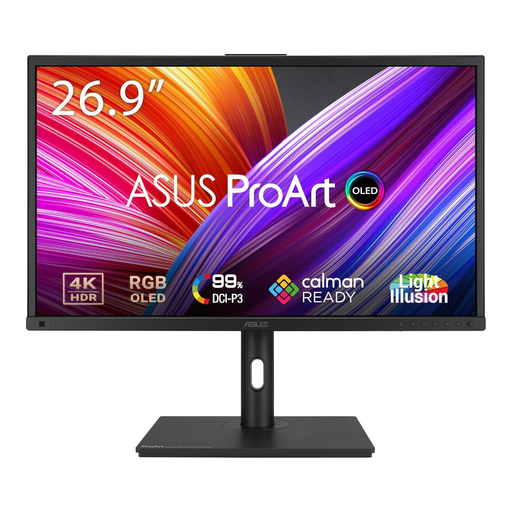 No image available
The 27-inch format may suit a desk where a larger reference screen would be difficult to position. Its title identifies a 4K OLED panel; check the calibration documentation and colour modes needed for your artwork, as well as the screen height achievable at your desk.
 No image available
Consider the larger display only if a curved screen suits the way you judge reference artwork. The title states 3840 × 2160 resolution, a 165 Hz refresh rate and Type-C 65 W; check the basis of its colour-accuracy claim and whether its connections meet your laptop's needs.
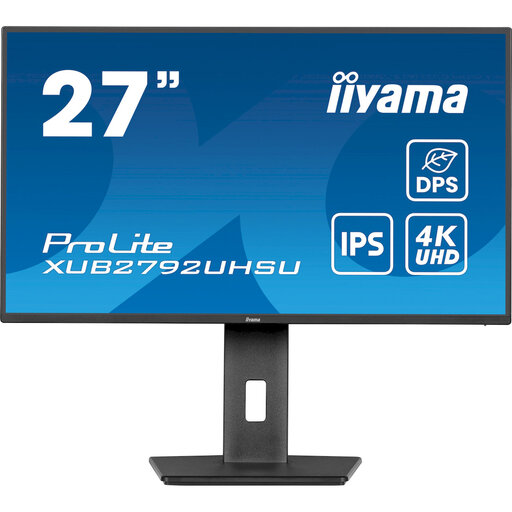 No image available
This 27-inch 4K model is worth comparing when desk space makes a compact reference screen preferable. If colour-critical matching or laptop charging matters, check the exact model's calibration information and USB-C power-delivery capability before deciding.
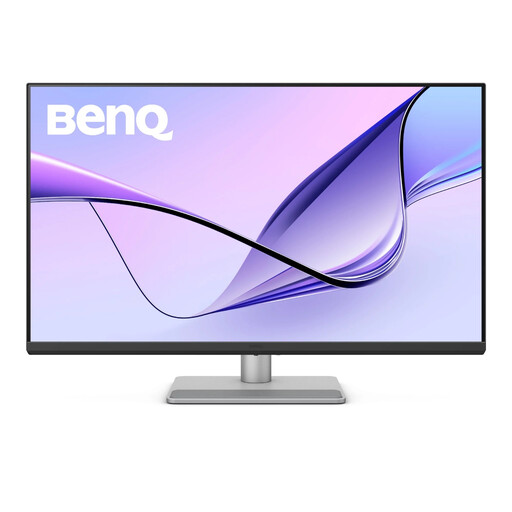 No image available
This larger, height-adjustable USB-C monitor may suit a desk with space for a 32-inch reference view. Check whether its glossy screen treatment suits your lighting, and confirm the colour modes, calibration documentation and mounting compatibility your setup requires.
No. A 4K pixel grid does not tell you whether the monitor's colour coverage, selected mode or calibration suits the artwork. Check those details against the files' intended colour space and your colour-managed workflow.
Choose by the physical reference size you need and the space available to position the screen. A 27-inch 4K monitor is more compact; a 31.5- or 32-inch 4K monitor gives a larger physical view, provided you can maintain a workable distance and height.
The Health and Safety Executive advises placing the top of the screen at eye level and the screen about an arm's length away. Measure your standing position before buying, and check the stand or a compatible arm against those measurements.
If consistent colour matters over time, reassess the display's calibration and follow the process supported for your exact model. ASUS notes that wide-gamut displays can develop colour deviation over time; check monitor and calibration-tool compatibility before planning that workflow.