
24/7 Customer Support

Free returns

Same-day & Next-day Delivery

Quality Guaranteed

Unlock Your Welcome Offers: FREE Delivery | Up to 80% OFF | Free 30-day JoyPlus trial
Download the APP
Choosing among 4K compact cameras for vlogging and action photography can be harder than comparing resolution figures. A camera may advertise 4K video yet still produce shaky footage, poor sound or short recording sessions. For students, travellers, families and first-time creators, the right choice depends on how and where the camera will be used.
By the Joybuy Product Recommendation Officer
4K describes the image resolution, not the quality of the whole recording. Check the frame rate, stabilisation method, sensor size and lens angle as well. A camera recording 4K at 30fps may suit talking-head videos, while 4K at 60fps or higher is more useful for fast movement and slow-motion editing.
Also check whether a quoted high frame rate is available in standard video mode. Some models support 4K/240fps only for slow motion, rather than normal continuous recording.
Viewers may tolerate a slightly imperfect image, but muffled speech and wind noise can make a vlog difficult to watch. Built-in microphones are convenient for casual clips, but creators filming outdoors should look for microphone connectivity, wind protection or a compatible external audio system.
A compact camera with image stabilisation but weak sound may require extra accessories, increasing the total cost.
A pocket gimbal camera, compact video camera or travel camera is not automatically suitable for rain, swimming or water sports. Some action cameras are waterproof without a case, while others need the supplied housing. Check the exact depth rating and whether every port cover must be closed before use.
For UK coastal trips, rinse equipment with clean water after exposure to saltwater and allow it to dry before charging.
For YouTube, school projects and social content, 4K recording provides useful detail and allows some cropping during editing. However, 4K files use more storage and battery power than 1080p files.
Before buying, confirm:
Use a compatible U3 or V30-rated microSD card where required for high-bitrate video. A slower card can cause recording interruptions or file errors.
For handheld walking footage, look for electronic image stabilisation (EIS), optical stabilisation or a three-axis mechanical gimbal. EIS is common in a 4K action camera and works well for cycling, hiking and vehicle-mounted clips, although it may crop the image.
A pocket gimbal camera physically moves the camera to counter unwanted motion. This can produce a different style of smooth footage, but it is usually less suitable for rain, sand and impacts unless the model is specifically protected.
A larger sensor can help with low-light detail and background separation, but it may increase the camera’s size and price. Wide-angle lenses are useful for selfie videos, interiors and outdoor scenes, while a zoom lens offers more flexibility for portraits and distant subjects.
Also consider the screen. A rotatable or vari-angle touchscreen helps solo vloggers check framing, while a front-facing display is practical for action recording and group shots.
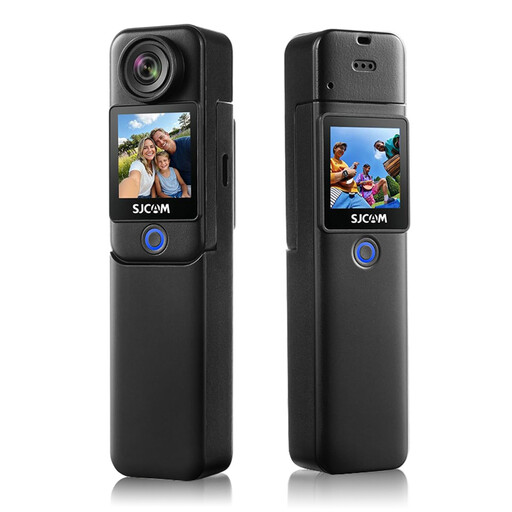
Why This Fits Their Persona: A practical option for students, families and first-time vloggers who want one compact camera for school projects, trips and casual outdoor clips.
The listed specification includes 4K/30fps, six-axis EIS, a 64GB card gift and a waterproof case rated to 30m.
Includes dual-band Wi-Fi, a 1.3-inch touchscreen and an auxiliary battery handle for extended recording.
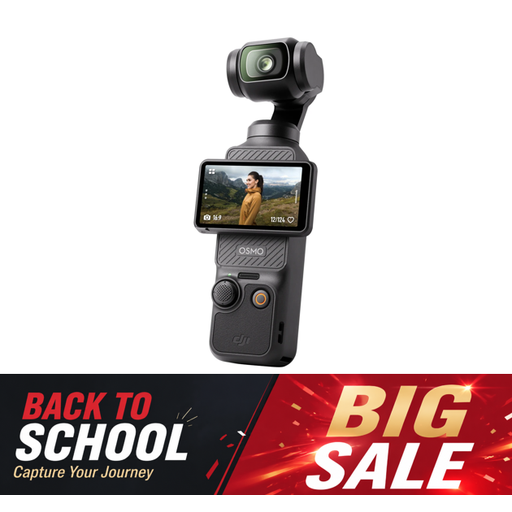
Why This Fits Their Persona: Suits creators who prioritise smooth handheld footage, portrait framing and a compact setup for travel or YouTube.
Its listed 3-axis mechanical stabilisation addresses walking shake, while stereo recording and direct support for two compatible transmitters address audio requirements.
The 1-inch CMOS sensor records 4K/120fps, and the 2-inch screen rotates for horizontal or vertical shooting.

Why This Fits Their Persona: Designed around sports, cycling, hiking and outdoor adventures where durability, mounting options and battery capacity matter.
The Adventure Combo includes three batteries, while the variable aperture and cold-resistant design are specified for changing outdoor conditions.
The listed features include a square 1/1.1-inch sensor, 4K recording and direct connection for two compatible microphone transmitters.
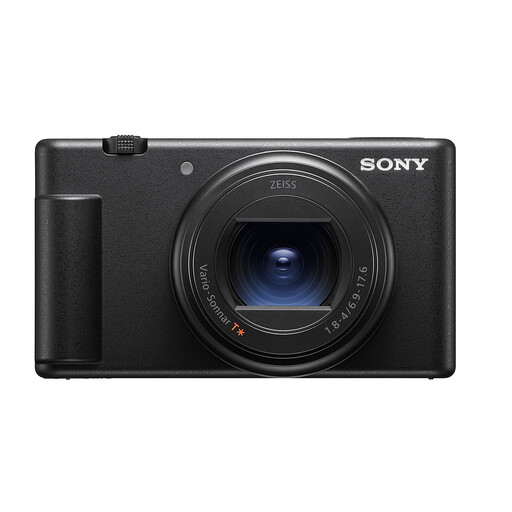
Why This Fits Their Persona: A useful match for travellers who want both still photography and 4K video in a small body, without carrying interchangeable lenses.
Its 18–50mm equivalent zoom range offers more framing flexibility than a fixed wide-angle action camera. It is not water-resistant, so wet-weather use requires care.
The 1-inch 20.1MP sensor, RAW capture, built-in ND filter and smartphone transfer support mixed photo and video use.
We have compiled a complete, real-time list of products that fully satisfy these strict selection criteria and UK safety regulations.
Yes, provided the camera also offers dependable stabilisation, usable audio and a practical way to transfer files. A rotatable screen and subject tracking can make solo filming easier, while a microphone input or transmitter connection helps improve speech quality.
Lifespan depends on battery care, heat exposure, storage conditions and physical wear. Avoid leaving lithium-ion batteries in direct sunlight or extreme temperatures. Keep lenses clean, protect gimbal mechanisms from impacts and replace worn batteries or damaged waterproof seals when necessary.
The ongoing costs usually include memory cards, spare batteries, mounts and possible protective cases. Higher frame rates and 4K recording use more storage, so budget for additional cards and backup space. A bundle containing batteries, mounts or a memory card may reduce the need for separate purchases, but check exactly what is included before ordering.