
24/7 Customer Support

Free returns

Same-day & Next-day Delivery

Quality Guaranteed

Unlock Your Welcome Offers: FREE Delivery | Up to 80% OFF | Free 30-day JoyPlus trial
Download the APP
As a Joybuy Product Recommendation Officer, my role is to help you navigate the crowded market of car technology. When it comes to choosing a 4K dash cam front and rear, the sheer number of options and technical jargon can be overwhelming. Many UK drivers invest in a device for peace of mind, only to find it fails them when it matters most.
Before you make a decision, it's crucial to understand the common pitfalls. Many products look great on paper but have hidden flaws that render them useless for providing clear evidence after an incident. Let's look at the main traps to avoid.
To ensure your investment is worthwhile, focus on these core technical specifications. They are the true indicators of a reliable and effective car camera front and rear.
The goal of a 4K dash cam is clarity. This is achieved not just by a 3840x2160 pixel count, but by the quality of the image sensor. Look for models that specify a high-quality sensor, such as the Sony STARVIS series. These sensors are designed for surveillance applications and excel at capturing clear, detailed footage in a wide range of lighting conditions. A quality sensor is the foundation of effective dash cam with night vision, ensuring number plates and road signs are legible after dark.
For a device that lives in your car, thermal durability is paramount. Supercapacitors are the superior choice for powering a dash cam. Unlike traditional lithium-ion batteries, they are built to withstand extreme temperatures (from roughly -20°C to 70°C) without degrading or posing a safety risk. This makes them far more reliable for consistent operation and essential for any car security camera that uses a 24-hour parking mode.
In the event of an insurance claim or dispute, irrefutable evidence is key. A dash cam with GPS automatically embeds your vehicle's speed, location and the time of recording into the video file. This data provides critical context and credibility. Furthermore, look for models with 5GHz WiFi capability. This allows for significantly faster video file transfers to your smartphone, enabling you to quickly review, save and share footage without the long waits associated with older 2.4GHz connections.
Based on these practical criteria, we've matched several dash cam models to the needs of different UK drivers.
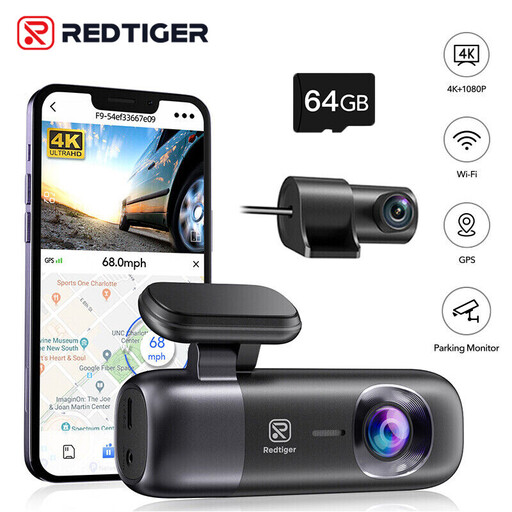
Why This Fits Their Persona: Ideal for UK commuters who need a reliable, no-fuss dual camera system. It provides essential front and rear coverage for daily drives on motorways and city streets, offering solid evidence for insurance purposes without an overwhelming number of features.
This model provides true 4K front recording for clear detail and includes built-in WiFi and GPS, avoiding the pitfalls of poor image quality and lack of essential evidence-logging features.
A complete package that includes a 32GB card, getting you started straight out of the box. Its compact design is discreet and won't obstruct the driver's view.
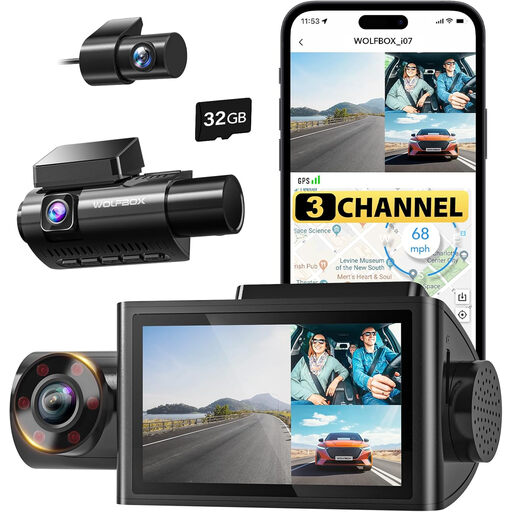
Why This Fits Their Persona: For professional drivers, ride-share operators or families wanting to monitor passengers, a 3 channel dash cam is essential. This unit records the front, rear and interior of the car simultaneously, providing comprehensive protection and accountability.
It offers a high-resolution 4K front camera combined with an interior-facing camera equipped with IR night vision, ensuring clear footage inside the cabin even in complete darkness, a common failing of lesser models.
The triple-channel recording (1440P+1080P+1080P) provides complete situational awareness. Built-in GPS and WiFi ensure all evidentiary needs are met efficiently.
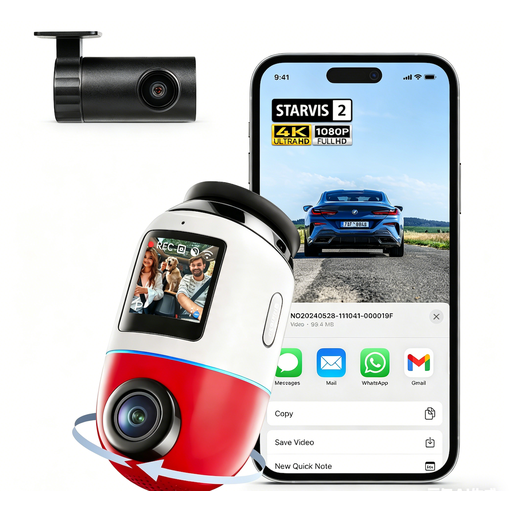
Why This Fits Their Persona: For the driver who wants cutting-edge technology, this model stands out. Its unique 360° rotating view eliminates blind spots, and the use of a premium Sony STARVIS 2 sensor ensures exceptional image quality, satisfying the demand for high performance.
It sidesteps the "fake 4K" trap by using one of the newest Sony sensors for true 4K clarity and superior HDR night vision. It also features advanced AI motion detection for a more intelligent and reliable parking mode.
The motorised 360° lens provides unparalleled coverage. It is also 4G LTE ready (with an optional kit), allowing for remote viewing and cloud features, and uses fast 5GHz WiFi 6 for rapid downloads.
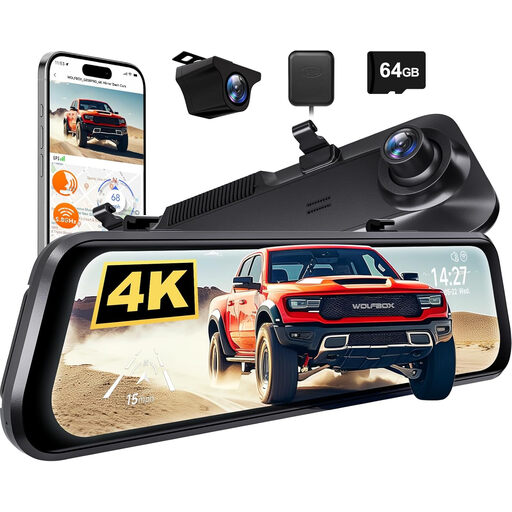
Why This Fits Their Persona: For drivers who prefer a clean, factory-look installation, a mirror dash cam is an excellent choice. This model replaces the standard rearview mirror with a large 12-inch touchscreen display, providing a wide, unobstructed rear view and a high-tech feel.
Unlike basic mirror cams, this unit offers true 4K front recording and fast 5.8GHz WiFi, ensuring you don't sacrifice performance for aesthetics. It also includes advanced driver-assistance systems (ADAS) for added safety.
The expansive 12-inch screen provides a much wider field of view than a traditional mirror, reducing blind spots. The touch interface is intuitive for easy playback and settings adjustment.
We have compiled a complete, real-time list of products that fully satisfy these strict selection criteria and UK safety regulations.
While many dash cams can be self-installed using a 12V cigarette lighter socket for driving-only recording, utilising the 24-hour parking mode feature almost always requires a hardwire kit. This kit connects directly to your car's fuse box. If you are not comfortable working with your vehicle's electrical system, professional installation is highly recommended to ensure the feature works correctly and to prevent any risk of draining your car battery.
A properly installed dual dash cam 4K system will not drain your battery. Hardwire kits designed for parking mode include a low-voltage cut-off feature. This intelligent function monitors your car battery's voltage and automatically shuts off the dash cam if the voltage drops below a preset level, ensuring you always have enough power to start your engine.
The storage capacity depends on the video bitrate. For a typical 4K dash cam front and rear system, a 64GB memory card can generally store between 4 to 6 hours of continuous footage from both cameras. All modern dash cams feature loop recording, which automatically overwrites the oldest, non-locked files once the card is full, so you don't need to manage the storage manually.