
24/7 Customer Support

Free returns

Same-day & Next-day Delivery

Quality Guaranteed

Unlock Your Welcome Offers: FREE Delivery | Up to 80% OFF | Free 30-day JoyPlus trial
Download the APP
A 4K dash cam front and rear system can provide useful visual evidence after a collision, parking incident or disputed road event. However, resolution alone does not determine whether a camera is suitable for everyday UK driving. Lens quality, night recording, storage, installation and vehicle compatibility all affect how practical the system will be.
Before buying, watch for three common traps:
A front camera recording at 3840 × 2160 can capture more image detail than a standard Full HD camera, particularly when reading road signs or examining nearby vehicles. Yet a high pixel count is only useful when paired with a suitable lens, sensor, exposure control and a sensible viewing angle.
For rear coverage, check whether the camera records at 1080P, 2K or 4K. A 2K rear camera may offer more detail than Full HD, while a 1080P unit can still provide useful evidence when correctly positioned.
A night vision dash cam should also be assessed by its practical features. Look for WDR or HDR, a wide-aperture lens and, for interior recording, infrared illumination. Strong contrast from headlights, wet roads and low-lit streets can make night footage difficult, even when the headline resolution is high.
A front and rear dash camera covers traffic ahead and vehicles approaching from behind. This is generally suitable for private motorists, commuting and family cars.
A 3 channel dash cam adds an interior view. It may be more appropriate for taxi drivers, rideshare operators, delivery professionals or families who want cabin footage. Check whether the interior lens can be angled towards passengers and whether infrared recording is available at night.
For wider coverage, a four-camera recorder can capture front, rear and side areas. This may help with parked-vehicle incidents, but it usually creates more installation work and requires greater storage capacity.
A dash cam with GPS can record route, time and speed data alongside video. This may help organise footage, although drivers should ensure any displayed information is accurate and appropriate for the situation.
A Wi-Fi dash cam allows clips to be viewed or downloaded through a smartphone app without removing the memory card. Check that the app supports your phone and that the camera creates a stable connection.
Installation should not obstruct the driver’s view. Route cables away from airbag deployment areas, keep the windscreen clear and confirm that the power connection suits your vehicle. For vans, lorries and vehicles with unusual rear layouts, check cable length and rear-camera mounting options before ordering.
In the UK, any camera or replacement mirror must not create an unsafe obstruction. If a product is intended to replace the original rear-view mirror, check the installation instructions and ensure the driver retains a clear rear view. Cabin recording may also involve personal data, so taxi and rideshare operators should consider appropriate passenger notices and data-handling practices.
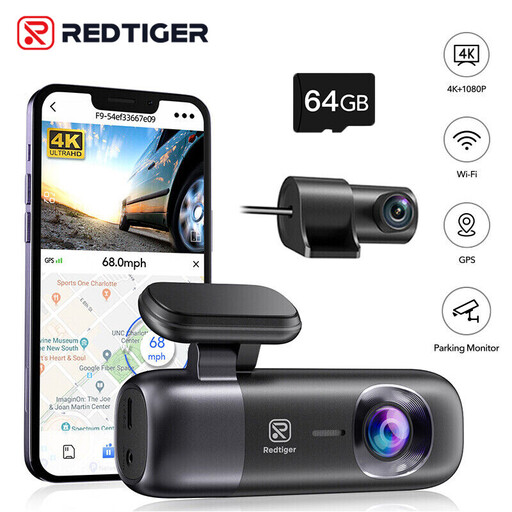
Why This Fits Their Persona: A straightforward dual dash camera for drivers who want front and rear recording, app access and GPS without moving to a three-camera setup.
The front and rear resolutions are stated separately, making it easier to compare the actual two-channel specification rather than relying only on “4K” in the title.
Includes a 64GB card, Wi-Fi, GPS, loop recording, night vision and parking mode. Supports cards up to 256GB.
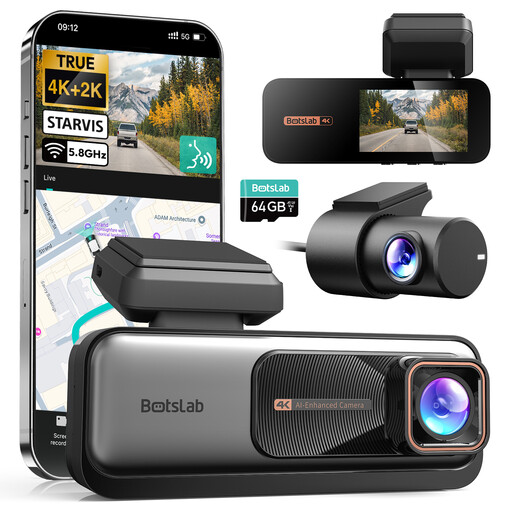
Why This Fits Their Persona: Suits motorists who prioritise detailed front footage, wider coverage and fast wireless transfers for regular file access.
The specification identifies 4K front and 2K rear recording, rather than implying that both cameras record at the same resolution.
Features Sony STARVIS sensor technology, 170° front and 150° rear lenses, GPS, 5.8GHz Wi-Fi and a 64GB card.
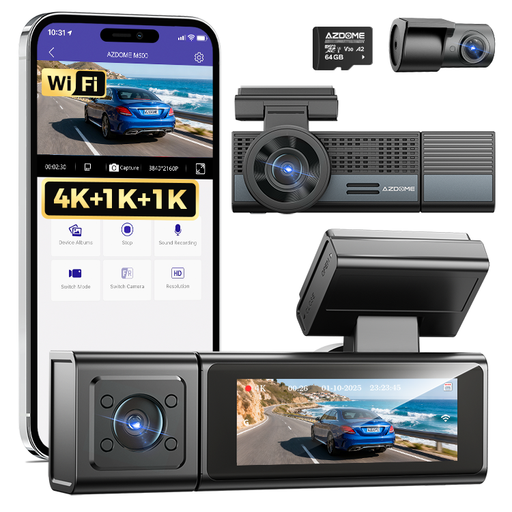
Why This Fits Their Persona: The front, interior and rear views are relevant to passenger transport, family trips and drivers who want cabin footage as well as road coverage.
It clearly lists three recording channels and includes a 64GB card, helping address coverage and initial storage concerns.
Provides 4K front recording, interior and rear cameras, built-in Wi-Fi, GPS, a screen, night vision and parking monitoring.
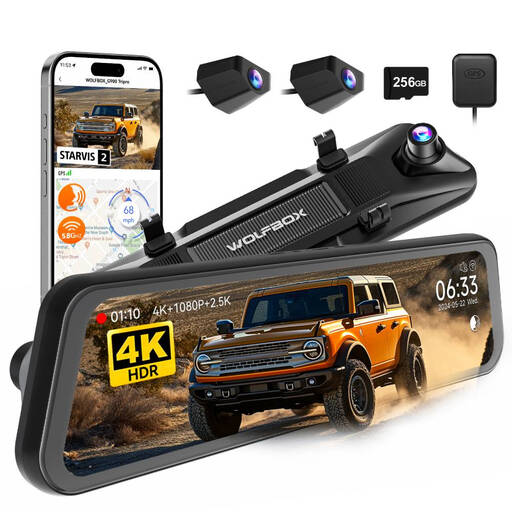
Why This Fits Their Persona: A three-camera mirror dash cam with substantial included storage for frequent driving, commercial use and vehicles needing a rear bumper view.
The listing specifies separate front, cabin and bumper-camera resolutions, plus a 256GB card, making the storage and coverage arrangement clear.
Offers 4K front, 2.5K interior and 1080P rear recording, 5.8GHz Wi-Fi, voice control, GPS and a 256GB card.
We have compiled a complete, real-time list of products that fully satisfy these strict selection criteria and UK safety regulations.
Before your first journey:
It can be worthwhile when you regularly drive on motorways, work as a delivery or rideshare driver, or want more detail from the front recording. A dual dash cam with a lower-resolution rear channel may provide more balanced value than paying for 4K on every camera.
A 64GB card can provide a practical starting point, but three-channel or high-resolution systems create files more quickly. Frequent drivers may prefer 128GB, 256GB or a manufacturer-supported higher capacity. Use a suitable high-endurance card and format it periodically.
Usually, parking monitoring requires a hardwire kit that supplies power when the ignition is off. The vehicle’s battery protection settings should be configured correctly, and professional installation may be sensible, particularly for newer cars, vans or vehicles with complex electrical systems.