
24/7 Customer Support

Free returns

Same-day & Next-day Delivery

Quality Guaranteed

Unlock Your Welcome Offers: FREE Delivery | Up to 80% OFF | Free 30-day JoyPlus trial
Download the APP
As a UK driver, ensuring your vehicle is protected on the road and while parked is a top priority. A high-quality 4K dash cam front and rear system provides more than just a recording of your journey; it offers crucial, high-definition evidence for insurance claims, deters vandalism and delivers peace of mind. However, the market is filled with technical jargon and ambitious claims, making it difficult to choose the right device.
This guide is designed to cut through the clutter. We will outline the key features to look for in a modern dual dash cam and present a few carefully selected recommendations to help you make an informed decision for your vehicle's security.
Choosing the right dash cam involves more than just looking at the resolution. Here are a few practical points to consider to ensure you get a device that performs reliably when you need it most.
While 4K (3840x2160p) resolution offers exceptional clarity for the front camera, the quality of the image sensor is just as important. A premium sensor, such as a Sony STARVIS dash cam sensor, is specifically designed to perform well in low-light conditions. This is essential for capturing clear details like number plates during twilight hours or on overcast British days. A good night vision car camera capability, often enhanced by a wide aperture (e.g., F1.8) and High Dynamic Range (HDR) technology, ensures footage is balanced and usable, not washed out by headlights or lost in shadows.
Modern dash cams are packed with useful technology. A car camera with parking mode is a must-have for 24/7 protection, automatically recording any bumps or motion detected while your vehicle is unattended. Note that this feature typically requires a separate hardwire kit for continuous power.
Furthermore, a dash cam with GPS is invaluable. It automatically logs your vehicle's speed and location coordinates, embedding this data into the video file to create a comprehensive record of events. For convenience, a WiFi dash cam with app control allows you to easily view, download and share footage directly on your smartphone. Finally, a car camera with ADAS (Advanced Driver-Assistance Systems) can provide helpful alerts for things like lane departure or potential forward collisions, adding an extra layer of safety to your drive.
A dash cam is always on, so reliability is paramount. Look for models that use a supercapacitor instead of a traditional lithium-ion battery. Supercapacitors are more resistant to the extreme temperatures a car can experience and have a much longer operational lifespan.
Continuous loop recording is a standard feature, but storage capacity matters. A system that supports large microSD cards (e.g., 256GB or 512GB) ensures you can store many hours of footage before it is overwritten. Always use a high-endurance U3-rated card designed for constant rewriting to prevent data corruption.
Here are our recommendations, selected for their performance, features and overall value for UK drivers.

Why It Stands Out: The DDPAI Z50 Pro offers a powerful combination of high-resolution recording and advanced connectivity. Its standout feature is the use of 5GHz WiFi 6, enabling significantly faster video transfers to the companion app. This is ideal for quickly reviewing or saving important clips on the go. The system also has an optional 4G module for remote monitoring, turning it into a comprehensive vehicle security hub.
Pros:
Who is it for? This model is an excellent choice for tech-savvy drivers who value fast connectivity and the option for advanced features like remote 4G cloud monitoring.
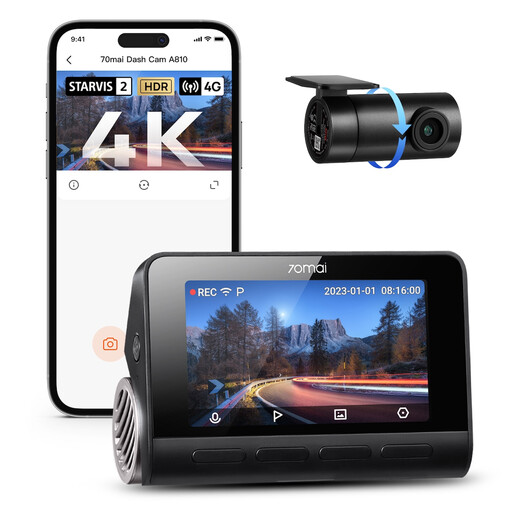
Why It Stands Out: The 70mai A810-2 is built around superior image quality, especially in challenging light. It is equipped with dual Sony STARVIS 2 image sensors for both the front (4K) and rear (1080p) cameras. Combined with dual-channel HDR and 70mai's Night Owl Vision technology, it excels at capturing clear, colour-accurate footage at night, in tunnels or when facing harsh glare from other vehicles.
Pros:
Who is it for? Drivers who prioritise the highest possible video fidelity, particularly for night-time driving. If capturing crystal-clear details in any lighting condition is your main concern, this is a leading contender.
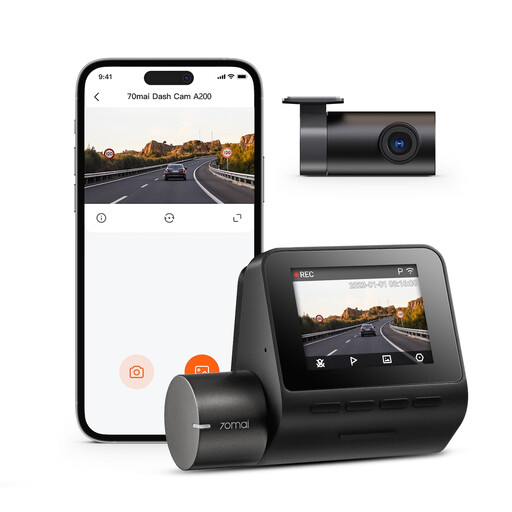
Why It Stands Out: While not a 4K system, the 70mai A200-1 offers a compelling alternative focused on smoothness and clarity. The front camera records in 1080p at 60 frames per second (FPS). This higher frame rate produces exceptionally smooth video, which can be more effective at capturing fast-moving details like number plates on a motorway compared to a standard 30FPS camera. Both front and rear cameras also feature HDR for excellent performance in mixed lighting.
Pros:
Who is it for? This is for drivers who prioritise fluid video motion and strong HDR performance over maximum resolution. It is a fantastic choice for those seeking a reliable and effective dual-camera system without needing 4K.
These three models represent some of the strong choices available today, but every driver's needs are different. If you are looking for a different combination of features or resolutions, there are many other excellent systems to consider.
For a wider selection of dual-camera systems, explore our full range of front and rear car dash cam models.
1. Is a 4K dash cam front and rear worth it in the UK? Yes, for many drivers, it is. The increased resolution of a 4K front camera can be the deciding factor in being able to clearly identify a number plate or other small details, especially from a distance or in poor weather. The rear camera provides vital context for rear-end collisions, parking incidents and tailgating, offering complete 360-degree protection.
2. How does a car camera with parking mode work? Parking mode allows the dash cam to monitor your vehicle when the engine is off. It typically uses a G-sensor to detect physical impacts (like a bump or collision) or an advanced motion sensor to detect movement around the car. When triggered, it wakes up and records a short, protected video clip. This feature requires a continuous power source, usually provided by a hardwire kit that connects to your car's fuse box and includes battery-drain protection.
3. Do I need a dash cam with GPS and WiFi? A dash cam with GPS is highly recommended. It embeds crucial data like your speed and exact location onto the video footage, which can be invaluable for validating your account of an incident for insurance or legal purposes. A WiFi dash cam with app control adds a layer of convenience, allowing you to review, download and share videos on your phone without the hassle of removing the microSD card and using a computer.