
24/7 Customer Support

Free returns

Same-day & Next-day Delivery

Quality Guaranteed

Unlock Your Welcome Offers: FREE Delivery | Up to 80% OFF | Free 30-day JoyPlus trial
Download the APP
Navigating UK roads requires more than just good driving skills; it demands a reliable way to document your journey. Whether you're dealing with a potential insurance claim, a parking incident or simply want to capture a scenic drive, the clarity of your footage is paramount. A 4K dash cam front and rear system provides the high-resolution evidence needed for peace of mind.
This guide is designed to help you understand the key features to look for in a modern dual dash cam 4k setup and to present some carefully considered options available today.
Choosing the right device can feel overwhelming with all the technical specifications. Here are a few essential features to focus on to ensure you get a system that meets your needs.
Not all 4K is created equal. The most critical component for image quality is the sensor. Look for models that specify a high-quality image sensor, such as a Sony STARVIS dash cam. These sensors are renowned for their excellent low-light performance, which is essential for clear dash cam with night vision capabilities. True 4K resolution (3840x2160 pixels) ensures that crucial details like number plates and road signs are legible, even when zooming in on footage. A dual-camera system should ideally offer high resolution on both the front and rear cameras for comprehensive coverage.
A dash cam's job doesn't end when you park. A dash cam with parking mode acts as a car security camera, recording any incidents like bumps, scrapes or break-in attempts while your vehicle is unattended. This feature typically relies on a G-sensor to detect impacts and may use motion detection to identify activity around your car. For continuous surveillance, most models require a separate hardwire kit, which connects the camera directly to your car's fuse box. This ensures the camera has a constant power source without draining your vehicle's main battery.
A dash cam with GPS provides more than just route tracking. It embeds crucial data like your vehicle's speed, location and the time directly onto the video footage. This information can be invaluable as indisputable evidence in the event of a dispute. Many modern dash cams also include Advanced Driver Assistance Systems (ADAS), which can provide audible alerts for potential hazards like lane departures or forward collisions, adding an extra layer of safety to your drive.
Here are a few front and rear dash cam systems that offer a strong combination of the features discussed above.
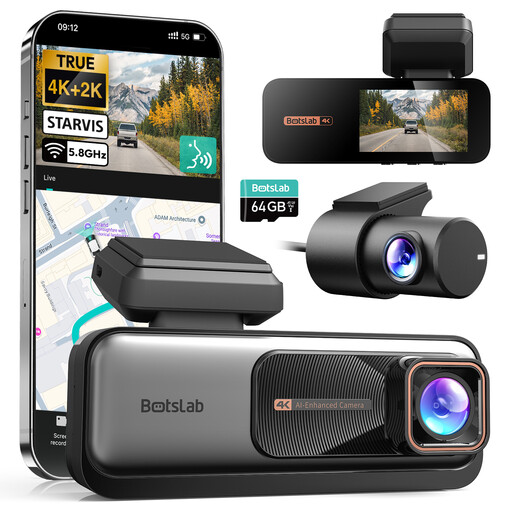
Why It Stands Out: This system delivers a complete package with true 4K front and 2K rear recording, powered by a Sony STARVIS sensor. Its ultra-wide 170° front lens covers multiple lanes, and the inclusion of a 64GB microSD card means it's ready to use straight out of the box.
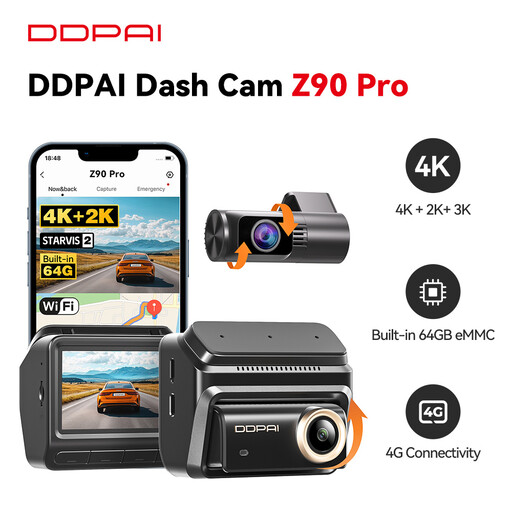
Why It Stands Out: The Z90 Pro uses a next-generation Sony STARVIS 2 IMX678 sensor for exceptional HDR video and night vision. Its D?save 2.0 dual-storage system, combining 64GB of built-in eMMC memory with support for a 512GB microSD card, provides an extra layer of recording reliability.
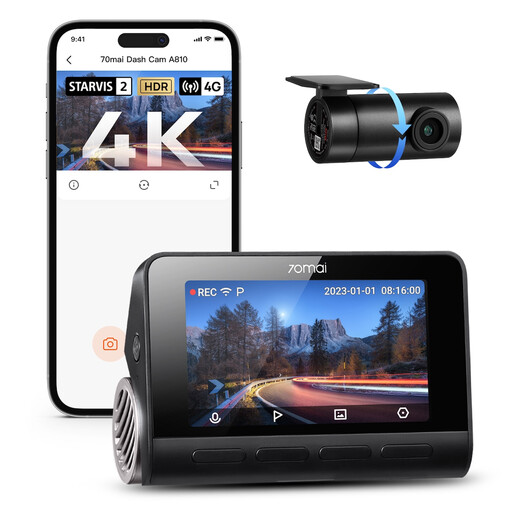
Why It Stands Out: This model features dual Sony STARVIS 2 sensors for both its 4K front and 1080P rear cameras, delivering impressive dual-channel HDR recording. Its AI-powered motion detection for parking mode is designed to intelligently identify human activity, helping to avoid false triggers.
If the models above aren't quite what you're looking for, or if you'd like to explore different features and price points, there are many other choices available.
Discover a wider selection of devices by browsing our full range of DVR cameras.
Yes, for many drivers, it is. The primary advantage of 4K resolution is the level of detail it captures. This makes it significantly easier to read number plates, identify road signs and discern other crucial details from a distance or in challenging lighting conditions. This clarity can be the deciding factor in an insurance claim or police report.
A dash cam with parking mode is designed to protect your vehicle when it's unattended. It typically uses a built-in G-sensor to detect physical impacts, such as another car bumping into yours. When an impact is detected, the camera wakes up and saves a locked video file of the event. More advanced systems also use motion detection or time-lapse recording. For these features to work, the dash cam usually needs to be connected to your car's battery via a hardwire kit.
While a front-facing camera is essential for capturing events ahead of you, a rear camera provides a complete picture. It is invaluable for documenting rear-end collisions, which are among the most common types of accidents. It also provides evidence for incidents that occur behind your vehicle in car parks, such as reversing mishaps or vandalism, making a car camera front and rear system a comprehensive security solution.