
24/7 Customer Support

Free returns

Same-day & Next-day Delivery

Quality Guaranteed

Unlock Your Welcome Offers: FREE Delivery | Up to 80% OFF | Free 30-day JoyPlus trial
Download the APP
Navigating UK roads comes with its own set of challenges, from dense city traffic to unpredictable country lanes. For many drivers, the peace of mind that comes from having a reliable visual record of their journey is invaluable. Whether it's for clarifying liability in an accident, deterring theft or simply capturing the unexpected, a high-quality car camera is becoming an essential piece of kit.
Choosing the right device can feel overwhelming with so many features and specifications to consider. This guide is designed to help you understand the key features of a modern 4K dash cam front and rear system and to highlight a few standout options that cater to different needs and priorities.
Before we look at specific models, let's cover a few key features to keep in mind during your search. Understanding these will help you make a more informed decision.
The primary purpose of a dash camera for cars is to capture clear, usable footage. A 4K resolution on the front camera provides exceptional detail, making it much easier to read number plates and identify road signs, even when zooming in on the footage. A dual dash cam setup, which includes a rear camera, is crucial for recording incidents from behind, such as rear-end collisions or parking mishaps. A wide field of view (typically 130° or more) for both cameras ensures you capture the entire scene without blind spots.
Modern dash cams offer more than just recording while you drive. A dash cam with parking mode provides surveillance when your vehicle is left unattended. This feature usually requires a hardwire kit for a constant power supply and can automatically record any bumps or motion detected. For driving after dark, a night vision dash cam is essential. Look for models with large apertures (e.g., F1.8) and advanced image sensors that can produce clear, well-lit footage in low-light conditions.
Features like built-in GPS and WiFi add a significant layer of convenience and evidence. GPS modules log your vehicle's speed and location, embedding it into the video file, which can be vital for insurance claims. WiFi allows you to connect the dash cam to your smartphone via an app, making it easy to view, download and share footage without needing to remove the memory card.
Here are a few recommendations that offer a strong combination of features, performance and reliability for UK drivers.

View the REDTIGER F7N Pro on Joybuy
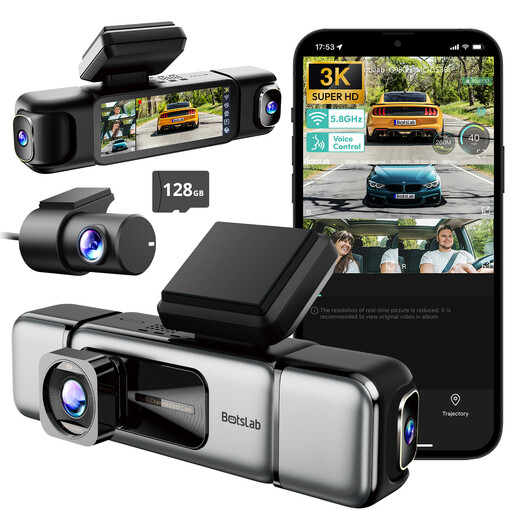
View the BOTSLAB 4 Channel Dash Cam on Joybuy

The models above represent just a fraction of the available technology. If you have different requirements or are looking for a specific feature not highlighted here, there are many other excellent devices to consider.
Explore our full range of car dash cams to find the perfect fit for your vehicle and budget.
Q1: Is a 4K dash cam front and rear worth it in the UK? A: Yes, for many drivers it is. The significant increase in resolution from 1080P to 4K makes it much easier to discern critical details like number plates from a distance. A front and rear system ensures you have a record of events happening behind you, which is essential for incidents like rear-end collisions or car park bumps.
Q2: Do I need a hardwire kit for a dash cam with parking mode? A: In most cases, yes. To enable 24/7 surveillance, the dash cam needs a continuous power source that doesn't shut off with the ignition. A hardwire kit connects the camera directly to your car's fuse box, providing this power. These kits typically include a voltage monitor to prevent the camera from completely draining your car battery.
Q3: Can I use any microSD card in my dash cam? A: It is strongly advised to use a 'high-endurance' microSD card. Dash cams are constantly writing and rewriting large video files, which places heavy strain on a standard memory card and can lead to failure. High-endurance cards are specifically built to withstand this constant use, ensuring your footage is reliably saved when you need it most. Always check the camera's specifications for the maximum supported card capacity.