
24/7 Customer Support

Free returns

Same-day & Next-day Delivery

Quality Guaranteed

Unlock Your Welcome Offers: FREE Delivery | Up to 80% OFF | Free 30-day JoyPlus trial
Download the APP
A 4K dash cam can provide highly detailed footage of number plates, road signs and incidents, but resolution alone does not determine whether a camera will suit your vehicle. UK drivers also need to consider rear coverage, night performance, storage, parking surveillance and installation.
A compact front camera may be enough for a daily commuter, while taxi drivers, fleet operators and motorists who park on the street may need a front and rear dash cam or a triple-channel dash cam. The right choice depends on how and where you drive.
4K describes the number of pixels captured, not the quality of every recording. Glare, a dirty windscreen, poor exposure control and low-quality compression can still make number plates difficult to read. A wide-angle lens may also stretch details at the edges of the frame.
Look for practical supporting features such as HDR, WDR, a suitable aperture and a capable low-light sensor. A Sony STARVIS dash cam may be worth considering for motorists who regularly drive on unlit roads, although results can vary according to lighting, windscreen condition and camera settings.
A listed 24-hour parking mode does not always mean the camera can monitor a parked vehicle straight out of the box. Many systems require a separately purchased hardwire kit connected to constant power, switched power and ground.
This installation can affect the vehicle battery if configured incorrectly. Choose a hardwire kit with low-voltage protection, and consider professional fitting if you are unfamiliar with a vehicle’s fuse box. Check the product instructions and your vehicle’s electrical system before installation.
Some listings use dual-channel terminology inconsistently. Confirm whether the package contains both front and rear cameras, whether the rear cable is long enough for your vehicle and whether the rear unit records at the advertised resolution.
Also check whether a microSD card, hardwire kit and mounting accessories are included. A lower purchase price can become less attractive when essential extras are added separately.
A 4K front camera generally captures more detail than a 1080p model, but storage requirements are higher. A night vision dash cam should offer suitable exposure handling and noise reduction rather than relying on resolution alone. A camera with HDR can help balance bright headlights and darker areas, but it cannot remove every reflection or obstruction.
For dual systems, compare both channels. A 4K front and 2K rear arrangement may provide a more useful balance than a high-resolution front camera paired with a basic rear unit.
A dual-channel dash cam records the road ahead and behind. This is useful for rear-end collisions, changing lanes and incidents occurring behind the vehicle. A triple-channel dash cam adds an interior camera, which can suit taxi and ride-hailing drivers who need cabin footage, subject to privacy obligations and clear notices where required.
Four-channel systems can record front, rear, left and right views, but they usually involve more cables, more storage and more complex positioning. Check that each camera can be mounted without obstructing the driver’s view.
High-resolution footage fills a memory card quickly. Loop recording allows the camera to overwrite older, unlocked clips when storage is full. A G-Sensor detects sudden impacts and locks relevant files, reducing the risk of automatic overwriting.
Use a compatible, high-endurance microSD card where recommended, format it regularly through the camera and check the maximum supported capacity. Built-in storage, such as eMMC, can offer an alternative, but verify how footage is exported and whether external memory is still required.
A GPS dash cam can record speed, route and location data alongside video. This may make files easier to organise, but drivers should review footage carefully and consider whether sharing location information is appropriate.
A WiFi dash cam or dash cam with app control can make it easier to preview and download clips without removing the card. WiFi normally creates a direct connection to the phone; it does not necessarily provide internet access or remote monitoring. Optional 4G hardware is generally required for cloud access and alerts away from the vehicle.
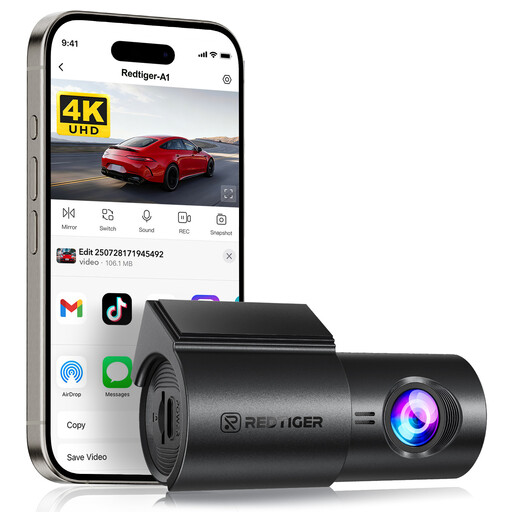
Why This Fits Their Persona: Its compact front-camera format suits commuters who want straightforward recording without a larger multi-camera installation.
The listing identifies WiFi and app control, G-Sensor protection, loop recording and 24-hour parking mode. Parking monitoring requires the included 3-wire hardwire connection to be installed correctly.
4K front recording, compact design and smartphone access to footage. It is specified for standard 12V vehicles, including cars, SUVs, pick-ups and commercial vans.
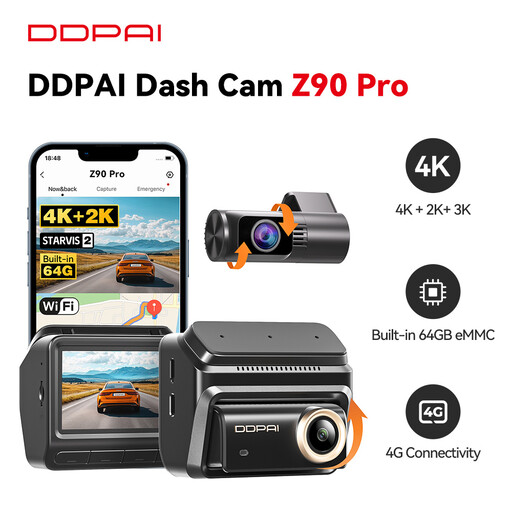
Why This Fits Their Persona: Drivers wanting front and rear coverage, GPS data and faster file access have a feature-rich dual-channel configuration to consider.
The specification clearly separates the 4K front and 2K rear cameras from the optional interior camera. It also states that the hardwire kit and 4G module are separate requirements for particular parking and remote functions.
Sony STARVIS 2 IMX678 front sensor, built-in GPS, 64GB eMMC storage and 5GHz WiFi. Optional three-channel recording and 4G connectivity provide expansion possibilities.
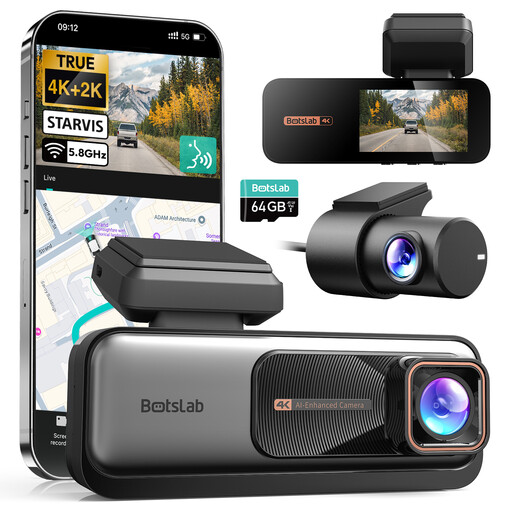
Why This Fits Their Persona: Suitable for motorists who regularly drive long distances, use motorways or want front and rear evidence for a wider range of incidents.
It specifies separate front and rear resolutions, wide-angle coverage and a 64GB microSD card in the package. Parking mode still requires a separately purchased hardwire kit.
4K front and 2K rear recording, built-in GPS, 5.8GHz WiFi, ADAS alerts, loop recording and G-Sensor emergency file locking.
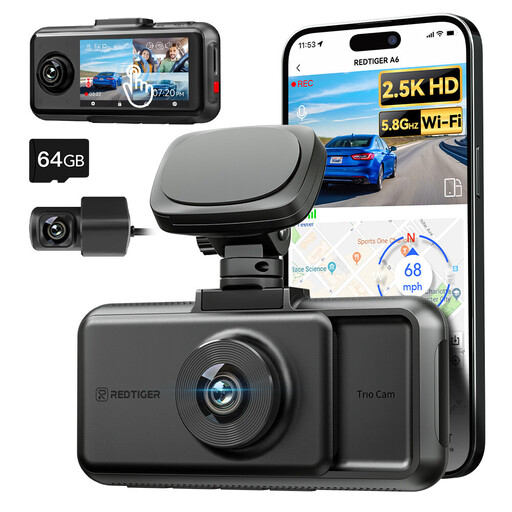
Why This Fits Their Persona: The front, rear and interior arrangement is designed for drivers who need coverage inside the cabin as well as around the vehicle.
The product description distinguishes dual recording from triple-channel recording, so buyers can check the resolution available in each mode before ordering.
Supports 2.5K front plus 1080p interior and rear recording, with WiFi, GPS, loop recording and adjustable rear-camera positioning.
We have compiled a complete, real-time list of products that fully satisfy these strict selection criteria and UK safety regulations.
Mount the camera behind or close to the rear-view mirror where it does not obstruct your view. Route cables neatly along the headliner and A-pillar, taking care around airbags. A rear camera may require cable routing through a hatch or rubber grommet.
Before driving, confirm that:
ADAS features should be treated as driving aids rather than replacements for observation. Drivers remain responsible for following the Highway Code and operating the vehicle safely.
It can be useful when identifying fine details is important, particularly on well-lit roads. However, a 4K model usually creates larger files and may need a higher-capacity, high-endurance memory card. If your priority is simple incident recording, a reliable 1080p or 2K camera may be sufficient.
Usually, yes. A standard accessory socket normally switches off when the ignition is off, so it cannot provide continuous power. A compatible hardwire kit connects the camera to the vehicle’s electrical system and should include low-voltage protection. Check each product listing because some cameras require the kit to be purchased separately.
This depends on resolution, frame rate, card capacity and whether one, two or three channels are recording. Loop recording overwrites older, unlocked files when storage is full, while G-Sensor-protected clips may remain until manually deleted or the card is formatted. Regularly review important footage and replace worn memory cards when necessary.