
24/7 Customer Support

Free returns

Same-day & Next-day Delivery

Quality Guaranteed

Unlock Your Welcome Offers: FREE Delivery | Up to 80% OFF | Free 30-day JoyPlus trial
Download the APP
Navigating UK roads requires more than just good driving skills; it demands a reliable way to document events. Whether you're dealing with a disputed insurance claim, a parking incident or simply want a clear record of your journey, a high-quality dash cam is an essential tool. The market is filled with options, making it difficult to distinguish genuine features from marketing jargon.
This guide is designed to help you understand the key features of modern 4K dash cam models. We will break down what matters most, from resolution to connectivity, so you can make an informed choice for your vehicle and driving needs.
Choosing the right dash cam involves looking beyond the basic recording function. Here are the critical features that define a modern, effective car camera system.
While any dash cam is better than none, 4K resolution offers a significant advantage. The increased pixel density means you can capture crucial details like number plates and road signs with far greater clarity, even when zooming in on the footage.
Consider the coverage you need:
Modern dash cams offer more than just video recording. A car camera with GPS and WiFi adds layers of convenience and data.
A dash cam with parking mode provides surveillance even when your vehicle is switched off and unattended. Using its internal G-sensor, the camera detects impacts or motion, automatically wakes up and records the event. This feature is invaluable for capturing evidence of car park bumps, vandalism or attempted break-ins. Note that this function often requires a separate hardwiring kit to draw power from the car's battery without draining it.
Here are a few standout models that offer a strong combination of features, performance and reliability for UK drivers.
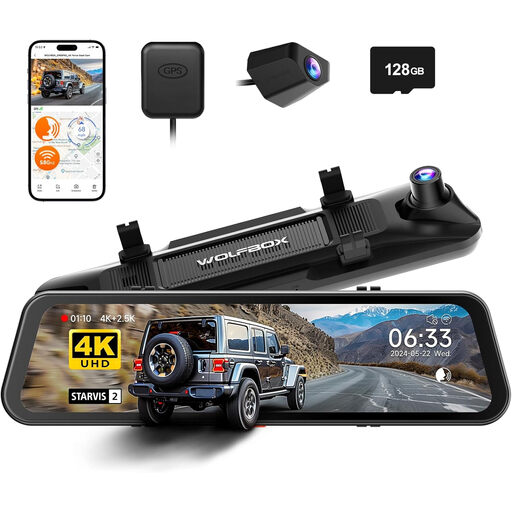
Why It Stands Out: The WOLFBOX G900 PRO focuses on delivering exceptional video quality. With a 4K Ultra HD front camera and a 2.5K rear camera, it captures sharp, detailed footage from both ends of your vehicle. The inclusion of 5GHz Wi-Fi enables faster file transfers to your phone compared to standard 2.4GHz models.
Pros:
Who is it for? Drivers who prioritise high-fidelity video evidence and want a reliable, high-performance dual dash cam front and rear system without the need for an immediate memory card purchase.
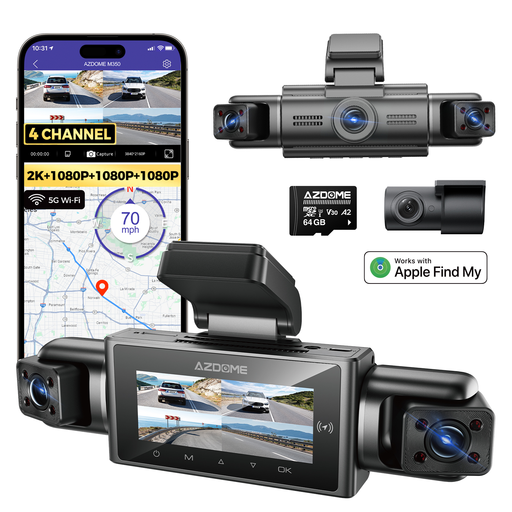
Why It Stands Out: The AZDOME M350 offers a unique proposition with its 4-channel recording system, capturing the front, rear and both sides of your vehicle. Its most innovative feature is the native integration with the Apple Find My network, allowing you to track your car's location without a separate subscription or app.
Pros:
Who is it for? Tech-savvy car owners, particularly those within the Apple ecosystem, and professional drivers who require complete situational awareness and an integrated vehicle tracking solution.
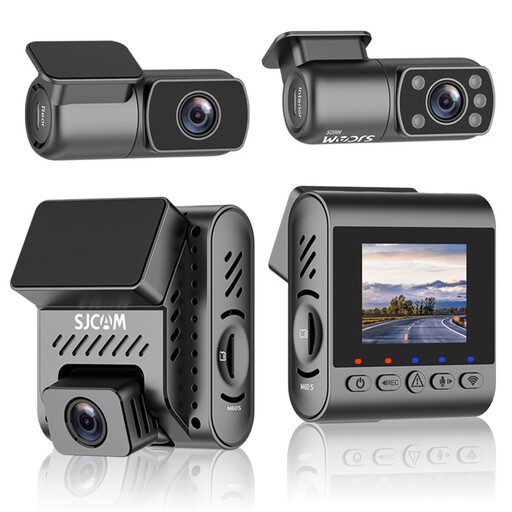
Why It Stands Out: The SJCAM M60S is a purpose-built 3 channel dash cam that excels at providing complete coverage. It combines a 4K front camera, a 2K rear camera and a 1080p interior camera with infrared night vision. The use of a high-quality IMX335 sensor in the front camera ensures excellent image performance, especially in varied lighting conditions.
Pros:
Who is it for? Ideal for taxi and ride-share drivers, fleet managers or parents of new drivers who need to monitor activity inside the car as well as on the road ahead and behind.
These recommendations represent some of the strong contenders in the market, but every driver's needs are different. If you're still exploring or have specific requirements not covered here, you can find a wider variety of models to suit your vehicle and budget.
If you're ready to find the perfect fit, browse our full collection of car wireless cameras.
Yes. The primary benefit of 4K resolution is the ability to capture fine details with greater clarity. For UK drivers, this means a much higher chance of legibly recording number plates, road signs and other identifying features from a distance. This level of detail can be crucial when providing evidence for an insurance claim or to the police.
A dash cam with parking mode remains in a low-power standby state when the car is parked and the ignition is off. It uses a built-in G-sensor to detect physical impacts (like another car bumping into yours) or, in some models, a motion sensor to detect movement around the vehicle. When triggered, the camera powers on and records a short, protected video clip of the event. This typically requires a hardwire kit (often sold separately) to provide continuous power from the car's battery.
A dual dash cam front and rear is highly recommended for most drivers. Rear-end collisions are extremely common, and having footage of the event can protect you from fraudulent claims. A 3 channel dash cam is a more specialised tool. It is most beneficial for professional drivers (taxi, ride-share) who need to record the cabin for liability and security, or for anyone who wants a complete record of what happens inside their vehicle.