
24/7 Customer Support

Free returns

Same-day & Next-day Delivery

Quality Guaranteed

Unlock Your Welcome Offers: FREE Delivery | Up to 80% OFF | Free 30-day JoyPlus trial
Download the APP
As a Joybuy Product Recommendation Officer, my role is to help you navigate the crowded market of car technology. When it comes to choosing a 4K front and rear dash cam, the stakes are high. This device is your impartial witness on the road, crucial for insurance claims and peace of mind. However, many UK drivers are caught out by misleading marketing and technical jargon.
Before you invest, it is important to understand the common pitfalls that can leave you with unusable footage when you need it most. Let's look at the three most frequent issues and how to sidestep them.
Many affordable dash cams advertise "4K" resolution, but the reality is often disappointing. These models frequently use a lower-quality 2K or 1080p sensor and digitally upscale the image to 4K. This process, known as interpolation, results in a soft, blurry picture where critical details like number plates are unreadable, especially from a distance or in motion. True 4K relies on a high-quality image sensor capable of capturing native 3840x2160 resolution.
Nearly every car camera with night vision promises clear footage after dark. However, without the right technology, you will likely end up with a grainy, high-contrast video where bright headlights wash out the entire scene and dark areas remain pitch black. Effective night vision depends on two key factors: a large lens aperture (e.g., f/1.7) to let in more light and High Dynamic Range (HDR) technology, which balances the brightest and darkest parts of the image to reveal detail across the entire frame.
A basic 24 hour parking mode dash cam typically relies on a G-sensor to detect an impact. The problem? It only starts recording after your car has been hit, often missing the moments leading up to the incident and the culprit driving away. A truly effective system uses proactive AI motion detection to identify suspicious activity around your vehicle and begins recording before an event occurs, providing a much more complete picture of what happened.
To ensure you get a device that performs reliably, focus on these non-negotiable specifications.
The heart of any dash cam is its image sensor. Do not just look for the "4K" label; check the sensor model. A Sony STARVIS 2 dash cam sensor, for example, is specifically designed for surveillance applications. It offers superior light sensitivity and lower image noise compared to standard sensors, delivering genuinely sharp and clear footage day and night. This is the standard you should be looking for to capture number plates and road signs accurately.
A single front-facing camera only tells half the story. A dual dash cam with GPS provides comprehensive front and rear coverage, which is essential for documenting rear-end collisions or incidents in your blind spots. The built-in GPS automatically logs your vehicle's speed and location, embedding verifiable data into your video files for insurance purposes. Furthermore, modern systems often include helpful driver aids. An ADAS dash cam can provide alerts for lane departure or potential forward collisions, while a voice control car camera allows you to save footage, take photos or change settings without taking your hands off the wheel.
We have matched some popular vehicle-related products to different driver profiles to help you find a suitable option.
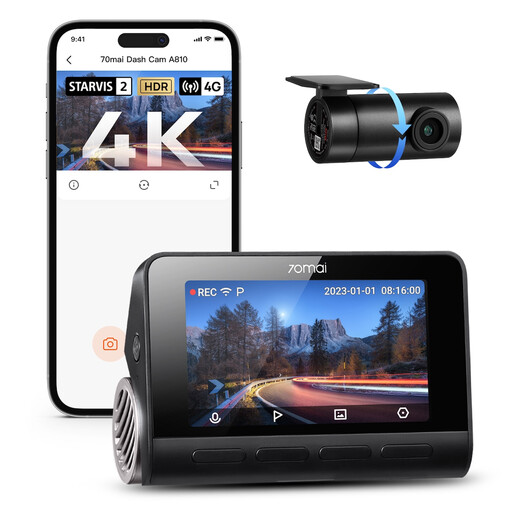
Why This Fits Their Persona: Ideal for daily commuters, ride-share drivers and anyone who prioritises undeniable video evidence. Its feature set is built for maximum security and incident documentation on UK roads.
This model uses a genuine Sony STARVIS 2 sensor for true 4K clarity, avoiding the "fake 4K" pitfall. Its dual-channel HDR and AI-powered parking mode directly counter poor night vision and ineffective surveillance.
Comprehensive front and rear recording with advanced AI motion detection for parking. The built-in GPS and ADAS features provide valuable data and safety alerts.
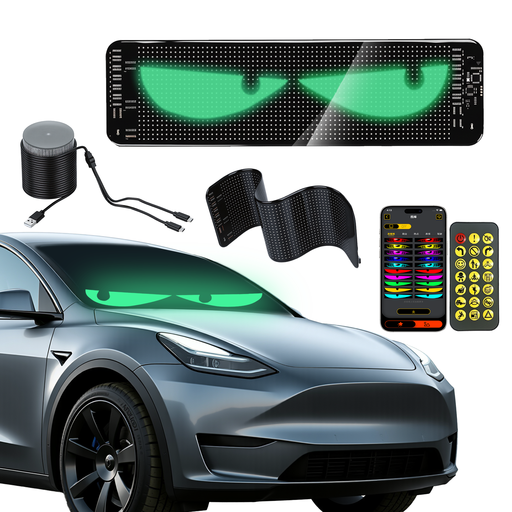
Why This Fits Their Persona: For the driver who has their vehicle's security covered and now wants to add a touch of personality. This is a high-tech accessory for making a statement at car meets or just on the evening drive.
This avoids the trap of generic, low-quality car accessories. It offers a fully customisable, app-controlled experience with vibrant animations, rather than a simple static sticker or light.
Features a flexible, IP65 waterproof design that is safe for use in the rain. The high-definition LED matrix provides smooth, clear graphics that are visible day and night.

Why This Fits Their Persona: For the parent who prioritises safety on the road with a dash cam, and wants to share their passion for cars with their children in a safe, fun and engaging way.
This avoids the trap of excessive screen time for children by providing an active, hands-on play experience. The parental remote control ensures it is a safe alternative to less supervised toys.
An officially licensed Lamborghini design with realistic butterfly doors and LED lights. The dual-control system allows for both kid-driven fun and parent-supervised safety.
We have compiled a complete, real-time list of products that fully satisfy these strict selection criteria and UK safety regulations.
Yes, a hardwire kit is essential for enabling true 24-hour surveillance. It connects the dash cam directly to your car's fuse box, providing a constant source of power even when the engine is off. This is required for features like time-lapse recording and AI-driven motion detection to function correctly. The kit also includes a voltage cut-off feature to prevent the dash cam from draining your car's battery.
Absolutely. The higher resolution is invaluable for capturing crucial details that could make or break an insurance claim. On fast-moving motorways or in adverse weather conditions common in the UK, the clarity of 4K allows you to reliably identify number plates, road signs and the faces of individuals involved in an incident. The extra detail provides a more definitive and trustworthy record of events.
A dual-channel 4K system records a large amount of data. A one-hour drive can generate anywhere from 10GB to 20GB of footage. However, all modern dash cams use loop recording, which automatically overwrites the oldest files when the memory card is full. To ensure you have enough space, it is advisable to use a high-endurance microSD card with a capacity of at least 128GB, which is specifically designed for the constant rewriting cycles of a dash cam.