
24/7 Customer Support

Free returns

Same-day & Next-day Delivery

Quality Guaranteed

Unlock Your Welcome Offers: FREE Delivery | Up to 80% OFF | Free 30-day JoyPlus trial
Download the APP
Navigating UK roads comes with its own set of challenges, from congested city streets to winding country lanes. A reliable car camera system provides an impartial witness, offering peace of mind against disputed insurance claims, false accusations or unexpected incidents. With technology advancing rapidly, choosing the right device can feel overwhelming. This guide is designed to help you understand the key features of modern dash cams and review some of our top recommendations for 2026, helping you make an informed choice for your vehicle.
Before diving into specific models, it's helpful to understand the features that make a significant difference in performance and usability.
Video Resolution and Clarity: While 1080p HD has been the standard, a 4K front and rear dash cam captures footage with significantly more detail. This can be crucial for identifying number plates, road signs and other small details, both day and night. Look for models with quality sensors and High Dynamic Range (HDR) technology, which improves car camera night vision by balancing light and dark areas of the image.
Smart Connectivity and GPS: A dash cam with wifi and app integration allows you to easily view, download and share footage directly on your smartphone without needing to remove the memory card. A car camera with GPS is also invaluable, as it automatically logs your vehicle's speed and location coordinates, embedding this crucial data into the video file for use as evidence.
Parking Surveillance: A dash cam with parking mode offers protection even when you're away from your vehicle. Using motion detection or a G-sensor, the camera can automatically start recording if it detects an impact or suspicious activity, helping to capture evidence of hit-and-runs or vandalism. This feature often requires a separate hardwire kit for continuous power.
Here are a few standout options that cater to different needs and priorities, from all-in-one convenience to cutting-edge sensor technology.
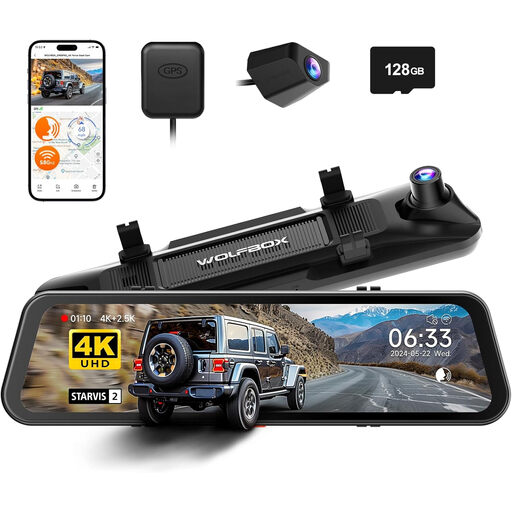
Why It Stands Out: The WOLFBOX G900 PRO is a comprehensive package that delivers high-resolution recording for both front and rear views. The front camera captures in sharp 4K Ultra HD, while the rear camera records in a very clear 2.5K, a notable step up from the more common 1080p rear cameras. It also includes a generous 128GB memory card, meaning it's ready to use straight out of the box.
Pros:
Who is it for? This is an excellent choice for drivers who want a high-performance dual dash cam system without the hassle of sourcing a separate memory card. The superior rear camera resolution makes it particularly suitable for those who want equally detailed coverage of events happening behind their vehicle.
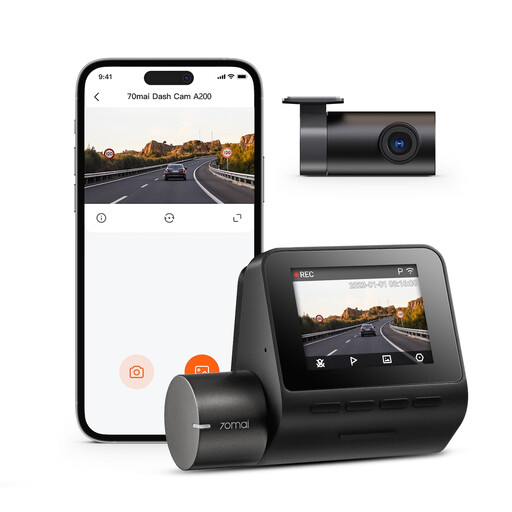
Why It Stands Out: While not a 4K model, the 70mai A200-1 set earns its place by prioritising smoothness and low-light performance. The front camera can record at 60 frames per second (FPS) in single-channel mode, resulting in exceptionally fluid video that can make it easier to capture details on fast-moving objects. The combination of HDR and the brand's Night Owl Vision technology provides impressive clarity in challenging lighting conditions.
Pros:
Who is it for? This set is ideal for daily commuters and drivers who prioritise exceptionally smooth footage and reliable night-time recording over maximum resolution. It offers a robust feature set at a very accessible price point. Note that a microSD card is required and sold separately.
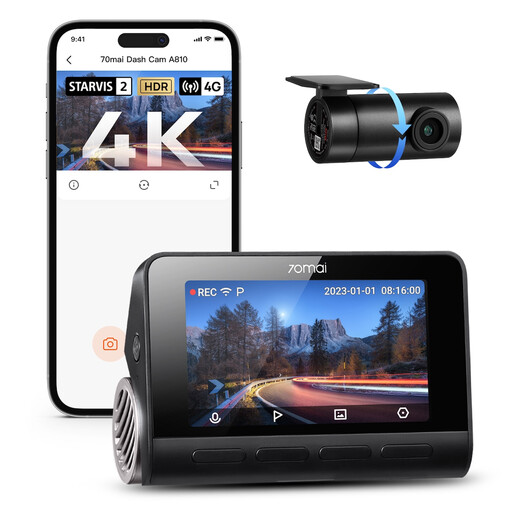
Why It Stands Out: The 70mai A810-2 is built around advanced sensor technology. It uses dual Sony STARVIS 2 sensors, which are renowned for their low-light sensitivity. This, combined with Dual-HDR recording for both front and rear cameras, delivers outstanding clarity in high-contrast situations like exiting tunnels or facing oncoming headlights. It also packs advanced features like AI Motion Detection for parking mode and optional 4G connectivity for remote monitoring (requires a separate kit).
Pros:
Who is it for? This model is aimed at tech-savvy users and those who demand superior image quality, especially at night. The advanced parking surveillance and remote access capabilities make it a strong contender for anyone serious about vehicle security.
The world of in-car cameras is vast, with models offering different form factors, screen sizes and unique features. If our recommendations don't quite match what you're looking for, you can explore a wider selection of devices.
? Browse our full range of car video camera systems
1. Is a 4K dash cam worth it in the UK? Yes, for many drivers, it is. The primary benefit of 4K resolution is the increased level of detail. On UK roads, this can mean the difference between capturing a readable number plate in a moving or parked vehicle and having a blurry, unusable image. This detail can be invaluable for insurance claims or reporting incidents to the police.
2. How does a dash cam with parking mode work? Parking mode allows the dash cam to monitor your vehicle when it's turned off. It typically works in two ways: some models use a G-sensor to detect an impact (like another car bumping into yours) and will wake up to record the event. More advanced models, like the 70mai A810, use motion detection (sometimes with AI) to identify suspicious activity around the car and begin recording. This feature requires a continuous power supply, usually provided by a hardwire kit connected to your car's fuse box.
3. Do I really need a front and rear dash cam? While a front-facing camera captures the most common incidents, a dual dash cam provides a complete picture. It records events happening behind you, which is crucial for documenting rear-end collisions, tailgating and incidents in car parks. Having that rear-view footage can be essential in proving you were not at fault.