Relevant monitor lines
These model lines illustrate different IPS and OLED choices; a brand name alone does not establish how a particular screen will handle light in your room.
Alienware
Dell’s 27-inch options include a dual-resolution IPS model and a separate 4K QD-OLED model.
- Dell lists an anti-glare IPS finish, 4K at 180Hz and a Full HD 360Hz mode for the AW2725QF.
- The AW2725Q is a different OLED model. Compare its anti-reflective glass and your room’s lighting rather than assuming the two screens handle reflections alike.
ASUS ROG
The PG32UCDM Gen3 is a larger 4K OLED option for a setup where direct light can be managed.
- ASUS lists a 31.5-inch Tandem QD-OLED panel, BlackShield anti-reflection film and a 240Hz refresh rate for this model.
- A published anti-reflection treatment does not predict visibility in every room. Check the exact model’s OLED-care features and applicable warranty wording.
LG UltraGear
The 32GR93U-B offers a conventional 32-inch 4K IPS route with a 144Hz refresh rate.
- LG lists variable refresh rate compatibility and specifies the graphics connections needed for 4K at 144Hz.
- Those specifications do not establish how its reflections compare with another monitor’s. Check the screen in relation to your lighting.
Joybuy monitor choices
These 4K gaming monitors offer IPS and OLED options for historical adventures. Compare each screen’s reflection behaviour for your room before choosing on panel type or refresh rate.
 No image available
Samsung Odyssey OLED G8 LS32DG802SUXXU 32-inch UHD
Consider this 32-inch UHD OLED monitor if you have room for a larger screen and can manage direct light. Check its reflection behaviour where you play, along with the exact model’s OLED-care and warranty terms.
View on Joybuy
 No image available
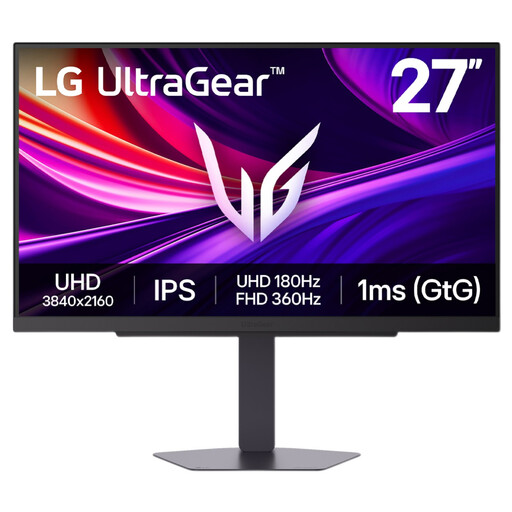
LG UltraGear G8 27G850A 27-inch 4K Nano IPS
This 27-inch IPS option suits a shopper who wants 4K for adventures and a separate fast-game mode. Its stated dual modes are 4K at 240Hz and Full HD at 480Hz; confirm that your device and connection can use the mode you want. Check reflection handling for your room.
View on Joybuy
 No image available
LG UltraGear 27G810A-B 27-inch 4K IPS Dual Mode
Consider this 27-inch 4K IPS model if you split your time between adventures and faster games. Confirm the exact refresh modes for this variant and the modes your device can deliver; assess its screen finish and reflections against your lighting.
View on Joybuy
 No image available
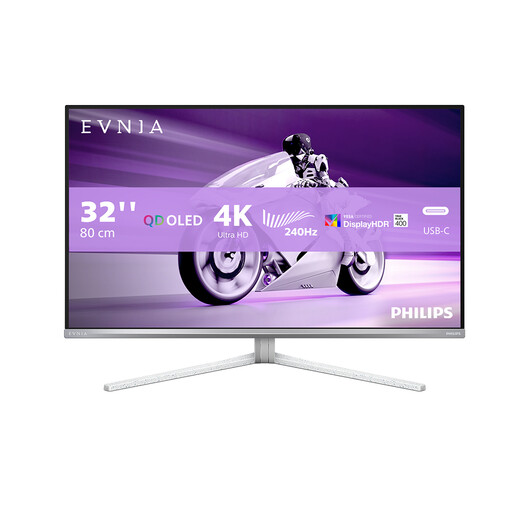
Philips Evnia 32M2N8900 32-inch UHD OLED
This 32-inch UHD OLED option is worth considering if you want a larger screen and can control direct reflections. Confirm the precise model suffix and refresh modes before ordering, then check reflection handling and OLED warranty terms for that variant.
View on Joybuy
Questions before buying
What should I check if sunlight or a lamp reflects in the screen?
Start with the light’s position relative to the screen, then compare the exact models’ screen finishes and direct-reflection test results where available. RTINGS notes that brightness helps in a well-lit room, but direct reflections are a separate visibility concern.
Will my gaming PC run 4K at a monitor’s maximum refresh rate?
Only if the graphics hardware and connection support that mode. For example, LG specifies DisplayPort 1.4 with DSC or HDMI 2.1 graphics hardware for 4K at 144Hz on its 32GR93U-B; check the requirements of the monitor you actually choose.
Should I check burn-in cover before buying an OLED monitor?
Yes: read the warranty for the exact model and region, including its stated burn-in terms. ASUS UK support publishes model-specific OLED warranty information, so cover stated for one model should not be assumed for another.
How do I compare energy use and dispose of an old monitor?
Compare the monitors’ energy information, then use an appropriate electrical-equipment collection or retailer take-back route for the old screen. GOV.UK provides guidance on energy information for products in scope and on the UK’s waste electrical and electronic equipment rules.


