What matters when choosing?
Settle the viewing arrangement and project colour space before comparing docking features. A larger screen is useful only if both viewers can see it comfortably without crowding the desk; connectivity then depends on the computers and peripherals you intend to share.
| Concern |
What to check |
Who this matters to |
| Colour workflow |
Check the documented Rec.709 or sRGB mode for standard video review, and P3 coverage only if your workflow calls for it. Compare any factory-calibration or colour-accuracy claim in the mode you plan to use. |
If my review affects colour decisions, I need the display mode to match the work being delivered. Around 42% of consumers put that colour confidence first. |
| Shared connections |
Compare the laptop’s charging requirement with the monitor’s stated USB-C or Thunderbolt power delivery. Check USB upstream behaviour and an explicit KVM feature if two computers must share peripherals. |
Swapping computers at one desk should not mean repeatedly reconnecting my keyboard and mouse. For around 33% of consumers, shared-workstation connectivity is the primary concern. |
| Viewing area and desk fit |
Measure usable width and depth, including the stand and viewing positions. If you plan to use an arm, check its mounting compatibility and desk clearance. |
I want a second person to see the timeline without losing the space needed to work at the desk. That balance comes first for around 25% of consumers. |
Relevant brands to consider
These examples show how particular monitor lines address the shared-desk decision; a brand name alone does not establish the features of a different model.
Dell
Dell’s UltraSharp U2725QE is a compact 27-inch 4K hub-monitor option for a desk where one editor usually sits closest to the display.
- Dell UK lists IPS Black technology, a height-adjustable stand, an anti-glare surface and refresh rates up to 120 Hz for the U2725QE.
- The 27-inch panel offers less physical viewing area for two people than the larger models here. Confirm KVM separately if peripheral switching is essential.
BenQ
The 31.5-inch DesignVue PD3225U brings colour-workflow specifications and computer-switching features into one larger shared-desk display.
- BenQ UK specifies 100% sRGB and Rec.709 coverage, 98% P3 coverage, an average Delta E of no more than 2, KVM and 85 W Thunderbolt power delivery.
- Its published width is 714.8 mm and its stand depth is 273.3 mm. BenQ lists a 60 Hz refresh rate, so consider other uses separately from timeline review.
ASUS
ASUS positions its 31.5-inch ProArt PA329CRV for creative work requiring a 4K display and USB-C docking.
- ASUS lists 98% DCI-P3 coverage, factory calibration, Delta E below 2 and 96 W USB-C power delivery for this model.
- Match its available colour mode to your delivery workflow and its power rating to your laptop. A USB hub alone does not establish KVM switching.
ViewSonic
The 32-inch ColorPro VP3256-4K is worth examining for review work centred on sRGB or Rec.709 and a larger shared screen.
- ViewSonic’s UK datasheet lists 100% sRGB support, 100% Rec.709 coverage, factory pre-calibration and an adjustable stand.
- The datasheet lists 60 W USB-C charging; compare that rating with the connected laptop’s requirement before relying on the monitor as its charger.
Joybuy monitors for this setup
These monitors cover larger 4K screens for people reviewing together and more compact 27-inch choices for tighter desks. Compare each model’s stated connections and colour features with your own workstation rather than assuming every display serves the same workflow.
 No image available
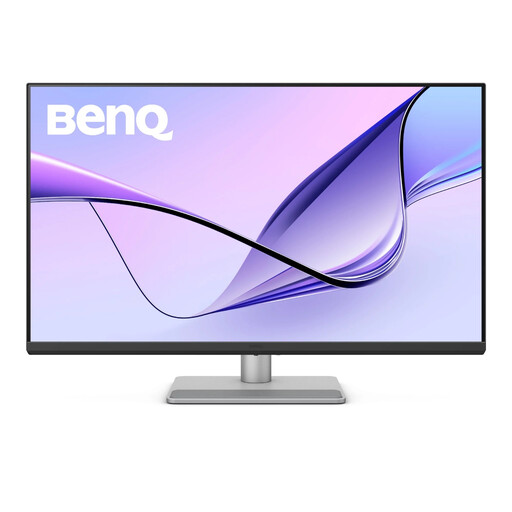
BenQ MA320UP 32-inch 4K Nano Glossy IPS monitor
Consider this larger display when two people need to view a 4K timeline and the desk can accommodate it.
The product title lists USB-C, P3 and a height-adjustable stand. It describes the monitor as Mac-focused, so check compatibility with your computer; confirm the charging requirement and an explicit KVM feature if either matters to your setup.
View on Joybuy
 No image available
ASUS ProArt Display PA32UCG-K 32-inch 4K monitor
Its larger screen is an option when collaborators need to inspect the timeline together and the desk has room for a 32-inch display.
The product title lists an IPS Mini LED panel, 120 Hz refresh rate, DCI-P3 and Thunderbolt 3. If HDR performance affects your decision, confirm the applicable brightness specification for this variant; also check the required colour mode and whether its connection meets your laptop-charging needs.
View on Joybuy
 No image available
Dahua 32-inch-class 4K 165 Hz curved OLED monitor
This curved, larger-screen option may suit a desk where shared viewing and its stated connection features matter, provided its shape and stand fit the viewing positions.
The product title lists 99% DCI-P3, Type-C 65 W and a USB hub. Confirm the exact screen size and model before ordering, and check the required Rec.709 or sRGB mode and KVM capability if your workflow depends on them.
View on Joybuy
 No image available
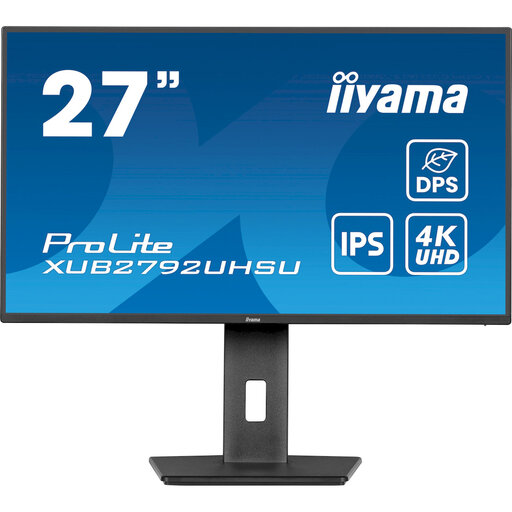
iiyama ProLite XUB2792UHSU-B6 27-inch 4K monitor
Consider the 27-inch size when desk space takes priority and another person joins the review only occasionally.
The product title identifies a 4K display. Check the colour mode for your project and confirm laptop charging and KVM specifications if you intend to share computers and peripherals through the monitor.
View on Joybuy
 No image available
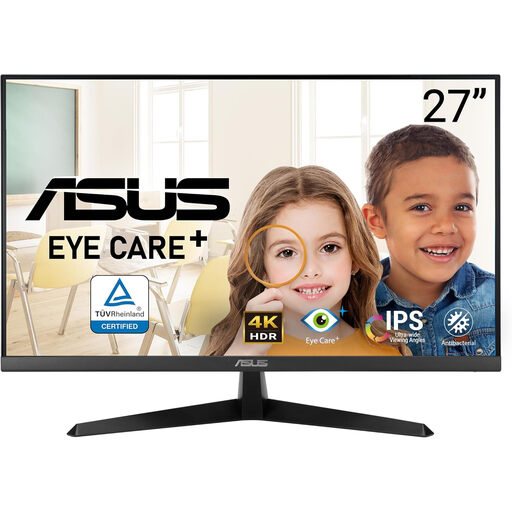
ASUS EYE CARE VY27UQ 27-inch 4K monitor
This compact-size choice fits a setup where one editor usually sits nearest the display and occasional shared viewing is enough.
The product title lists 4K resolution and a 60 Hz refresh rate. Before using it for colour decisions or a shared laptop dock, check the required colour mode, peripheral connections and charging features against your setup.
View on Joybuy
Common questions
Is 27 inches or 32 inches more suitable for reviewing a timeline with someone else?
A 31.5- or 32-inch 4K screen is the more accommodating physical size when two people regularly inspect a timeline and preview together; choose 27 inches when desk space is tighter or one editor normally views the screen from closest range. Measure the usable width and depth, including the stand or planned arm, before deciding.
Do I need a particular colour mode for video review?
Match the monitor’s documented mode to the project’s delivery colour space: Rec.709 or sRGB is relevant to standard video review, while P3 matters where the workflow calls for it. BenQ UK, ASUS and ViewSonic publish coverage or calibration claims for the models discussed here, but a stated figure does not replace configuring and calibrating the full workflow when colour decisions require it.
What does KVM add to a shared editing desk?
A monitor’s KVM function matters when two computers need to share one keyboard and mouse. BenQ UK explicitly lists KVM for the PD3225U; do not infer it for another model from USB-C charging, a USB hub or multiple video inputs.
Can the monitor’s USB-C connection replace my laptop charger?
It can serve that role only when the monitor’s stated power delivery, the laptop’s charging requirement and the intended cable are compatible. ViewSonic lists 60 W USB-C charging for the VP3256-4K, BenQ UK lists 85 W Thunderbolt power delivery for the PD3225U, and ASUS lists 96 W USB-C power delivery for the PA329CRV; check the exact model you intend to connect.
What should I check when buying a monitor from a marketplace seller?
For a monitor intended for Great Britain, check the seller’s identity and the product information for the applicable electrical-equipment requirements rather than relying on a generic overseas listing. GOV.UK guidance for England, Scotland and Wales says CE marking continues to be recognised for many products alongside or instead of UKCA marking; Northern Ireland has different arrangements, so check the requirements applicable there separately.


