Still-render reviewers
If you check material colour, lighting, shadows and final frames, look for documented colour modes and a calibration path rather than choosing on gaming specifications alone.


For still-render checks in a home office, start with a 4K creator monitor whose documented colour modes match your intended output, and check its calibration options and connections before choosing by resolution alone. Consider an HDR-focused display when HDR delivery is part of the work, or a higher-refresh monitor when you regularly inspect animation and real-time scenes. A factory calibration report helps with initial setup, but colour-critical work also calls for a way to recalibrate over time.
If you check material colour, lighting, shadows and final frames, look for documented colour modes and a calibration path rather than choosing on gaming specifications alone.
If the monitor also needs to connect to and charge your laptop, its inputs, power delivery and stand adjustment matter alongside the 4K image.
If you inspect moving cameras, animation or game-engine scenes, refresh rate becomes relevant—but the monitor still needs to suit your colour workflow.
Match the monitor to the render's delivery format first, then check how it will fit and connect at your desk. Treat HDR and high refresh rates as requirements to assess against the work you actually review.
| Concern | What to check | Who this matters to |
|---|---|---|
| Colour and tonal review | Find a named mode for your output space, such as sRGB or Rec.709, and check the calibration path. | When I judge materials, gradients and shadows in still renders, I need a display mode that matches the deliverable. Around 36% of consumers put colour and tonal review first. |
| Desk fit and connections | Measure the space for the screen and stand; check video-output compatibility and the laptop's charging requirement. | A screen must fit my home desk and connect to my laptop without complicating the setup. For around 29% of consumers, workspace and connection needs come first. |
| HDR and wider-gamut review | Confirm the required output format, relevant colour-space coverage and the computer's ability to send that signal. | If I deliver HDR or wider-gamut renders, I need to assess them in the intended format. That is the primary need for around 21% of consumers. |
| Motion review | Check the refresh rate and whether the computer, cable and monitor input support it at 4K. | Regular animation or real-time scene checks make moving images part of my review. Around 14% of consumers prioritise motion review. |
Pixel count does not tell you whether a monitor offers the colour mode or calibration method needed for your render deliverable.
Identify the output colour space, then check the exact model's named modes and calibration options.
A factory report describes an initial state, not an unchanged display throughout ownership. ASUS advises that display colours can drift over time.
For colour-critical review, check how the monitor can be recalibrated and which colour meters its calibration software supports.
Periodic recalibration may require access to a compatible colour meter.
A USB-C socket alone does not establish that your laptop can send the required video signal or draw sufficient charging power through the monitor.
Check the laptop's video-output and charging requirements against the exact monitor input and power-delivery rating.
An incompatible one-cable setup may require a separate cable, dock or charger.
HDR capability and refresh rate address different review tasks; neither establishes that a monitor is set up for your SDR colour workflow.
Prioritise HDR when you must assess HDR output, and higher refresh when inspecting motion is a regular part of the job.
BenQ's Creative Pro range includes 4K monitors aimed at colour-led work and a higher-refresh model positioned for animation and game development.
Dell's UltraSharp U3225QE is a reference point for a laptop-centred 4K desk setup with hub connectivity.
The ProArt PA32UCX-PK is a specialist reference when reviewing HDR output or wider-gamut deliverables is part of the work.
These 4K models span HDR-focused, motion-oriented and desk-friendly setups for checking 3D renders. Choose against your output colour space and connection requirements rather than treating every model as interchangeable for colour-critical work.
 No image available
Consider this model when HDR render review and a hardware-calibration route are part of your workflow.
The product name specifies a 120 Hz IPS mini-LED display, Dolby Vision, HDR10, Thunderbolt 3 and HDMI 2.1. Confirm the exact peak-brightness figure before relying on it for HDR assessment, and check laptop charging and screen-uniformity requirements separately.
 No image available
This is a motion-oriented choice if you also check animation or real-time scenes; decide whether a curved screen suits your render-review setup.
The product name specifies HDR400, 99% DCI-P3 coverage, a USB hub and 65 W Type-C power. For colour-critical decisions, check the calibration method; for laptop use, compare that power rating with your computer's requirement.
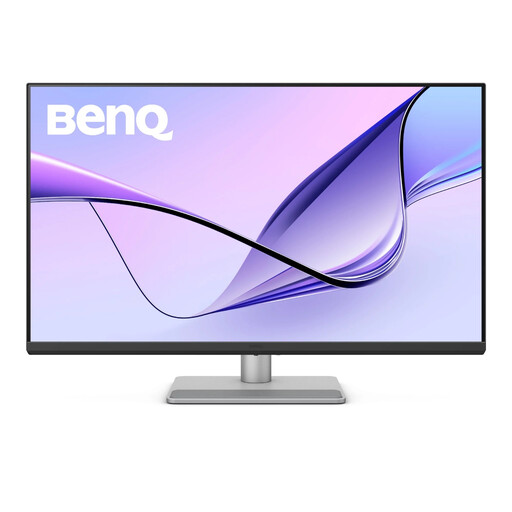 No image available
Consider this model for a Mac-centred render-review desk if its display modes and USB-C connection suit your computer and intended output.
Its product name specifies HDR, P3 and a height-adjustable stand. Check the applicable calibration and charging details before making either central to your setup.
 No image available
Consider this smaller-screen option if moving 3D scenes are a regular part of your checks.
The product name specifies a Nano IPS panel, 240 Hz/480 Hz dual-mode operation, DisplayHDR 600, DisplayPort 2.1 and HDMI 2.1. Confirm which resolution applies to each refresh mode and check the calibration route if final colour decisions depend on this screen.
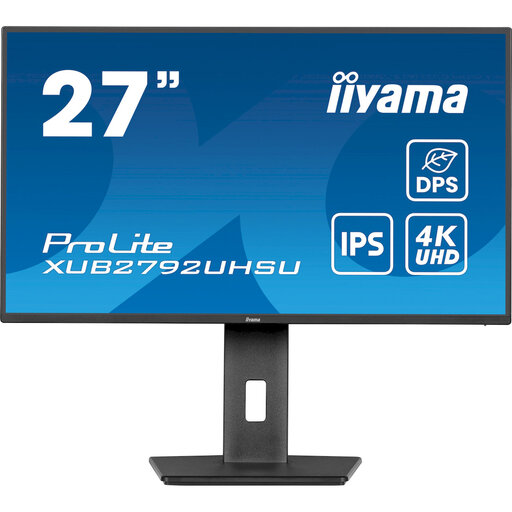 No image available
The 27-inch format is worth considering when desk space is a priority alongside viewing 4K render detail.
Before using it for colour-critical review or laptop charging, check its colour modes, recalibration options and USB-C power-delivery details against your workflow.
No. A larger screen may give you more room to view a render, but it also needs more desk space. Check the screen and stand dimensions against your desk, then compare colour-workflow features rather than deciding by diagonal size alone.
No: it helps establish the monitor's initial setup, but does not mean its colour will remain unchanged. ASUS advises that display colours can drift over time, so check the recalibration method and use a mode appropriate to your output.
Confirm that your laptop port supports video output, that the monitor input supports the display mode you need, and that its power delivery meets the laptop's charging requirement. A USB-C connection by itself does not establish all three.
A colour meter may be needed if your chosen recalibration workflow requires one. Check which meters the exact monitor and its calibration software support, and whether you will need access to one separately.