Colour-critical render reviewers
If you inspect materials, lighting or final images against a particular output colour space, stated gamut coverage and calibration information matter alongside a consistent colour-management workflow.


For render checking on a small desk, match the monitor’s stated colour coverage to your intended output colour space, then measure the complete stand or arm layout. A display with stated calibration details is worth considering for colour-critical review; USB-C power delivery simplifies a laptop setup only when the computer’s video and charging requirements are compatible.
If you inspect materials, lighting or final images against a particular output colour space, stated gamut coverage and calibration information matter alongside a consistent colour-management workflow.
If usable desk depth is limited, check the complete stand dimensions, cable clearance and mounting position rather than judging fit by screen diagonal alone.
If you want video and charging through one connection, compare the monitor’s USB-C power delivery with your laptop’s requirements and confirm that the computer supports the required video connection.
For a 4K monitor used to inspect 3D renders on a small desk, establish the output colour space first; then check whether the display fits and connects to your computer as intended.
| Concern | What to check | Who this matters to |
|---|---|---|
| Colour confidence | Match the exact model’s stated gamut and calibration information to the render’s delivery colour space. | If the final image targets sRGB, Rec.709 or a wider-gamut workflow, I need a display specification relevant to that target, not just 4K resolution. Around 42% of consumers put colour confidence first. |
| Desk fit and mounting | Measure the complete stand layout and cable clearance; for an arm, check the mount, clamp and desk requirements. | When desk depth is tight, I need to know where the screen and its support will sit without assuming an arm fits my desk. Desk fit is the primary concern for around 33% of consumers. |
| Laptop connection and interactive use | Check USB-C video support, charging power and cable compatibility; consider refresh rate separately from colour needs. | If I work from a laptop or move frequently through a 3D viewport, connection convenience and interactive use can decide between otherwise suitable displays. Around 25% of consumers prioritise those needs. |
Resolution describes pixel count, not the colour space used to judge a render. BenQ UK specifies 99% sRGB and 99% Rec.709 for the PD2705U, while ASUS UK specifies 99% DCI-P3 and 99% Adobe RGB for the PA279CRV.
Identify the intended output colour space and check the exact monitor’s gamut and calibration information. A factory-calibration claim does not replace a consistent colour-management workflow.
BenQ UK lists a 256.8 mm depth with stand for the PD2705U and a 459.4 mm overall depth for the arm-equipped PD2705UA. An arm therefore needs its own layout check, not an assumption that every dimension will be smaller.
Measure usable desk depth, rear cable space and the desk edge. Check any arm’s load and clamp requirements against the desk manufacturer’s guidance.
Using a separate VESA arm also means finding a compatible mount and a suitable position for its clamp.
BenQ UK specifies 65 W USB-C power delivery for the PD2705U and PD2705UA; ASUS UK specifies 96 W for the PA279CRV. Power delivery alone does not establish video support or adequate charging for a particular laptop.
Check the computer’s USB-C video capability, charging requirement and cable specification before planning a one-cable setup.
Depending on compatibility, you may still need the laptop’s own charger or a suitable cable or dock.
A replaced monitor needs an electrical-waste route rather than general-waste disposal. GOV.UK describes take-back duties for qualifying distributors when customers buy electrical equipment of the same type.
Ask the seller how its take-back arrangement works, or check the local council’s monitor recycling arrangements before taking the old display anywhere.
The PA279CRV is a 27-inch 4K creative-display option for wider-gamut render review.
The PD2705U and PD2705UA offer 27-inch 4K routes for review aimed primarily at sRGB or Rec.709 output.
The S2725QC is a general-purpose 27-inch 4K USB-C option for combining render inspection with interactive and everyday work.
These 4K displays offer different starting points for render checking: match the panel and stated variant to your intended work, then confirm the colour, desk-fit and connection details that matter to your setup.
 No image available
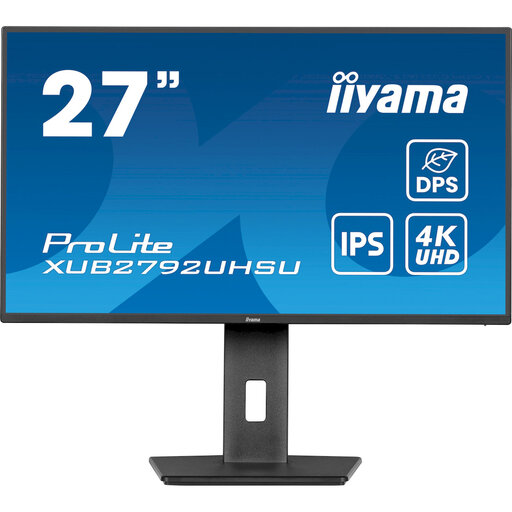
For checking renders on a limited desk, compare its full stand layout with your available space and confirm its colour specifications against your output target.
The listed variant is a 16:9 4K UHD monitor in matte black. If you plan to connect a laptop through USB-C, check the video connection and available charging power before relying on one cable.
 No image available
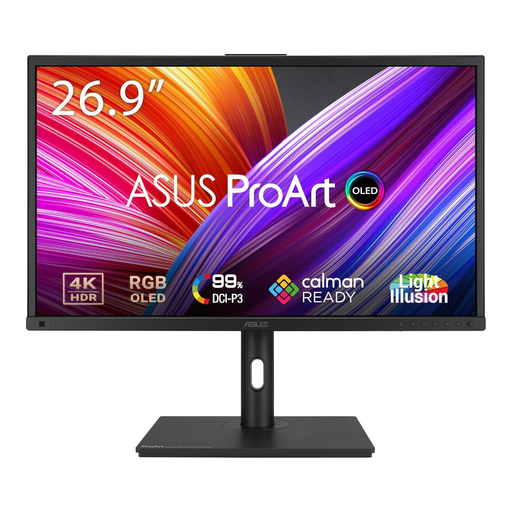
Consider this OLED model if its colour specifications suit your render’s delivery target, but check the calibration details you need for that workflow.
Measure its stand layout or intended mounting position against your desk. Confirm USB-C charging power and video compatibility if a laptop will provide the render.
 No image available
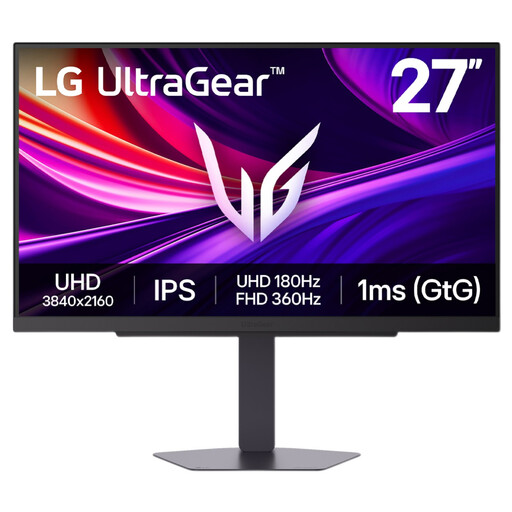
This gaming-oriented 4K model may interest you if the same screen will also serve interactive work; assess render colour requirements separately from refresh rate.
The name specifies Dual Mode with a maximum of 360 Hz, not a refresh rate for every mode. Check the stand layout and any calibration requirements before choosing it for a small desk.
 No image available
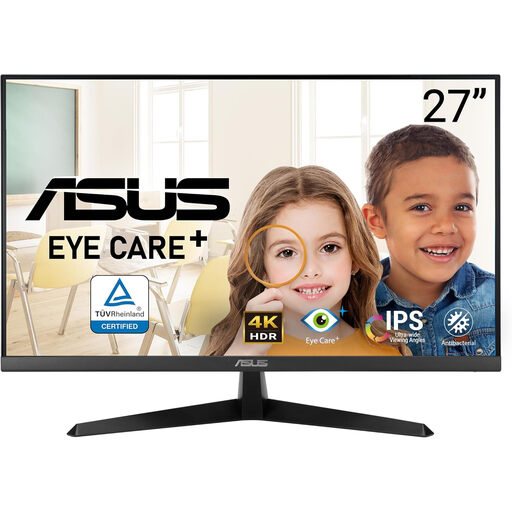
For render inspection where 60 Hz meets your interactive needs, check that this model’s colour specifications match the intended output.
Confirm the complete stand footprint and cable clearance on your desk, as well as any factory-calibration details your workflow requires.
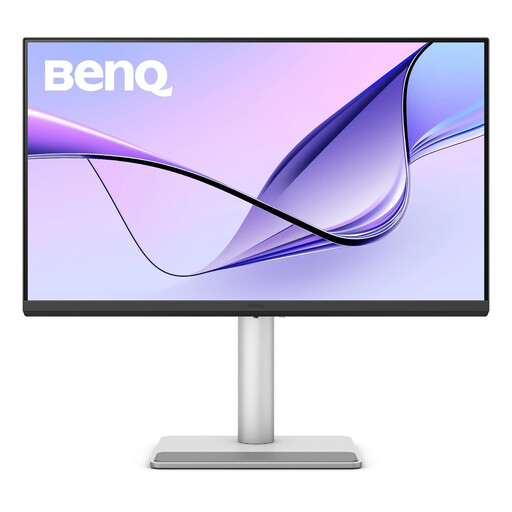 No image available
For a laptop-based render setup, this model’s stated USB-C connection is worth checking against your computer’s video and charging requirements.
The name identifies a Nano Glossy IPS 4K variant with an adjustable stand. Confirm its footprint on your desk and the colour and calibration specifications needed for your output target.
It can be, provided the complete stand or arm layout fits your usable space. BenQ UK lists the PD2705U at 614 mm wide and 256.8 mm deep with its stand, while the arm-equipped PD2705UA has a quoted overall width of 614 mm and depth of 459.4 mm; also allow for cables and your viewing position.
Not necessarily: choose stated colour coverage that matches the intended delivery workflow. BenQ UK lists 99% sRGB and Rec.709 for the PD2705U; ASUS UK lists 99% DCI-P3 and Adobe RGB for the PA279CRV. Neither set of specifications replaces checking how your software manages colour.
Only if the laptop supports the required USB-C video connection and its charging needs fit the monitor’s power delivery. BenQ UK specifies 65 W for the PD2705U and PD2705UA, while ASUS UK specifies 96 W for the PA279CRV; check your computer and cable before depending on one connection.
Use an appropriate electrical-waste route rather than general waste. GOV.UK describes same-type take-back duties for qualifying distributors when you buy a replacement; ask the seller about its arrangements or check the local council’s monitor recycling options.