For checking 3D renders, choose a 4K monitor whose documented colour coverage matches your output workflow; if colour approval matters, look for a model-specific factory-calibration claim rather than relying on resolution or an HDR label alone. For a laptop-based study desk, check USB-C video and charging compatibility, stand dimensions and adjustment before choosing a screen. If audible electronics would be disruptive, ask for model-specific operating-noise information rather than assuming a monitor will be silent.
Who this choice affects
Colour-critical render reviewers
If you judge materials, lighting and final render colour against colour-managed deliverables, the stated gamut and calibration of the exact model matter more to that decision than its refresh rate. ASUS UK and BenQ UK publish model-specific colour specifications for their cited creative monitors.
Laptop-based 3D creators
If the study desk also serves as a laptop workstation, a USB-C monitor may simplify connections. Check that the laptop port carries video, the cable is suitable and the monitor’s stated power delivery meets the laptop’s requirements.
Space-conscious long-session users
If you review renders for long periods at one desk, compare the stand or arm footprint and its adjustment range with the space available. BenQ UK lists different height and swivel adjustments for its PD2706U stand and PD2706UA arm variants, so the exact variant matters.
What to prioritise
For a 4K monitor used to check 3D renders in a quiet study, start with the colour space required for delivery, then check laptop connections and physical desk fit. The deciding concern will differ between consumers, even when their needs overlap.
| Concern |
What to check |
Who this matters to |
| Render colour |
Match stated sRGB or Rec.709 coverage to standard web or video delivery; check DCI-P3 or Adobe RGB coverage when your workflow requires it. Look for model-specific factory-calibration details. |
If I approve a render’s materials and lighting for a defined output colour space, I need more than a sharp image to judge its colour. Around 42% of consumers would make colour confidence their primary concern. |
| Laptop integration |
Confirm video support on the laptop’s USB-C port and compare its charging requirement with the monitor’s power delivery; check the cable and any required peripheral ports. |
When my laptop shares a study desk with other devices, I want the display connection and charging arrangement to work without relying on assumptions about the USB-C socket. Around 33% of consumers would put laptop integration first. |
| Desk placement |
Measure desk depth and the stand or arm footprint; compare height, tilt, swivel and pivot adjustment. If noise is critical, request information for the exact model. |
During long review sessions, I need to position the screen comfortably without an arm or base crowding the desk. For around 25% of consumers, physical fit and positioning would be the deciding need. |
Buying pitfalls
-
Taking an HDR or wide-gamut label as proof of accurate colour
Neither label, on its own, tells you whether the exact monitor is factory-calibrated or whether its stated gamut matches the render’s output colour space.
Check the model’s calibration details and relevant gamut coverage, then use a colour-managed workflow when final colour approval matters.
-
Assuming any USB-C connection will handle video and charging
A monitor’s stated power delivery does not establish that the laptop port outputs video or that the available charging power is sufficient.
Check the exact laptop port, charging requirement and cable capability before planning a single-cable setup.
Depending on that setup, you may also need a suitable cable, charger or separate dock.
-
Choosing a stand or integrated arm without measuring the desk
Stand and arm variants can have different adjustment ranges and footprints, even within the same monitor line.
Measure the desk’s width, depth and rear clearance, including any clamp area, against the dimensions of the exact variant.
A poor fit may require a different stand, an arm or changes to the desk arrangement.
-
Assuming home collection of an old monitor is free
GOV.UK guidance says retailers offering in-store electrical-waste take-back must provide that service free, but they may charge to cover transport when collecting from a customer’s home.
Check the retailer’s take-back arrangements and a local recycling route before arranging disposal of a replaced monitor.
Relevant brands to consider
ASUS ProArt
The PA279CRV is a 27-inch creative-monitor example for buyers matching a display’s stated colour coverage to their render workflow.
- ASUS UK states that the PA279CRV covers 99% DCI-P3 and 99% Adobe RGB and is factory pre-calibrated to Delta E <2.
- Those manufacturer specifications do not establish the calibration of an individual unit throughout its use; colour-critical approval may still call for profiling and recalibration.
BenQ DesignVue
The PD2706U is a 4K option to examine when standard web or video colour spaces and desk adjustment are part of the brief.
- BenQ UK lists 100% sRGB, 100% Rec.709 and 95% P3 coverage for the PD2706U, with an average Delta E ≤3.
- Its listed 60 Hz refresh rate is a separate consideration if the work also involves fast interactive viewing; it does not determine colour suitability.
Dell UltraSharp
The U2723QE illustrates a 27-inch 4K hub-monitor approach for a desk that also needs laptop and peripheral connections.
- Dell UK lists 100% sRGB and Rec.709 coverage, 98% DCI-P3 coverage, 90 W USB-C power delivery and LAN for the U2723QE.
- Dell’s UK page marks this exact model unavailable, so its specifications should not be taken as evidence that it can currently be purchased there.
Joybuy monitors for render review
These 4K monitors offer different starting points for checking renders at a study desk: some emphasise a creative-display format, while others combine 4K resolution with laptop connections or stand adjustment. Match the exact model’s colour, connection and physical specifications to your workflow; the product choice alone does not establish quiet operation.
 No image available
ASUS ProArt Display PA32UCG-K 32-inch 4K monitor
Consider this larger creative-display format if your desk can accommodate a 32-inch screen for render review.
The product title specifies an IPS Mini LED panel, 120 Hz refresh rate, Thunderbolt 3 and HDMI 2.1. Confirm the connections and charging requirements of your laptop before planning a single-cable setup.
Joybuy
 No image available
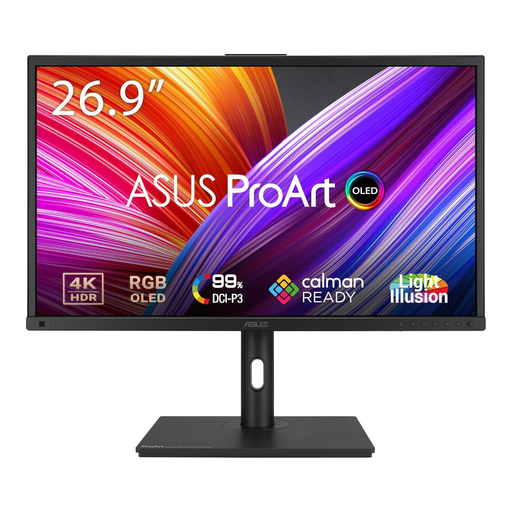
ASUS ProArt PA27DCE-K OLED 4K monitor
This OLED 4K model is relevant if you want a creative-display option for reviewing render detail.
Check model-specific calibration evidence against your output requirements before using it for colour approval, and confirm laptop charging and video compatibility if you intend to connect by USB-C.
Joybuy
 No image available
Dahua 32-inch curved OLED 4K monitor
Consider this curved screen only if its shape and 32-inch footprint suit the way you inspect renders at your desk.
The product title specifies 165 Hz, 99% DCI-P3 and Type-C 65 W. Check the basis for any colour-accuracy claim before colour-critical approval, and compare the stated power delivery with your laptop’s needs.
Joybuy
 No image available
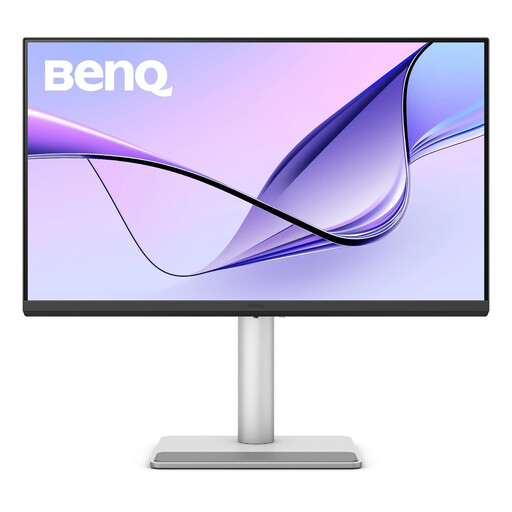
BenQ MA270UP 27-inch Nano Glossy IPS 4K monitor
This 27-inch model is worth considering for a laptop-based render-review desk where USB-C connection and screen positioning matter.
Its product title identifies a Nano Glossy IPS panel, USB-C and a height-adjustable stand. Confirm the required laptop and cable compatibility, and check calibration details if final colour judgement is part of the work.
Joybuy
 No image available
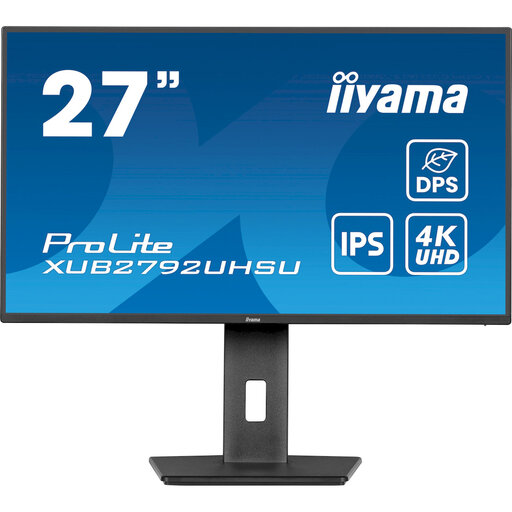
iiyama ProLite XUB2792UHSU-B6 27-inch 4K monitor
Consider this 27-inch 4K model if screen size and desk fit lead your render-review choice.
Check its exact stand dimensions and adjustment range for your study, along with calibration details if you will approve final colour. Confirm USB-C video and charging capabilities before relying on a single cable.
Joybuy
Frequently asked questions
Is 4K more important than refresh rate for checking a 3D render?
For static render checking, start with resolution and documented colour characteristics rather than treating a higher refresh rate as evidence of better colour judgement. Refresh rate becomes a separate priority if you also need fast interactive viewport work or animation review.
Will one USB-C cable connect and charge my laptop?
It can, but only if the laptop’s relevant port supports video output and the monitor’s power delivery meets the laptop’s charging needs. Check the exact port, monitor specification and cable before relying on a one-cable desk setup.
Do I need wide-gamut coverage for every 3D render?
No; choose stated gamut coverage to match the colour space used by your output and colour-managed workflow. For standard web or video delivery, examine sRGB or Rec.709 coverage; DCI-P3 or Adobe RGB coverage matters when those spaces are part of the work. A wider-gamut claim alone does not establish accurate colour.
What should I do with an old monitor in the UK?
Use an appropriate electrical-waste recycling or retailer take-back route rather than placing the monitor in ordinary household rubbish. GOV.UK guidance distinguishes free in-store take-back where offered from home collection, for which a retailer may charge transport costs; check the arrangements available for your replacement.


