Shared-desk colour reviewers
Editors, designers and collaborators comparing the same image from different seats need room for both viewers, manageable reflections and a colour mode suited to the work they are reviewing.


Choose the colour mode for the work you deliver: sRGB or Rec.709 for web and standard dynamic range video, Adobe RGB support for print-oriented photography, and HDR capability when the work requires it. At a shared desk, also check sightlines, reflections and available space; wide-gamut coverage or factory calibration alone will not make every application show colour consistently.
Editors, designers and collaborators comparing the same image from different seats need room for both viewers, manageable reflections and a colour mode suited to the work they are reviewing.
Photographers and retouchers preparing Adobe RGB or print-oriented work have more reason to check the exact model’s colour-space coverage, calibration options and uniformity support.
People switching between a laptop and other desk devices may value display connectivity and peripheral switching, provided the monitor’s ports and charging capability suit their computer.
Set the delivery colour space first, then work out how both people will see the screen. Check laptop connections and specialist HDR requirements against the exact monitor rather than assuming they come with 4K resolution.
| Concern | What to check | Who this matters to |
|---|---|---|
| Shared viewing | Measure screen and stand space; check stated viewing angles and reflection control against both seating positions. | If we review an image from different seats, I need both of us to see it without a direct reflection getting in the way. Around 31% of consumers put shared viewing first. |
| Colour workflow | Match the deliverable to the exact model’s colour modes and calibration options; use review software that handles the display profile. | For print-oriented edits, I need to judge colour in the intended space rather than rely on a wide-gamut label alone. Roughly 31% of consumers make colour-workflow control their primary concern. |
| Desk connections | Check the laptop’s video output and charging requirements against the monitor’s USB-C or Thunderbolt ports and power delivery. | When I connect a laptop and desk peripherals, I want the arrangement to work without repeated cable changes. About 23% of consumers prioritise that connection workflow. |
| HDR finishing | Confirm the required delivery format, stated HDR support and brightness specification, as well as desk or arm load limits. | If my deliverable requires HDR review, I need a display and setup suited to that format rather than an SDR screen chosen for resolution alone. Approximately 15% of consumers put HDR finishing first. |
A broad-gamut display does not make an application use the display profile. DisplayCAL explains that colour-managed applications must perform the necessary profile transformations.
Start with the delivery space, check the monitor’s modes and calibration options, and test the applications used for editing and review.
Profiling the display may also call for a colourimeter and time to set up the workflow.
Both viewers need workable sightlines, but a larger panel and stand must fit the available surface. ASUS specifies a weight of 18.3 kg with stand for the ProArt PA32UCX-PK, so its support needs particular attention.
Measure usable desk width and depth, and check the arm’s weight and mounting limits if you plan to use one.
Monitor power delivery does not establish whether a particular laptop and cable can carry video, charging and the peripherals you need.
Compare the laptop’s port and charging specifications with the exact monitor’s connection and power-delivery requirements.
A specification page can describe a model even when it is no longer available from that seller. Dell UK identified its U2723QE as unavailable on the cited product page.
Confirm the exact model and its current availability and warranty terms with the intended retailer before ordering.
These lines illustrate different colour-editing priorities; check the specifications of the particular model rather than treating a brand name as a workflow guarantee.
BenQ UK specifies the 31.5-inch PD3225U for a larger 4K P3, sRGB and Rec.709 workspace with Thunderbolt and KVM connectivity. Its 27-inch SW272U instead specifies 99% Adobe RGB coverage and hardware calibration for photo-oriented work.
Dell UK lists the 27-inch UltraSharp U2725QE as a 4K IPS Black Thunderbolt hub monitor with an anti-glare, anti-reflective surface and power delivery up to 90 W.
ASUS specifies the 32-inch ProArt PA32UCX-PK with 4K resolution, Mini LED backlighting, hardware calibration and HDR10, HLG and Dolby Vision support.
These 4K monitors offer different starting points for shared-desk review, from larger colour-work screens to more compact displays. Match each model’s stated features to your delivery space, seating arrangement and computer before choosing.
 No image available
Consider this larger display if your shared-desk work calls for the HDR formats and calibration feature named for this model; confirm the required workflow before relying on either.
The product title specifies IPS Mini LED, 120 Hz, Dolby Vision, HDR10, hardware calibration and Thunderbolt 3.
Confirm the exact peak HDR brightness before using that figure to make a decision.
 No image available
Its larger curved screen may suit a desk where both reviewers can position themselves comfortably; assess the curve and reflections from their actual seats.
The product title states 165 Hz, 99% DCI-P3 coverage and Type-C 65 W power delivery. Check its colour modes and calibration options if these are central to your edits.
 No image available
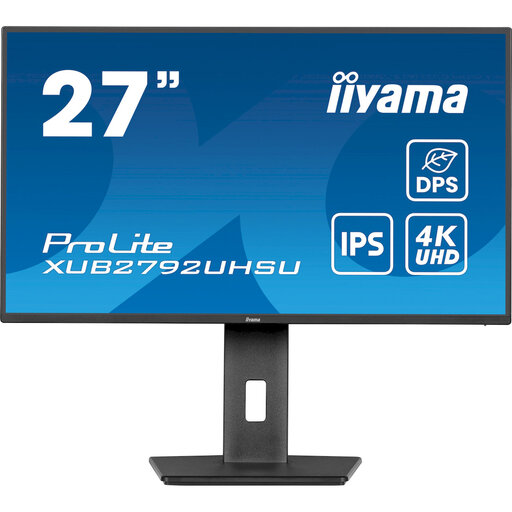
This 27-inch model is worth considering when desk space favours a smaller screen, provided it still gives both reviewers enough room to view the work.
Confirm its colour modes, reflection control and laptop charging requirements against your setup.
 No image available
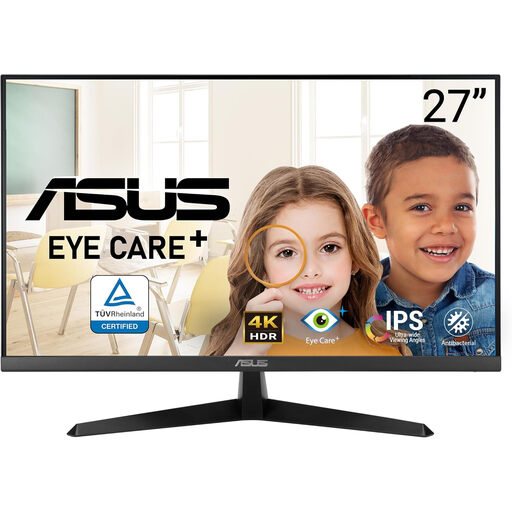
Consider it for 4K shared review if the screen size and seating position work at your desk, and check the colour mode required by your deliverables.
The product title states a 60 Hz refresh rate. Assess reflections and calibration needs before using it for controlled colour comparison.
 No image available
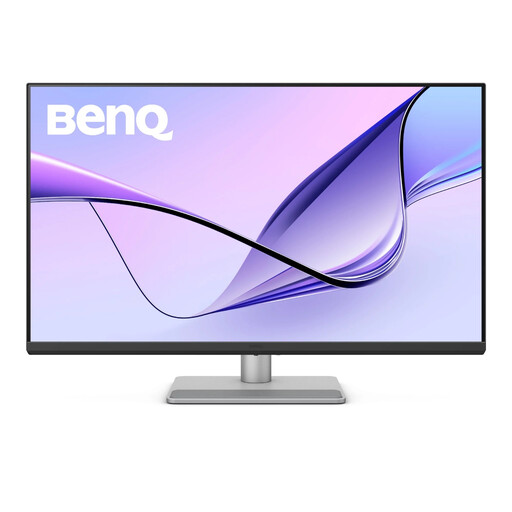
The larger screen may provide room for shared review, but check how its Nano Glossy surface looks under your desk lighting before choosing it for colour comparisons.
The product title specifies an IPS panel, USB-C, HDR and a height-adjustable stand. Confirm the required laptop connection and colour workflow for this exact model.
No. Resolution does not establish colour-space fit, uniformity, reflection control or whether review software uses the display profile. Choose a mode that matches the deliverable, then check the viewing setup and application workflow.
Both people need a workable view without direct reflections. Check the monitor’s stated viewing angles, then arrange seating, tilt and room lighting; a viewing-angle specification does not promise identical colour perception from every position.
No. A factory report describes the maker’s stated calibration result, while application behaviour also depends on the assigned display profile and colour management. DisplayCAL notes that applications must use the profile and necessary colour transformations.
It can when the monitor, laptop port and cable support the required video and charging functions. BenQ UK specifies 85 W power delivery for the PD3225U, and Dell UK lists up to 90 W for the U2725QE; check your laptop’s requirements before assuming either setup will work.
A qualifying UK consumer purchase has statutory protections separate from a retailer’s voluntary return policy. The Consumer Rights Act 2015 requires satisfactory quality for goods supplied under a consumer contract; keep the order confirmation, exact model details and a record of the issue when contacting the retailer.