For texture-seam review beside a bright window, prioritise screen placement and reflection handling before treating a high brightness figure as the solution: reflected light can still obscure fine detail. If the review determines colour-sensitive approvals, also look for documented colour accuracy and a workable calibration process; if inspection is less colour-critical, weigh those features against screen size, adjustment and the connections your desk needs.
Who needs which features?
Colour-critical texture reviewers
If a seam or colour transition affects creative approval, you need to assess colour and tone as well as fine detail. ASUS UK documents calibration features on the PA32UCXR, while RTINGS explains why colour accuracy matters when judging an image against its intended appearance.
Bright-window workstation users
If daylight or a window appears in the screen, consider the display surface and where the monitor will stand before relying on brightness alone. RTINGS identifies both reflections and brightness as factors in how an image looks under room lighting.
Hybrid laptop-desktop creators
If you review detailed material while connecting a laptop and peripherals at one desk, check the monitor’s connections, charging capability and stand adjustment against your equipment. Dell UK documents hub-oriented features on the U3225QE; the right connection still depends on your laptop.
What matters when choosing?
For seam inspection beside a window, settle the screen position and likely reflections first. Then decide whether colour approval or day-to-day desk integration places the greater demand on the monitor.
| Concern |
What to check |
Who this matters to |
| Reflections and visibility |
Check the stated screen treatment and whether a window will reflect in the intended viewing area. Compare brightness figures only when their measurement conditions match. |
When daylight falls across the inspection area, I need to see subtle seam boundaries without a reflected window covering them. Around 50% of consumers put reflection control first. |
| Colour and tone |
Match the colour mode to your delivery standard; look for a documented accuracy metric and a suitable calibration process, not gamut coverage alone. |
For approval work, I need a colour transition to look dependable in the mode I actually use. Colour reliability is the primary concern for around 30% of consumers. |
| Workspace and connections |
Check 4K screen size and stand adjustment at your desk, then match the monitor’s display connection and any stated charging capability to your laptop. |
If I move between a laptop and a desktop setup, I need a screen I can position and connect without disrupting review. Around 20% of consumers prioritise that desk workflow. |
Buying pitfalls
-
Choosing on resolution alone
4K resolution gives you detail to inspect, but a reflected window can cover the boundaries you are trying to judge. RTINGS notes that room lighting, brightness and reflection handling all affect the visible image.
Check the screen treatment alongside the desk position. If the window appears in the panel, try a different orientation or control the light with blinds.
-
Confusing a wide gamut with accurate colour
Colour-space coverage and colour accuracy describe different things. A wide-gamut specification alone does not tell you how accurately the monitor displays colour in the mode used for approval.
Check the stated accuracy metric, available colour modes and calibration documentation for your working standard. ASUS UK and BenQ UK document different calibration and accuracy features on the PA32UCXR and PD3225U respectively.
A calibration workflow may also require separate equipment or a calibration service.
-
Trying to solve workstation glare with the monitor alone
A bright source in the viewing area is also a desk-layout issue. The Health and Safety Executive advises arranging the screen and lighting to avoid glare and bright reflections.
For a regularly used workstation, assess the whole setup and adjust screen placement, lighting or blinds where needed.
-
Assuming any USB-C connection will suit a laptop
The connection you need for an external display may differ from what you need to charge the laptop or attach peripherals.
Compare the laptop’s display-output and charging requirements with the exact monitor’s connection and power-delivery specifications before planning a single-cable desk.
If the connection cannot meet those requirements, you may need a separate charger, cable or dock.
Relevant brands to consider
These examples illustrate different specification priorities for this workspace; their features apply to the named models, not every monitor from each brand.
ASUS ProArt
For colour-managed review where bright-room specifications also matter, ASUS UK lists the PA32UCXR as a 32-inch 4K IPS Mini-LED display with an anti-glare surface and embedded colorimeter.
- ASUS UK specifies 1,000 cd/m² typical brightness and a stated colour-accuracy figure of ΔE < 1 for the PA32UCXR.
- The PA32UCXR is specified at 60 Hz. Its stated brightness and accuracy are manufacturer specifications, not measurements of performance at your window angle.
Dell UltraSharp
For a 32-inch-class 4K desk display with laptop-oriented connections, Dell UK lists the U3225QE with an anti-glare, anti-reflective surface and an ambient-light sensor.
- Dell UK specifies an IPS Black panel and a 3,000:1 contrast ratio for the U3225QE, alongside its hub-oriented setup.
- Before choosing it for strong window light, check model-specific brightness and reflection performance under conditions comparable to your desk.
BenQ DesignVue
For colour-managed review, BenQ UK lists the 31.5-inch 4K PD3225U with a matte screen and a factory-calibration report.
- BenQ UK specifies 400 nits typical brightness, 2,000:1 native contrast and average ΔE ≤ 2 for the PD3225U.
- Its listed typical brightness is below the PA32UCXR’s listed 1,000 cd/m²; neither figure establishes how a direct window reflection will look at your workstation.
4K monitors to consider on Joybuy
These 4K monitors offer different screen sizes, panel types and desk setups for texture inspection. For a bright-window position, check reflection handling and the brightness relevant to normal use; for colour approval, check accuracy and calibration for the exact model rather than treating resolution or gamut as enough.
 No image available
ASUS ProArt Display PA32UCG-K 32-inch 4K Mini LED
Consider this model if colour-managed inspection is central to your work, but check how its brightness specification applies to everyday viewing beside your window.
The product name lists a 32-inch 4K IPS Mini LED display, hardware calibration, 120 Hz and Thunderbolt 3. Confirm laptop charging capability separately if you need it.
Joybuy
 No image available
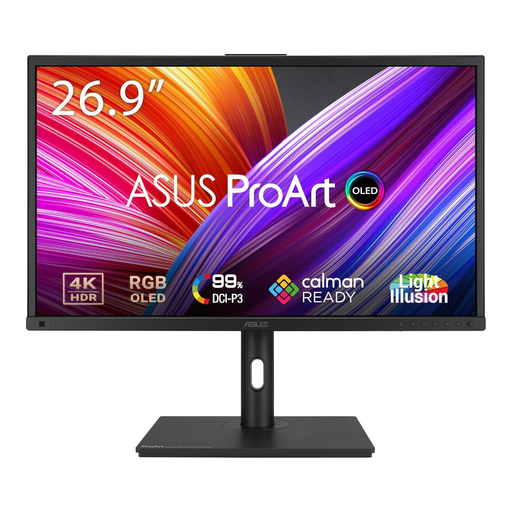
ASUS ProArt PA27DCE-K 4K OLED
This is a 4K option to consider when a smaller desk display suits your inspection setup; check its screen treatment and normal-use brightness against the window position.
The product name identifies an OLED 4K UHD display. For colour-sensitive approval, check the accuracy and calibration documentation for this exact model.
Joybuy
 No image available
LG UltraGear 32GX850A-B 32-inch 4K OLED
The 32-inch 4K format may suit a desk used for detailed inspection, but do not treat a peak-brightness claim as a measure of normal viewing beside a window.
This model is presented as a gaming monitor with OLED and dual-mode features. Check colour-accuracy documentation if the same screen will be used for approvals.
Joybuy
 No image available
Dahua 32-inch curved 4K OLED, 165 Hz
Consider the curved screen only if its shape suits the way you inspect seams at your desk; check the surface treatment and reflections at your intended window angle.
The product name lists 4K resolution, 165 Hz and Type-C 65 W. Compare that connection’s requirements with your laptop before relying on it for charging.
Joybuy
 No image available
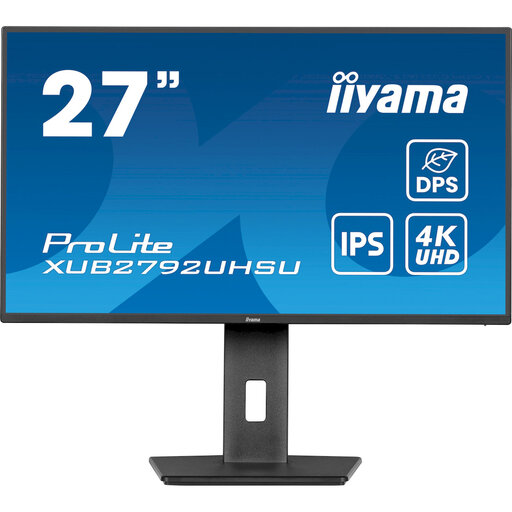
iiyama ProLite XUB2792UHSU-B6 27-inch 4K
This 27-inch 4K model may fit a more compact inspection desk, provided you can position it to keep window reflections away from the working area.
The product name identifies a 4K UHD LED monitor. Check its screen coating, applicable brightness specification and colour-accuracy documentation if those determine your choice; the stated matte-black colour does not establish a matte screen surface.
Joybuy
Frequently asked questions
Will a brighter monitor alone make seams easier to inspect beside a window?
No: higher brightness can help in a well-lit room, but a direct reflection may still cover fine detail. RTINGS identifies reflection handling and brightness as separate factors; position the screen away from reflected daylight and use blinds where needed.
Do I need colour calibration for texture-seam review?
If the review is used for colour-sensitive approval, choose a monitor with documented accuracy in a relevant colour mode and a calibration process you can maintain. For inspection focused mainly on the seam’s visible shape, establish reflection control first; a wide-gamut label on its own does not establish accuracy.
What should I change if a work monitor reflects the window?
Start with the workstation layout rather than assuming a replacement screen will remove the reflection. The Health and Safety Executive advises arranging the screen and lighting to avoid glare or bright reflections, often by positioning the screen so it does not directly face a window and adjusting curtains or blinds.
Is an anti-glare screen enough for a bright-window desk?
Not necessarily: a stated anti-glare or anti-reflective surface is relevant, but it does not guarantee that a window will disappear from the viewing area. Check the screen’s intended angle and how much light you can control, especially where seam inspection depends on seeing subtle boundaries.


