For vector artwork review beside a bright window, start with a 4K monitor whose screen surface, colour controls and physical adjustment suit your desk, then decide how much brightness and calibration capability your work needs. Higher specified brightness does not remove a reflection from the window: position the screen to control glare, and review artwork in the colour space intended for delivery.
Who needs which features?
Colour-critical vector reviewers
If you approve logos, illustrations or layouts for a defined delivery colour space, check the monitor’s relevant colour mode and how you will keep it calibrated. A 4K resolution alone does not establish a repeatable colour-review workflow.
Bright-window home-office creatives
If daylight makes paths, thin strokes or neutral tones difficult to judge, consider the screen surface and whether you can move or angle the display. The Health and Safety Executive advises arranging screens and lighting to avoid reflections and glare.
Laptop-based designers seeking a one-cable desk
If the same connection needs to carry video, charge your laptop and serve peripherals, compare the monitor’s USB-C or Thunderbolt functions with your computer’s video output and power requirements.
What matters when buying?
Set the artwork’s delivery colour space and tackle the window reflection before comparing headline display specifications. Then check whether the screen fits your artboards, desk and computer connections.
| Concern |
What to check |
Who this matters to |
| Reliable colour review |
Match the colour mode to the delivery space, such as sRGB, and check the calibration process for the exact model. |
If my artwork needs consistent approval across reviews, I want a colour setup I can repeat rather than relying on resolution alone; around 42% of consumers put reliable colour first. |
| Daylight visibility and reflections |
Check the screen surface and compare brightness figures on the same basis; make sure the stand or mount allows a position away from reflected light. |
When daylight obscures fine lines on my screen, controlling the reflection matters more to me than extra desk features; roughly 33% of consumers prioritise visibility and glare control. |
| Workspace and laptop connection |
Measure the space for a 27-inch or larger display, then confirm the laptop’s video connection and the monitor’s power-delivery rating. |
If I keep an artboard and reference files open alongside laptop peripherals, I need a workable screen and cable setup; about 25% of consumers place workspace integration first. |
Common buying mistakes
-
Assuming brightness eliminates window glare
A bright panel can still show a reflection that conceals artwork detail. The Health and Safety Executive advises adjusting screens and lighting to avoid reflections and glare.
Try a screen position that keeps the window out of the reflected view, then compare surface treatments and like-for-like brightness specifications.
-
Choosing wide gamut without a delivery colour space
Adobe RGB, DCI-P3 and HDR specifications do not replace the correct settings for artwork destined for sRGB or another defined workflow.
Identify the delivery space first, then check the monitor’s relevant mode and the calibration process you can use with your computer and application.
-
Assuming every USB-C connection does the same job
A USB-C port does not, by itself, establish that your laptop can send the required video signal and receive enough charging power through one cable.
Check the laptop’s supported video connection and charging requirement against the exact monitor’s connection and power-delivery specification.
-
Choosing a larger screen without checking desk fit
A 31.5- or 32-inch screen needs room to position it without putting a window reflection across the artwork.
Measure your desk and check the stand adjustment or mounting option before deciding whether the larger physical workspace will suit it.
Brands and ranges to consider
EIZO
EIZO’s ColorEdge CG2700X is a 27-inch 4K route for work that calls for repeatable colour management.
- EIZO specifies a built-in sensor that can run calibration at scheduled times, alongside 500 cd/m² brightness and 94 W USB-C power delivery.
- Compare its 27-inch physical workspace with a larger display if you regularly keep wide artboards and palettes visible together. Window reflections still need attention at the desk.
BenQ
BenQ’s DesignVue PD3225U is a 31.5-inch 4K designer monitor with a matte screen.
- BenQ UK specifies 100% sRGB, 100% Rec.709 and 98% P3 coverage, a factory calibration report, 150 mm height adjustment and 85 W Thunderbolt power delivery.
- Its stated typical brightness is 400 nits. Assess the reflection at your actual desk rather than assuming the matte surface will resolve direct window glare.
Dell
Dell’s UltraSharp U3225QE combines a 31.5-inch 4K display with workstation features for a laptop desk.
- Dell describes anti-glare and anti-reflective treatment, an ambient-light sensor, a USB hub and up to 140 W power delivery.
- For colour-critical approvals, establish which colour space and calibration process you will use rather than treating desk-connectivity features as colour-management features.
ASUS
ASUS’s ProArt PA32UCXR is a 32-inch 4K mini-LED option for workflows that also call for wide-gamut or HDR review.
- ASUS UK specifies an anti-glare surface, 1,000 cd/m² typical brightness, 99% Adobe RGB, 97% DCI-P3 and a built-in motorised colorimeter.
- Check whether those colour spaces and HDR capabilities are relevant to the artwork you deliver; they are not a substitute for controlling a direct window reflection.
Joybuy product choices
These 4K monitors offer different screen sizes and display types for a creative desk. For window-side vector review, compare their surface treatment, usable brightness and colour workflow against your own setup before choosing.
 No image available
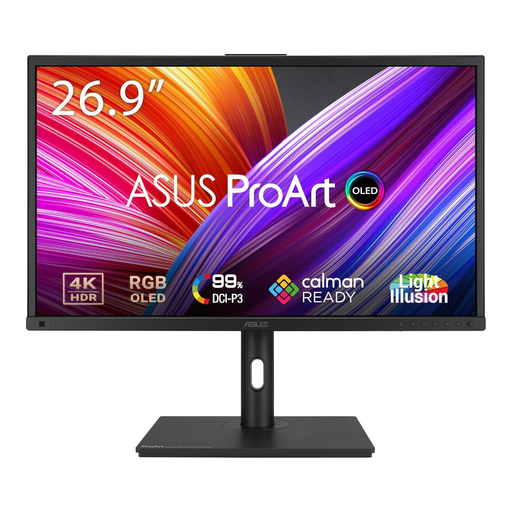
ASUS ProArt PA27DCE-K OLED 4K UHD
Consider this model if a compact 4K creative screen fits your desk; check its typical brightness and your calibration process before relying on it for daylight or colour-critical review.
OLED display; 4K UHD resolution.
View on Joybuy
 No image available
ASUS ProArt Display PA32UCG-K 32-inch 4K mini-LED
Consider the larger screen if your review includes artboards and reference material side by side. Confirm the brightness rating that applies to your intended use before judging its suitability beside the window.
32-inch 4K IPS mini-LED display; 120 Hz; Thunderbolt 3.
View on Joybuy
 No image available
LG UltraGear 32GS95UV-B 32-inch 4K OLED gaming monitor
This is a gaming-oriented 4K option to assess if the same desk also serves other uses. For artwork approval, check the calibration workflow and judge daylight visibility using the typical brightness figure, not an HDR peak figure.
32-inch 4K OLED display; dual mode specified as 4K at 240 Hz or FHD at 480 Hz; DisplayPort and HDMI 2.1.
View on Joybuy
 No image available
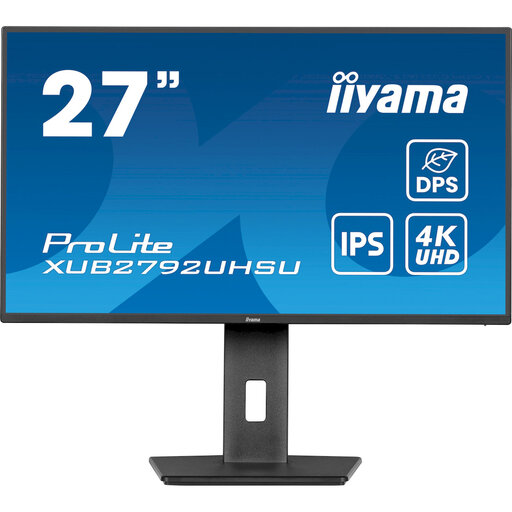
iiyama ProLite XUB2792UHSU-B6 27-inch 4K monitor
The 27-inch format is worth considering where desk space affects screen placement. Confirm its screen coating for window-side use and the calibration approach if your artwork requires colour-critical approval.
27-inch 4K UHD display; 16:9 aspect ratio.
View on Joybuy
 No image available
Dahua 32-inch 4K 165 Hz curved OLED gaming monitor
Consider whether a curved, gaming-oriented display suits the way you inspect vector layouts. Check its surface treatment, typical brightness and calibration process before using it for window-side colour review.
32-inch 4K curved OLED display; 165 Hz; Type-C connection with 65 W power delivery and a USB hub.
View on Joybuy
Frequently asked questions
Will a brighter monitor solve reflections from a nearby window?
No: greater display brightness can help visibility, but it cannot remove a reflection on the screen. The Health and Safety Executive advises arranging screens and lighting to avoid reflections and glare, so try changing the screen or desk position before relying on brightness alone.
Does a matte or anti-glare screen matter for vector artwork?
It is relevant when reflected daylight makes artwork harder to inspect, but it does not guarantee a reflection-free view. BenQ specifies a matte coating for the PD3225U, while Dell describes anti-glare and anti-reflective treatment for the U3225QE; screen position still matters for either model.
Do I need a built-in calibration sensor?
A built-in sensor is particularly relevant if you need a repeatable calibration routine for regular colour-critical review; it is not a requirement for every vector project. EIZO says the CG2700X can run calibration at designated times. For other monitors, check how you would calibrate the display in the colour space your work requires.
What should I check before connecting a laptop with one cable?
Confirm both video support over the relevant USB-C or Thunderbolt connection and enough power delivery for your laptop. BenQ specifies 85 W for the PD3225U, EIZO specifies 94 W for the CG2700X, and Dell specifies up to 140 W for the U3225QE; compare the rating of the model you choose with your computer’s requirements.


