Screen-first vector designers
If you review icons, interfaces, diagrams or web illustrations mainly for sRGB-oriented screens, prioritise fine 4K detail and a documented sRGB mode over print-specific gamut claims.


Choose a 4K monitor with a colour mode suited to the artwork’s final output, then use an appropriate ICC monitor profile for colour-managed review. At the same resolution, a 27-inch screen gives denser pixels for close inspection, while a 32-inch screen provides a larger physical canvas. Check desk space and laptop connections alongside the colour specification; neither screen size nor a wide-gamut claim settles the choice on its own.
If you review icons, interfaces, diagrams or web illustrations mainly for sRGB-oriented screens, prioritise fine 4K detail and a documented sRGB mode over print-specific gamut claims.
If artwork must be assessed against print, brand colours or wide-gamut output, check the relevant colour mode and monitor profile as well as the display’s stated coverage. Adobe explains why ICC-compliant profiles matter to reliable colour management.
If a laptop drives your artwork reviews, look for the screen space and connections your desk needs. Confirm that the laptop, monitor and cable can support the intended video connection and any required charging.
For reviewing vector artwork, start with the colour space required by the final output, then choose the screen size and connections that fit the way you work.
| Concern | What to check | Who this matters to |
|---|---|---|
| Colour-managed review | Check the exact model’s mode and stated coverage for your output colour space, plus how its active mode will be profiled. | If brand colours or print-bound artwork guide my edits, I need the display and colour-managed application to work together. Around 42% of consumers put predictable colour review first. |
| Fine detail and canvas size | Compare 27-inch and 32-inch screens at 3840 × 2160 against your viewing distance and available desk space. | When I inspect thin strokes but also keep artboards and panels open, I have to balance pixel density against physical workspace. Roughly 33% of consumers make that balance their primary concern. |
| Laptop connectivity | Match the monitor’s video input and any USB-C Power Delivery rating to the laptop and cable. | If I connect a laptop for repeated review sessions, I want video and charging to work with my actual setup rather than relying on the USB-C label alone. About 25% of consumers prioritise that connection need. |
A wide-gamut specification does not by itself tell you whether the active display mode and ICC profile suit the artwork you are reviewing.
For screen-first work, check for a documented sRGB mode. For print or wide-gamut work, match the model’s stated coverage, colour mode and profiling workflow to the final output.
At 3840 × 2160, a 27-inch screen has denser pixels than a 32-inch screen, while the 32-inch screen gives artboards and panels more physical room.
Compare both sizes at your intended viewing distance and check how much desk space the larger screen would occupy.
A monitor’s USB-C connection or charging rating does not establish that your laptop can send video and receive sufficient power through the same cable.
Check the laptop’s video-output support, charging requirement and cable capability against the exact monitor connection.
A large monitor may be awkward to repack, and arranging a return is separate from disposing of an old display.
Read the retailer’s return process before installation, and ask what electrical-waste take-back or local recycling option is available.
Where a retailer offers collection of electrical waste from your home, GOV.UK says transport charges may apply.
These product lines illustrate different specifications to check; the details of one model should not be assumed to apply across a brand.
BenQ’s DesignVue Creative Pro line includes 27-inch and 32-inch 4K monitors aimed at creative work.
Dell UltraSharp offers a productivity-oriented route for reviewers who also need an adjustable workstation and hub-style connectivity.
ASUS ProArt includes a 4K route for colour-managed work that calls for documented wide-gamut coverage.
These 4K displays offer different screen sizes, panel types and connection options for vector-artwork review. Match each model’s stated features to your output workflow and check its colour modes before making a colour-critical choice.
 No image available
Consider this larger screen if physical room for artboards and panels matters to your review setup. The product name specifies Thunderbolt 3 and a factory-calibration claim of Delta E < 1; check the active colour mode and ICC-profile workflow for your output before relying on that claim.
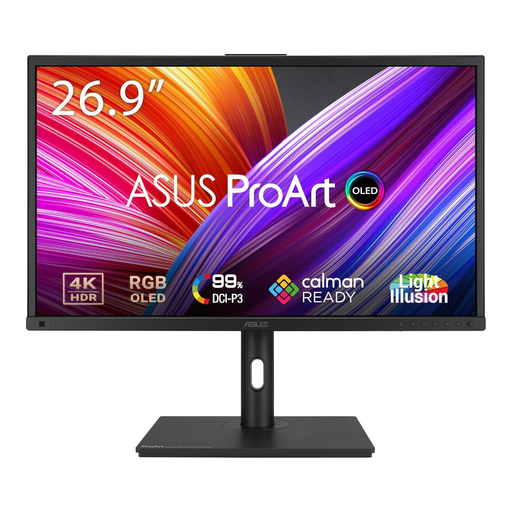 No image available
This is a close-detail option for a more compact review screen. Confirm which colour modes suit your artwork and whether its USB-C connection meets your laptop’s video and charging needs.
 No image available
The larger curved screen may suit a desk where artboard space matters, provided its geometry works for your review setup. Its product name states 99% DCI-P3 coverage and Type-C 65 W; check the colour mode, profiling workflow and laptop compatibility separately.
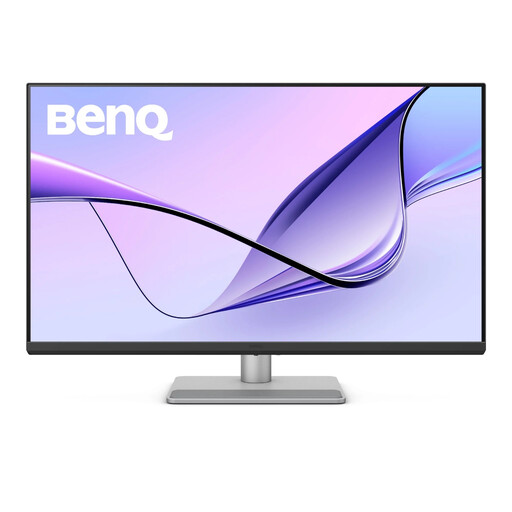 No image available
Consider its larger physical canvas if you review artboards alongside other windows on a Mac-based desk. The product name specifies USB-C and a height-adjustable stand; confirm device compatibility, the active colour mode and profiling arrangements for your workflow.
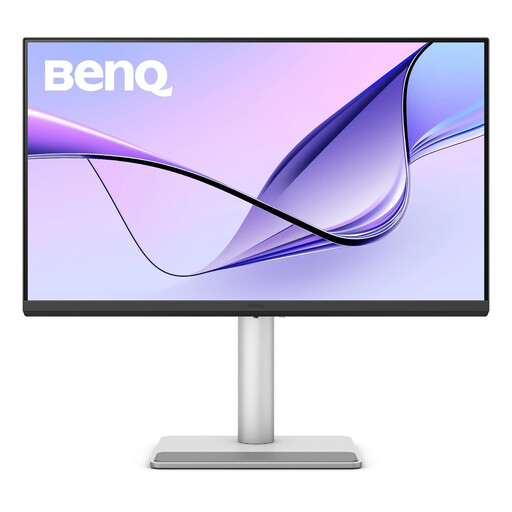 No image available
The 27-inch format is worth considering when close-detail inspection and a smaller physical screen matter more than a larger canvas. The product name specifies USB-C and a height-adjustable stand; check Mac compatibility and the colour mode and profile needed for your output.
Not for every workflow: if the final artwork is intended for standard sRGB-oriented screens, check for a suitable sRGB mode first. If your print or wide-gamut output calls for Adobe RGB or another colour space, choose documented coverage for that output and use an appropriate monitor profile in a colour-managed application.
Factory calibration is a starting point, not a substitute for the correct active mode and monitor profile. Adobe says accurate ICC-compliant profiles are essential to reliable colour management; match the operating-system profile to the display mode and revisit profiling when your workflow requires ongoing colour control.
Yes, if the monitor and laptop support the required video connection and Power Delivery, and the cable is suitable. Check the laptop’s video-output specification and charging requirement against the exact monitor’s port and power rating before buying.
GOV.UK guidance says customers can cancel an online order up to 14 days after delivery without giving a reason. Check the retailer’s process for notifying it and returning the monitor, including any applicable handling and postage arrangements; remedies for faulty, damaged or misdescribed goods are a separate matter.
Ask the retailer about its electrical-waste take-back arrangements or check a local recycling option. GOV.UK says an applicable in-store retailer take-back service must be free, while home collection may involve transport charges.