For tactical RPGs played in a dark room, consider OLED if separating bright interface elements from black surroundings matters most: RTINGS explains that OLED pixels can switch off individually, avoiding haloing around bright objects. Choose 4K when dense maps and menus take priority and your device can run the mode you want; QHD asks less of the graphics hardware, while Fast IPS is an alternative if you do not need OLED’s particular dark-room behaviour. With OLED, prolonged static interfaces and possible variable-refresh flicker remain part of the decision.
Who each option suits
Dark-scene immersion seekers
If you play in a genuinely dark room, OLED’s individually controlled pixels are relevant to scenes with black backgrounds and bright menus or effects. RTINGS explains the benefit for dark-room contrast, but repeated static game interfaces remain a consideration.
Map and interface detail prioritizers
If you spend long sessions reading compact grids, character sheets and inventory text, compare native resolution before focusing on refresh rate. The ASUS ROG Swift OLED PG27UCDM shows what the 26.5-inch 4K route offers, provided your device can drive the display mode you intend to use.
QHD players considering Fast IPS
If 27-inch QHD meets your needs, compare an OLED model with a Fast IPS alternative such as Dell’s Alienware AW2725DM. Fast IPS does not offer OLED’s individually switchable pixels, so decide how much that dark-room difference matters to you.
What matters when choosing
4K OLED
Consider it when: Reading dense tactical maps and menus matters most and your device can supply the intended 4K mode.
Trade-off: 4K places greater demands on graphics hardware than QHD; OLED also calls for care with persistent interface elements.
QHD OLED
Consider it when: You want OLED’s dark-room black levels at a resolution that is less demanding to render than 4K.
Trade-off: QHD has fewer pixels for fine labels, and prolonged static HUDs still require attention.
QHD Fast IPS
Consider it when: QHD gaming meets your needs and OLED’s particular dark-scene behaviour is not essential to your choice.
Trade-off: Fast IPS cannot switch off individual pixels to produce OLED’s black levels without haloing around bright objects.
| Concern |
What to check |
Who this matters to |
| Dark-scene separation |
Check the exact panel type and its HDR characteristics. For OLED, also review panel-care guidance for persistent game interfaces. |
In shadowy battles, I want bright selection markers to stand apart from black surroundings without a glow around them; roughly 36% of consumers put dark-scene separation first. |
| Map and text clarity |
Compare native 4K and QHD resolution, then confirm that your device and cable support the resolution and refresh mode you want. |
Small grid labels and character information need to remain readable throughout a session; around 29% of consumers make interface detail their primary concern. |
| Reflections and variable refresh |
Consider where lamps or daylight might reach the screen, and check the exact model’s finish and variable-refresh behaviour. |
If light catches the screen or frame rates fluctuate, distractions may matter more to me than extra pixels; roughly 21% of consumers put viewing comfort and reflections first. |
| OLED care and IPS trade-off |
Read the OLED model’s static-image care instructions and decide whether its dark-room characteristics matter more to you than choosing Fast IPS. |
During long sessions with a fixed HUD, I want to be comfortable with the screen-care routine I am taking on; around 14% of consumers put that ownership consideration first. |
Buying pitfalls
-
Assuming all OLED screens handle room lighting alike
OLED panel types and screen finishes differ. RTINGS notes that QD-OLED black levels can rise in brighter rooms, so a display chosen for a dark room may look different when light reaches it.
Check the exact panel and finish, and consider whether nearby lamps or daylight will reflect in the screen.
-
Choosing by refresh rate before checking resolution
Dell specifies the QHD Alienware AW2725D at 280Hz, while ASUS specifies the 4K ROG Swift OLED PG27UCDM at 240Hz. Those figures alone do not settle which display better serves your map and menu needs.
Decide whether finer native detail or lower rendering demand matters more, then check the modes your device and cable can supply.
-
Overlooking fixed HUD elements on OLED
RTINGS identifies burn-in as a risk with repeated static content. Tactical games can leave menus, minimaps and other interface elements in place during long sessions.
Follow the exact monitor’s panel-care guidance and use its protection features without treating them as a guarantee against burn-in.
Brands to consider for these monitor types
ASUS ROG
The ROG Swift OLED PG27UCDM is a 26.5-inch 4K QD-OLED option for players prioritising dense interface detail alongside OLED dark-room contrast.
- ASUS specifies 3840 × 2160 resolution, 240Hz refresh and 0.03ms GTG response time for this model.
- Its OLED panel still calls for care with persistent interface elements; check that your device can run the intended 4K mode.
Alienware
Dell’s Alienware range offers two different QHD routes relevant here: the AW2725D QD-OLED and the AW2725DM Fast IPS.
- Dell specifies the AW2725D at 2560 × 1440 and 280Hz; the AW2725DM is a 27-inch QHD Fast IPS model with up to 180Hz.
- The Fast IPS model does not have OLED’s individually switchable pixels, while the QD-OLED model brings static-image care into the decision.
LG UltraGear
LG’s 27GS95QE-B is a 27-inch QHD OLED option for comparing dark-room picture characteristics without moving to 4K.
- LG specifies 240Hz refresh, 0.03ms GTG response and DisplayHDR True Black 400 for the 27GS95QE-B.
- LG notes that disabling Smart Energy Saving can increase power consumption, so compare energy information for the settings you expect to use.
Samsung Odyssey
The Odyssey OLED G6 G61SH is a QHD QD-OLED option to consider when light sources might occasionally reach an otherwise dark gaming room.
- Samsung specifies QHD resolution and 240Hz refresh for the G61SH, and describes a Glare Free screen treatment on that model.
- Assess reflections in your own setup rather than assuming that one model’s screen treatment applies across the Odyssey range.
Joybuy monitors for this setup
These OLED monitors offer different screen sizes and resolutions for dark-room tactical play. If you are considering a wider display, check how your games arrange maps and interface elements; if you are weighing OLED against Fast IPS, use the panel trade-offs above rather than treating this OLED selection as a comparison of both types.
 No image available
Samsung Odyssey OLED LS32FG810SUXXU, 32-inch
Consider this OLED model if you want a 32-inch screen for dark-room play. Check that its dimensions suit your desk and viewing distance, and confirm the connections and display modes needed by your device.
View on Joybuy
 No image available
Samsung Odyssey G6 S27DG612, 27-inch QHD OLED
This 27-inch QHD OLED suits a player who wants OLED dark-room characteristics without choosing 4K. Its name specifies 240Hz and 0.03ms; QHD has fewer native pixels for fine map labels than 4K, and persistent HUDs still warrant panel care.
View on Joybuy
 No image available
LG UltraGear 34GX900A-B, 34-inch OLED WQHD
Consider this 34-inch OLED if you want a larger display for tactical maps and can accommodate it comfortably. The product name specifies WQHD and 240Hz; check your games’ interface layout and follow the model’s guidance for persistent on-screen elements.
View on Joybuy
 No image available
Acer X Predator X49X, 49-inch 32:9 QD-OLED
This 49-inch ultrawide is for a setup with room for a 32:9 screen and games whose interface works well across it. The product name specifies a 1800R curve and 240Hz; check desk dimensions, game layout and OLED care guidance before choosing this format.
View on Joybuy
 No image available
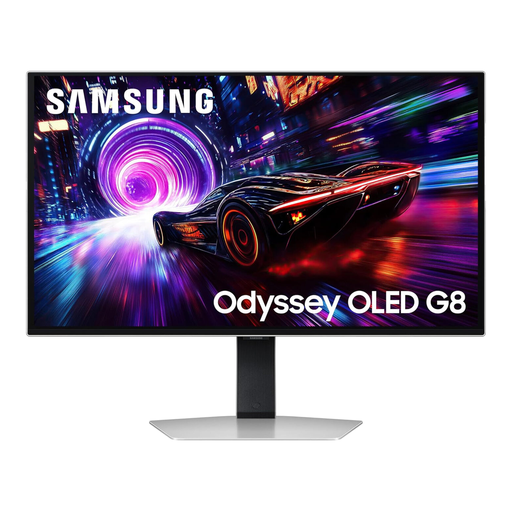
Samsung Odyssey OLED G8 LS32DG802SUXXU, 32-inch Ultra HD
This 32-inch OLED is worth considering if you want an Ultra HD screen for map and menu detail in a dark room. Check that it fits your viewing distance and confirm the exact display modes and panel-care guidance needed for your setup.
View on Joybuy
Common questions
Is OLED worth considering for tactical RPGs in a dark room?
Yes, if clean blacks beside bright interface elements are a priority: RTINGS explains that OLED pixels can switch off individually without the haloing associated with local-dimming LCDs. Account for repeated static HUD elements and possible variable-refresh flicker when frame rates change.
Should I choose 4K or QHD for tactical maps and menus?
Choose 4K if finer native map and text detail matters most and your device can run the intended mode; choose QHD if lower rendering demand is more important. For model-specific reference points, ASUS specifies the PG27UCDM at 3840 × 2160 and Dell specifies the Alienware AW2725D at 2560 × 1440.
What should I check before connecting a gaming monitor?
Match the exact monitor’s inputs to your PC or console output and cable for the resolution, refresh rate and other display features you plan to use. ASUS lists DisplayPort 2.1a and HDMI 2.1 for the PG27UCDM; check the specifications of whichever model you choose rather than assuming its connections are the same.
How can I compare monitors’ energy use?
Check the model-specific energy label and product information sheet when energy use affects your choice. Compare the information for the exact displays you are considering, and remember that settings can matter: LG notes that disabling Smart Energy Saving on the 27GS95QE-B can increase power consumption.


