
24/7 Customer Support

Free returns

Same-day & Next-day Delivery

Quality Guaranteed

Unlock Your Welcome Offers: FREE Delivery | Up to 80% OFF | Free 30-day JoyPlus trial
Download the APP
Navigating the world of high-end televisions can feel like walking through a minefield of technical jargon and marketing promises. You know you want the vibrant colours and brightness of a 4K QLED TV, but every box seems to shout about features that sound impressive yet are hard to quantify. As a result, many UK shoppers end up with a television that either underwhelms or is packed with expensive features they will never use.
Before you invest in a new centrepiece for your living room, it is crucial to understand the common pitfalls. Here are the key traps to avoid:
To make a smart purchase, focus on the core specifications that directly impact your viewing experience.
At its core, QLED (Quantum Dot Light Emitting Diode) technology uses a layer of tiny quantum dots to enhance the colour and brightness of a standard LED-backlit TV. This results in a wider, more accurate colour palette compared to non-QLED models.
However, the next evolution is the backlight itself. A Neo QLED TV or Mini LED TV replaces the conventional, large LEDs with thousands of much smaller ones. This allows for far more precise control over which parts of the screen are lit or dimmed. The practical benefit is significantly deeper blacks, higher contrast and reduced "blooming" or halo effects around bright objects on a dark background—a huge plus for movie nights.
For anyone who enjoys fast-paced action films, sports or gaming, the panel's native refresh rate is non-negotiable. A 60Hz panel refreshes the image 60 times per second, while a 120Hz or 144Hz panel does so twice as often. This creates a noticeably smoother, clearer and more responsive picture.
For a top-tier smart TV for gaming, look for this combination of features, enabled by HDMI 2.1:
While a dedicated soundbar is always a worthwhile upgrade, modern televisions are improving their built-in audio. A Dolby Atmos TV can create a more immersive, three-dimensional soundscape by simulating height and directional audio. Some brands also offer features that synchronise the TV's speakers with a compatible soundbar, creating a fuller and more cohesive soundstage.
Instead of a one-size-fits-all approach, we have matched some standout models to specific user needs.
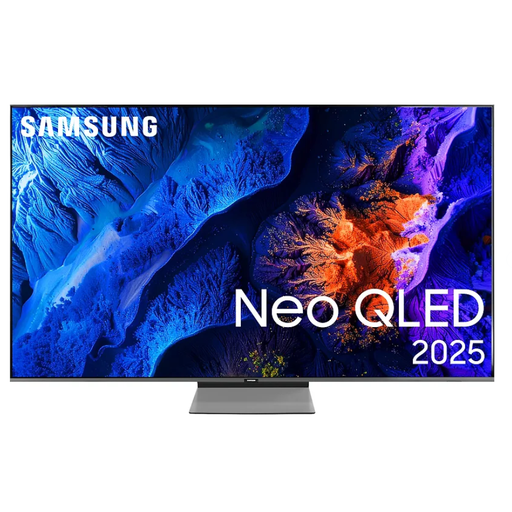
Why This Fits Their Persona: This model is built for performance. For a UK gamer with a PS5, Xbox Series X or high-end PC, its combination of a true 144Hz panel and four HDMI 2.1 ports provides the speed and connectivity needed for a competitive edge. The 55 inch smart TV size is perfect for most living rooms or dedicated gaming spaces.
It sidesteps the refresh rate illusion with a genuine 144Hz native panel and avoids the connectivity bottleneck with a full suite of HDMI 2.1 ports supporting VRR and ALLM.
The Neo QLED display with Mini-LED backlighting provides excellent contrast for spotting details in dark game scenes. Its comprehensive gaming features (FreeSync Premium Pro, Game Bar) offer deep customisation.
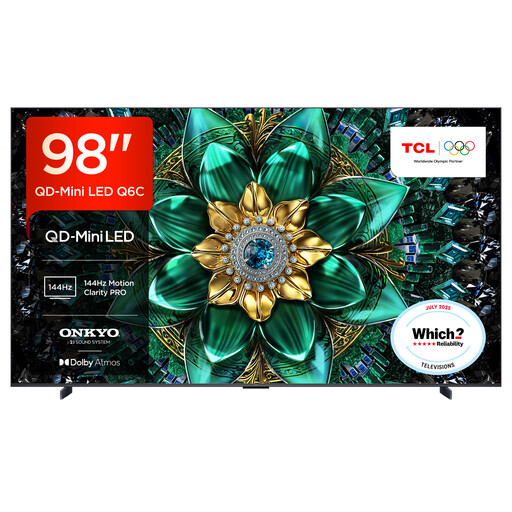
Why This Fits Their Persona: For those looking to create a true cinema experience at home, screen size is paramount. This colossal 98 inch TV delivers an incredibly immersive picture that fills your field of view. It is ideal for a large UK living room dedicated to film and premium streaming.
It avoids the "hollow HDR" trap by using a QD-Mini LED backlight with precise local dimming, delivering the high peak brightness and deep blacks needed for impactful HDR performance on such a large scale.
The sheer scale of the 98-inch screen is its main advantage. It also features a capable ONKYO 2.1 sound system with a built-in subwoofer and Dolby Atmos support, providing a solid audio foundation straight out of the box.

Why This Fits Their Persona: This TCL Google TV offers a fantastic balance of features and value for everyday family use. It provides the vibrant colours of QLED, comprehensive HDR support (including Dolby Vision) and a user-friendly smart platform with access to all major UK streaming apps. It's a versatile choice for movies, TV shows and casual gaming.
It avoids the trap of overspending on niche features. It includes modern essentials like HDMI 2.1 with ALLM and VRR for family gaming, without the premium cost of a 144Hz panel that may go unused.
Its support for multiple HDR formats (HDR10, HLG, HDR10+ and Dolby Vision) ensures you get a great picture from a wide range of sources. The hands-free Google Assistant is a convenient feature for family households.
We have compiled a complete, real-time list of products that fully satisfy these strict selection criteria and UK safety regulations.
For many users, yes. If you frequently watch movies or play games with dark scenes, the improvement in contrast and black levels is significant. The Mini LED backlight drastically reduces the "greyish" look of black bars and minimises the halo effect around bright objects. For daytime viewing in a bright room, the difference may be less pronounced, but for a premium home cinema or gaming experience, it is a worthwhile investment.
This depends on your setup. If you own both a PlayStation 5 and an Xbox Series X, you will want at least two HDMI 2.1 ports to use both consoles to their full potential without swapping cables. If you also plan to connect a Dolby Atmos eARC soundbar, a third port is useful. For most people, one or two HDMI 2.1 ports are sufficient, but serious gamers and tech enthusiasts should look for models with three or four.
QLED televisions are known for their durability and long lifespan. The quantum dots are inorganic and highly stable, meaning they do not degrade or suffer from burn-in like some other display technologies. You can generally expect a modern QLED TV to last for many years of regular use, often between 7 to 10 years, before you might notice any significant change in picture quality.