
24/7 Customer Support

Free returns

Same-day & Next-day Delivery

Quality Guaranteed

Unlock Your Welcome Offers: FREE Delivery | Up to 80% OFF | Free 30-day JoyPlus trial
Download the APP
Navigating the world of 4K Smart TVs can feel like wading through a swamp of technical jargon and marketing hype. Every box promises the sharpest picture and the smartest features, but the reality in your living room can often fall short. As a Joybuy Product Recommendation Officer, my role is to help you sidestep the common pitfalls and focus on the features that genuinely matter for your home in the UK.
Before you spend your hard-earned money, let's look at the three most common traps that catch buyers out and how you can avoid them.
The "Motion Rate 120" Illusion: Many televisions advertise high motion or refresh rates like "120Hz Motion Clarity" or "240Hz Picture Flow". This is often software-based motion smoothing, not a true native 120Hz panel. For everyday TV watching, it might look fine, but for a smooth, tear-free experience on a TV for PS5 or Xbox Series X, a native 120Hz (or 144Hz) refresh rate is non-negotiable. Software tricks can't replicate the genuine fluidity required for high-performance gaming.
The HDR Format Dead End: High Dynamic Range (HDR) is fantastic, delivering more vibrant colours and better contrast. However, there are competing formats, primarily Dolby Vision and HDR10+. If you buy a TV that only supports one format, but your favourite streaming service or 4K Blu-ray player uses the other, you won't get the enhanced picture you paid for. A good 4K Smart TV should ideally support multiple HDR formats to be future-proof.
The "Dumb" Smart TV: The "smart" part of your TV is only as good as its operating system (OS). Some budget models come with slow, clunky and unsupported systems that rarely receive updates. This leads to lagging apps, security vulnerabilities and a frustrating user experience. A responsive OS like Google TV, Tizen or webOS ensures you can access your content quickly and easily.
To make a confident choice, focus on these three core specifications. Getting these right will have a far bigger impact on your daily viewing than any flashy marketing term.
This is the heart of your television and dictates the overall picture quality.
If you're a gamer, this is critical. Look for a TV with a native 120Hz or 144Hz refresh rate. This specification ensures the panel can physically refresh the image 120 or 144 times per second. To make use of this, the TV must also have HDMI 2.1 ports. This connection standard provides the necessary bandwidth for 4K resolution at 120fps, along with essential gaming features like Variable Refresh Rate (VRR) and Auto Low Latency Mode (ALLM), which combine to create a responsive and smooth gaming TV experience.
Modern TVs are incredibly thin, which leaves little room for powerful speakers. While built-in audio has improved, features like Dolby Atmos TV support are what you should look for. Dolby Atmos creates a three-dimensional soundscape where audio feels like it's coming from all around you. Even if you use the TV's built-in speakers, this processing can create a more immersive effect. For the full experience, a TV with Dolby Atmos can pass the signal to a compatible soundbar or home cinema system.
Based on these practical criteria, we've matched a few standout models to different user needs.
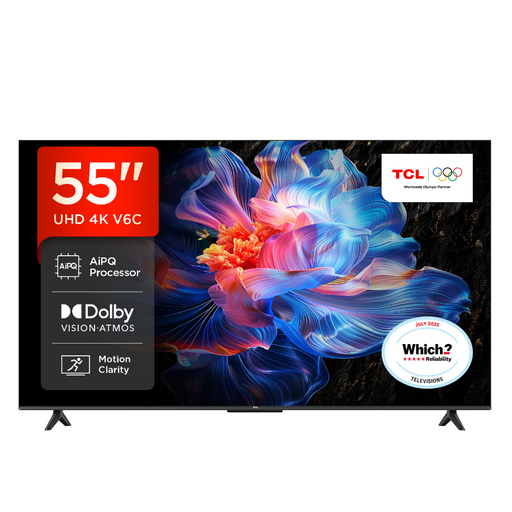
Why This Fits Their Persona: This 55 inch TV is an ideal size for the average UK living room. It focuses on delivering a solid 4K HDR picture and a great smart experience without the premium cost of high-end gaming features. Perfect for families who primarily use streaming services like Netflix, Disney+ and Prime Video.
It runs on the Google TV platform, avoiding the "dumb" smart TV trap with a fast, well-supported OS. It also supports multiple HDR formats, including Dolby Vision, ensuring great picture quality from most sources.
Excellent value for its size and features. The inclusion of Dolby Atmos support and a versatile smart platform makes it a strong all-rounder for general entertainment.
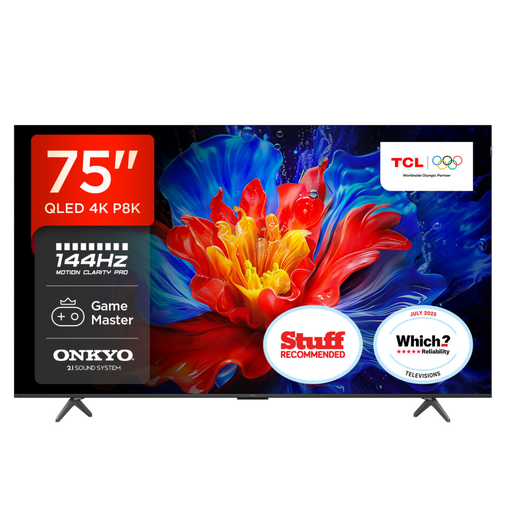
Why This Fits Their Persona: This massive 75 inch TV is built for immersive gaming. It's not just big; it's technically equipped for next-gen consoles with all the key performance features a serious gamer needs for a competitive edge and a spectacular experience.
It completely avoids the "fake refresh rate" trap by offering a native 144Hz panel with VRR and four HDMI 2.1 ports. This is exactly what gamers need to unlock the full potential of their consoles.
Uncompromised gaming performance. The combination of a high refresh rate, QLED colour and a dedicated Game Master mode makes this a top-tier gaming TV.
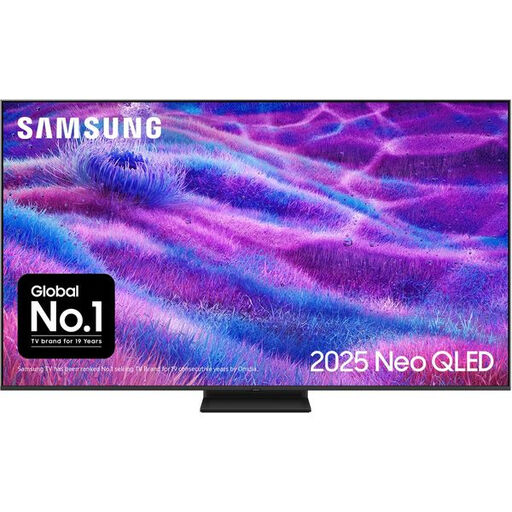
Why This Fits Their Persona: For the user who wants a high-performance TV that excels at everything—movies, daytime sports and gaming. This 65 inch TV uses Neo QLED (Mini LED) technology to deliver brilliant brightness for bright rooms and excellent contrast for movie nights.
This Samsung TV features a fast Tizen OS and a true 120Hz panel with gaming features. The Mini LED backlight provides a significant upgrade over standard QLEDs, avoiding the compromise on contrast.
Quantum Matrix Technology (Mini LED) offers superb picture control. It also features Object Tracking Sound Lite and Dolby Atmos for a more immersive audio experience straight out of the box.
We have compiled a complete, real-time list of products that fully satisfy these strict selection criteria and UK safety regulations.
For those who don't play video games, a native 120Hz panel is less of a necessity but still offers noticeable benefits. It can make fast-moving content, such as live sports or action films, appear smoother and clearer with less motion blur. While a standard 60Hz TV is perfectly adequate for most broadcast and streaming content, the improved motion handling of a 120Hz TV is a welcome visual upgrade if your budget allows.
The energy consumption of a TV can be found on its Energy Rating label. Due to a revised, stricter scale, it's common for even efficient, high-performance 4K TVs to have an F or G rating. Generally, larger screens and brighter technologies like Mini LED and OLED will consume more power than smaller, standard LED models. However, modern televisions are far more efficient than older plasma or CCFL-backlit sets, so the impact on your annual bill is typically modest.
While the audio systems in premium TVs, especially those with Dolby Atmos and brand-name speakers, are improving, physics remains a constraint. The slim profile of a modern TV leaves little space for large, powerful speaker drivers. For this reason, a dedicated soundbar will almost always provide a significant improvement in audio quality, particularly for dialogue clarity, deep bass and creating a truly immersive, room-filling sound.