
24/7 Customer Support

Free returns

Same-day & Next-day Delivery

Quality Guaranteed

Unlock Your Welcome Offers: FREE Delivery | Up to 80% OFF | Free 30-day JoyPlus trial
Download the APP
Choosing a new 4K smart TV can feel overwhelming. The market is flooded with technical terms, impressive-sounding features and a vast range of prices. It's easy to end up with a television that looks great on the shop floor but fails to deliver at home. As a Joybuy Product Recommendation Officer, my role is to help you navigate this landscape and make a choice that fits your home and your budget.
Before you start looking at smart TV deals in the UK, it's crucial to understand the common pitfalls that lead to buyer's remorse.
To avoid these traps, focus on a few core parameters that determine the real-world performance of your television.
The type of panel technology is one of the most significant factors in picture quality.
The refresh rate, measured in Hertz (Hz), is how many times per second the image on the screen is updated.
Picture quality is only half the story. A Dolby Atmos TV can create a more immersive, three-dimensional soundscape, though the quality of built-in speakers varies. For the smart experience, look for established platforms like Google TV or Roku TV. These systems are generally fast, well-supported with apps and receive regular updates.
Based on these practical considerations, here are a few models suited to different needs and budgets.
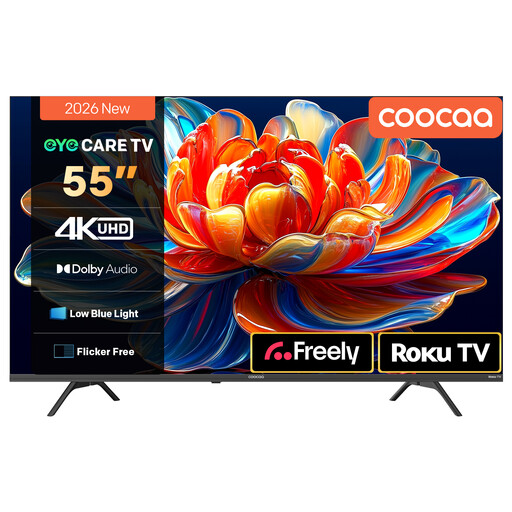
Why This Fits Their Persona: This 55 inch smart TV is ideal for families and individuals who primarily use their TV for streaming services like Netflix, BBC iPlayer and Prime Video. It offers a large screen and solid 4K picture without the premium cost of high-end gaming or cinema features.
It runs on the Roku TV platform, a fast and user-friendly OS that is widely supported and simple to use, neatly avoiding the sluggish software trap.
Excellent value for a large screen. The Roku OS provides access to a huge library of apps, including Freely for live and on-demand UK channels over Wi-Fi.
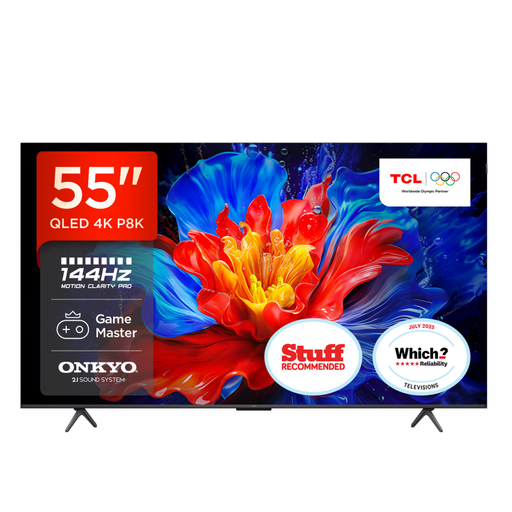
Why This Fits Their Persona: This model is built for next-gen console and PC gamers. It has all the key features needed for a high-performance gaming setup, delivering a responsive and fluid experience that can provide a competitive edge.
It features a native 120Hz refresh rate (with 144Hz VRR), cutting through the misleading "motion rate" marketing. Its four HDMI 2.1 ports confirm it's ready for high-framerate gaming.
Comprehensive gaming features including VRR, ALLM and FreeSync Premium. The QLED panel provides vibrant colours and the Google TV OS is fast and feature-rich.
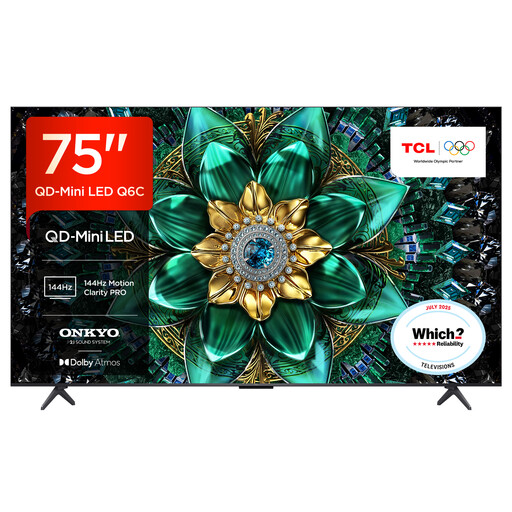
Why This Fits Their Persona: For those seeking a truly immersive, cinematic experience at home, this large screen TV delivers. Its premium display technology and audio support are designed for movie lovers who want spectacular picture quality on a grand scale.
The QD-Mini LED backlight with precise local dimming provides genuine high-contrast HDR, avoiding the "fake HDR" trap of less capable sets. It delivers the deep blacks and bright highlights needed for impactful cinema.
Exceptional contrast and brightness from the Mini LED panel. It supports all major HDR formats, including Dolby Vision IQ and features an integrated Onkyo 2.1 sound system with Dolby Atmos.
We have compiled a complete, real-time list of products that fully satisfy these strict selection criteria and UK safety regulations.
The physical screen (the panel) of a modern 4K TV can last for many years, often well over a decade with typical use. The more pressing concern is the "smart" functionality. The software may become slow or lose app support after 5-7 years. However, this can be easily remedied by plugging in an affordable external streaming device, giving your television a new lease of life.
For many people, yes. A QLED TV offers a noticeable improvement in colour vibrancy and brightness compared to a standard LED model. If you watch a lot of colourful 4K content, such as nature documentaries or animated films, or if your TV is in a brightly lit room, the enhanced picture quality of QLED is often worth the additional investment.
While a Dolby Atmos TV has the processing to create a more immersive sound field, the quality is still limited by the small, built-in speakers. Models with integrated sound systems from audio brands like Onkyo offer a significant step up. However, for a truly powerful and room-filling cinema audio experience, a separate soundbar with a dedicated subwoofer will almost always provide a superior result.