
24/7 Customer Support

Free returns

Same-day & Next-day Delivery

Quality Guaranteed

Unlock Your Welcome Offers: FREE Delivery | Up to 80% OFF | Free 30-day JoyPlus trial
Download the APP
Choosing a new 4K Smart TV can feel like navigating a minefield of technical jargon and marketing promises. With every brand claiming to have the sharpest picture and smartest features, it is easy to make a purchase you later regret. As a Joybuy Product Recommendation Officer, my role is to help you sidestep the common pitfalls and focus on the features that genuinely matter for your home in the UK.
Before you spend your hard-earned money, let's look at the most frequent traps that catch buyers out and how you can avoid them.
To make a confident choice, focus on these key specifications. They are the true indicators of a TV's performance, cutting through the marketing jargon.
The type of screen technology used is one of the biggest factors in picture quality. While standard LED TVs are common, two key upgrades have become more accessible:
If you are a console or PC gamer, a standard TV will not cut it. To get a competitive edge and a smooth experience, you need a proper TV for gaming. Look for these features:
High Dynamic Range (HDR) expands the range of colour and contrast, making the picture more realistic. While most 4K TVs support the basic HDR10 standard, a Dolby Vision TV offers a superior experience. Dolby Vision uses dynamic metadata to optimise the picture on a scene-by-scene or even frame-by-frame basis, ensuring you see the image exactly as the director intended, with perfect brightness and detail in both the darkest and brightest parts of the screen.
To help you match a TV to your specific needs, here are a few recommendations based on different user profiles.
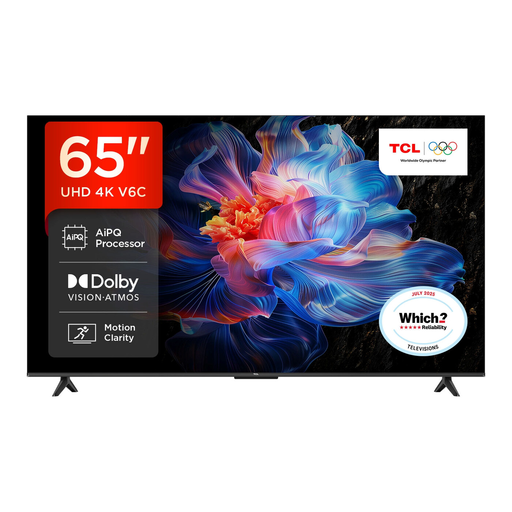
Why This Fits Their Persona: This 65 inch 4K TV is an excellent all-rounder for family movie nights and daily streaming. The Google TV platform is intuitive and packed with apps, while the hands-free voice control makes it easy for anyone to find what they want to watch.
It avoids the audio trap by including Dolby Atmos support for more immersive sound, and the Google TV OS ensures a long-term, well-supported smart experience.
Comprehensive HDR support (including Dolby Vision) and a clean, bezel-less design make it a great value centrepiece for a modern living room.
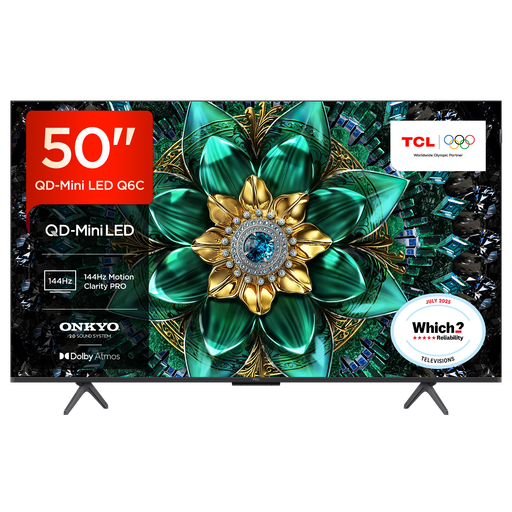
Why This Fits Their Persona: This TV is built for gaming. It is a genuine 144Hz gaming TV, providing the ultra-smooth motion that competitive players need. It is a perfect match for a PS5, Xbox Series X or high-end gaming PC.
It completely sidesteps the "motion rate" trap by offering a true 144Hz native refresh rate. It also includes full HDMI 2.1 ports with VRR and ALLM, not just a basic "game mode".
The combination of QD-Mini LED technology and Game Master Pro features (including AMD FreeSync Premium Pro) delivers both exceptional picture quality and elite gaming performance.
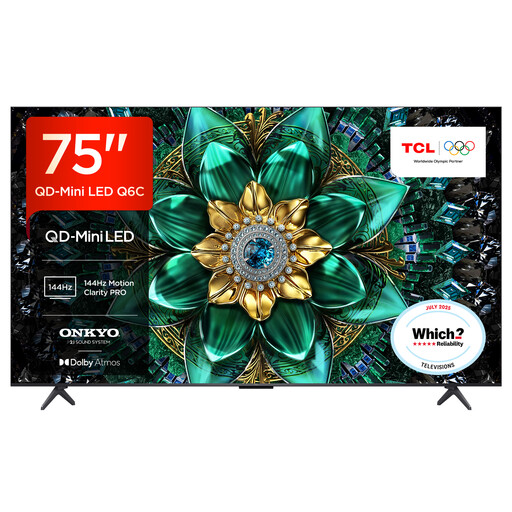
Why This Fits Their Persona: For those seeking a true cinematic experience, this large screen TV delivers. The 75 inch TV screen combined with advanced QD-Mini LED technology creates breathtaking contrast and brightness, perfect for blockbuster films.
It features a premium 2.1 Onkyo sound system with Dolby Atmos, avoiding the weak audio trap. Its support for Dolby Vision IQ also ensures the picture is automatically optimised for your room's lighting.
The QD-Mini LED panel provides superior contrast and brightness over standard QLED or LED TVs. It also includes top-tier gaming features, making it a powerful all-in-one entertainment hub.
We have compiled a complete, real-time list of products that fully satisfy these strict selection criteria and UK safety regulations.
A modern 4K smart TV should provide reliable performance for at least 5 to 7 years under normal usage. The physical panel often lasts much longer, but the "smart" components can become outdated. The lifespan of the smart features often depends on the manufacturer's commitment to software updates for security and app compatibility. Choosing a TV with a popular OS like Google TV can improve its long-term viability.
For cinematic films, which are typically shot at 24 frames per second, a 120Hz panel doesn't offer a dramatic advantage over a 60Hz one. However, for watching fast-paced sports like football or for gaming, the difference is significant. The higher refresh rate results in much clearer, smoother motion with less blur, making it easier to track the action.
Both are popular smart operating systems. Google TV is known for its content-first approach, offering personalised recommendations from all your streaming services on the home screen. It also has the vast Google Play Store for apps and features built-in Chromecast and Google Assistant. VIDAA TV, used primarily by Hisense, is designed for speed and simplicity. It has a more straightforward, customisable interface and offers very fast boot times, but its app selection may be slightly more limited than Google TV's.