
24/7 Customer Support

Free returns

Same-day & Next-day Delivery

Quality Guaranteed

Unlock Your Welcome Offers: FREE Delivery | Up to 80% OFF | Free 30-day JoyPlus trial
Download the APP
Navigating the world of 4K Smart TVs can feel like a minefield of technical jargon and flashy marketing. With every brand promising the most immersive experience, it's easy to end up with a television that looks great on the shop floor but disappoints at home. As a Product Recommendation Officer, my role is to help you see past the hype and focus on what truly matters for your viewing habits.
Many buyers find themselves frustrated by a few common, yet easily avoidable, pitfalls. Before you start looking at screen sizes, let's highlight the key issues that can lead to buyer's remorse.
To make a confident choice, focus on these three foundational elements. Getting these right ensures your new television will serve you well for years to come.
The technology behind the screen dictates its colour, contrast and brightness.
If you're a gamer or want to ensure your TV is ready for the next generation of devices, checking the HDMI ports is non-negotiable. An HDMI 2.1 TV is the current standard for high-performance connections. It enables key features for a modern TV for gaming, including:
The Smart TV OS is your gateway to all content. A good OS should be fast, intuitive and have a wide selection of UK-specific apps (like iPlayer, ITVX and Now). Google TV is known for its excellent content aggregation and voice assistant, while Roku TV is praised for its simplicity and comprehensive app library. Don't underestimate how much a good user interface contributes to your overall satisfaction.
Based on these critical factors, we've matched a few standout models to different UK households.
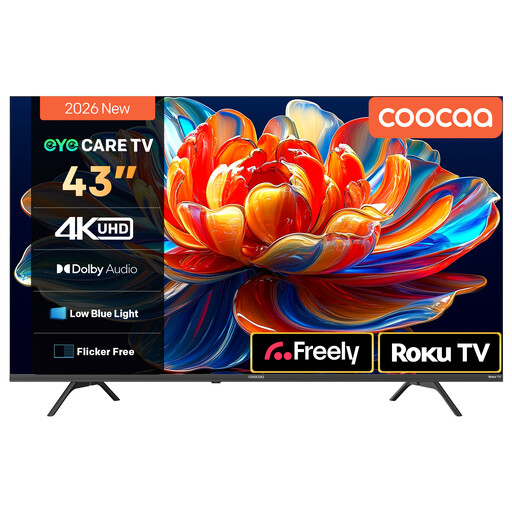
Why This Fits Their Persona: This model is ideal for anyone seeking a straightforward 4K smart TV without a hefty price tag. The 43-inch size is perfect for bedrooms or smaller living rooms, and the integrated Roku OS provides a simple, reliable streaming experience straight out of the box.
It sidesteps the sluggish interface pitfall by using the well-regarded Roku TV platform, which is known for being fast and easy to navigate, even on more affordable hardware.
Offers 4K resolution and HDR support at an accessible price point. The inclusion of Freely allows for streaming live and on-demand TV over Wi-Fi without an aerial.
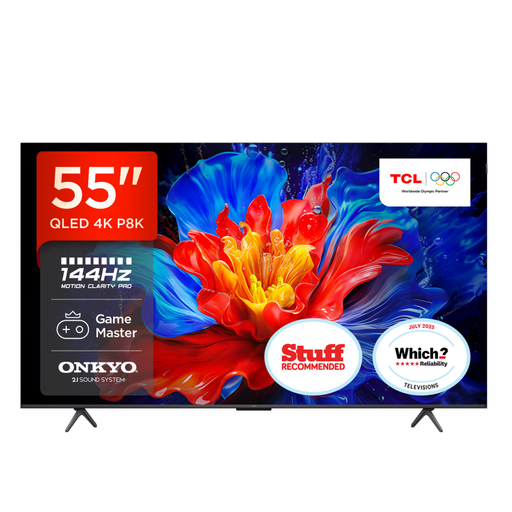
Why This Fits Their Persona: This 55 inch smart TV is built for competitive gaming. It combines a vibrant QLED panel with all the technical specifications needed to get the most out of the latest consoles, making it a prime choice for gamers who refuse to compromise on performance.
It directly counters the "fake refresh rate" trap by offering a true 120Hz TV UK native panel with up to 144Hz VRR. It also includes a 2.1 Onkyo sound system, avoiding the weak audio pitfall.
Features a full suite of gaming technology, including four HDMI 2.1 ports, ALLM and FreeSync Premium for exceptionally smooth, responsive gameplay.
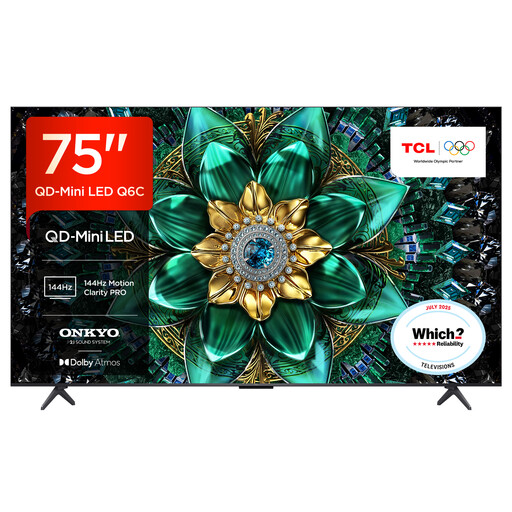
Why This Fits Their Persona: For those looking to create a true cinematic experience at home, this 75-inch model delivers. Its advanced QD-Mini LED panel provides the deep blacks and high peak brightness needed for impactful HDR, while the large screen size offers total immersion.
The QD-Mini LED technology with up to 512 local dimming zones provides far superior contrast to standard LED TVs. The integrated Onkyo sound system with Dolby Atmos support ensures the audio is as impressive as the visuals.
Exceptional contrast and colour volume thanks to the combination of Mini-LED and QLED technology. It also supports all major HDR formats, including Dolby Vision IQ.
We have compiled a complete, real-time list of products that fully satisfy these strict selection criteria and UK safety regulations.
For many people, yes. The enhanced colour volume and peak brightness of a QLED TV deliver a more vibrant and punchy picture, which is especially noticeable in a brightly lit room. While a good quality Direct LED TV provides an excellent picture, QLED is a visible and often worthwhile upgrade for those who prioritise image quality.
It is extremely important for your day-to-day use. The OS determines how quickly you can access apps, how intuitive the menus are and which streaming services are available. A slow or poorly designed system like a laggy TCL Google TV implementation or an unsupported OS can be a constant source of frustration. Well-regarded systems like Roku TV and the latest versions of Google TV generally offer a smooth, user-friendly experience with broad app support.
For watching films and standard television shows, a 60Hz panel is perfectly adequate. However, if you are a keen gamer with a modern console or you watch a lot of fast-paced sports, a native 120Hz TV UK model offers a tangibly smoother and clearer picture. The reduction in motion blur and input lag makes it a critical feature for a high-performance TV for gaming.