
24/7 Customer Support

Free returns

Same-day & Next-day Delivery

Quality Guaranteed

Unlock Your Welcome Offers: FREE Delivery | Up to 80% OFF | Free 30-day JoyPlus trial
Download the APP
Choosing between 4K Smart TVs is not simply a matter of picking the largest screen or the lowest price. A television can have an impressive specification sheet yet still be unsuitable for your room, viewing habits or games console. The right choice depends on display technology, smart platform, connectivity, sound and running costs.
By Joybuy Product Recommendation Officer
Some televisions advertise a high refresh rate or a “game accelerator” mode, but this may apply only to certain resolutions. For example, a model may support a higher refresh rate in Full HD while offering a lower native refresh rate at 4K.
For console gaming, check for:
These specifications matter more than a single headline refresh-rate figure.
QLED TVs use a quantum-dot layer to enhance colour volume, while Mini-LED TVs use smaller backlight LEDs and local dimming zones to improve control over bright and dark areas. Neither label alone tells you how a television will perform in your room.
Also check the panel type, local dimming system, HDR formats and viewing position. A television with strong contrast may be suitable for films in a darker room, while a brighter screen can be more practical in a sunny lounge.
A television can support Dolby Atmos processing without creating the same soundstage as a dedicated speaker system. Built-in audio is convenient, but room size, speaker positioning and power output affect what you hear.
Look for the listed audio output, eARC support and compatibility with a soundbar if cinematic sound is important. Dolby Atmos TVs can be a useful starting point, but the label should not be the only sound-quality consideration.
A 43-inch television can suit a bedroom, study or compact lounge. 55-inch TVs are a flexible choice for many living rooms, while 75-inch TVs and 85-inch TVs need more wall or cabinet space and a suitable viewing distance.
Before ordering, measure:
A large screen can be immersive, but it may feel uncomfortable if it dominates a small room.
A 4K Ultra HD screen has a resolution of 3840 × 2160 pixels. This can provide sharper detail than Full HD, particularly on larger displays. However, streaming quality depends on the source, internet connection and subscription plan.
For films and series, check support for HDR10, HLG, HDR10+ and Dolby Vision. HDR can improve highlight and shadow detail when content is mastered for it, but actual results also depend on brightness and backlight control.
The operating system affects app availability, navigation and voice control. Google TV brings streaming services, recommendations and Google Assistant together. Samsung Smart TVs use Tizen, while Hisense Smart TVs commonly use VIDAA. Check that your preferred services are available before buying.
Connectivity is equally important. Count the HDMI ports needed for a console, soundbar, set-top box and Blu-ray player. TVs with HDMI 2.1 are particularly relevant to newer consoles and gaming PCs. eARC is useful when sending higher-quality audio to a compatible soundbar or AV receiver.
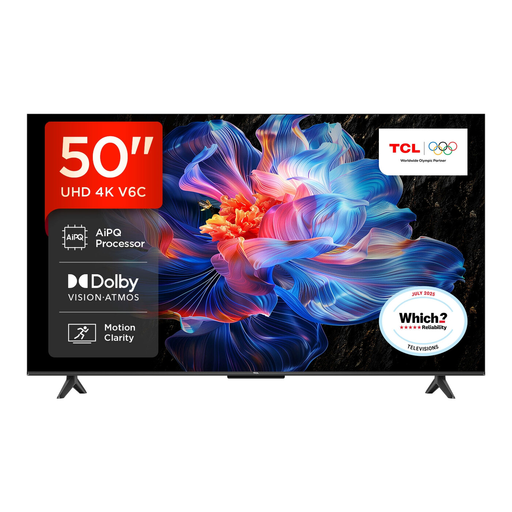
Why This Fits Their Persona: A practical 50-inch format for everyday streaming, films and family viewing without moving to a very large screen.
Its specification lists 4K HDR, multiple HDR formats, Google TV, HDMI 2.1, VRR and ALLM, making the feature set easier to assess than a refresh-rate headline alone.
4K resolution with Dolby Vision and HDR10+ support; built-in Google Assistant and Dolby Atmos audio processing.
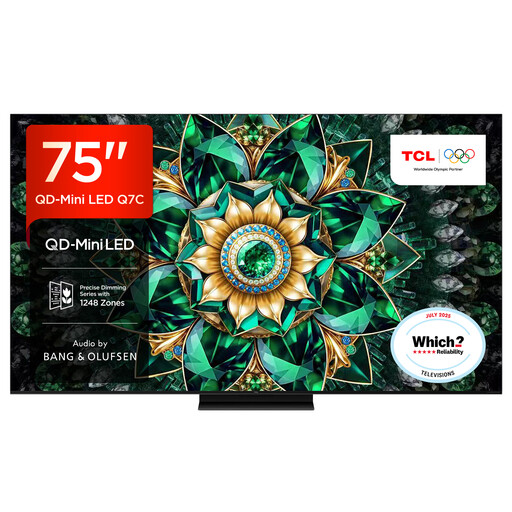
Why This Fits Their Persona: Designed for a large lounge or dedicated media room where a sizeable picture and advanced backlight control are priorities.
It identifies QD-Mini LED backlighting, up to approximately 2,048 dimming zones and a 144Hz native refresh rate rather than relying only on a QLED label.
75-inch 4K resolution; Google TV, HDMI 2.1 connectivity and audio co-engineered by Bang & Olufsen.
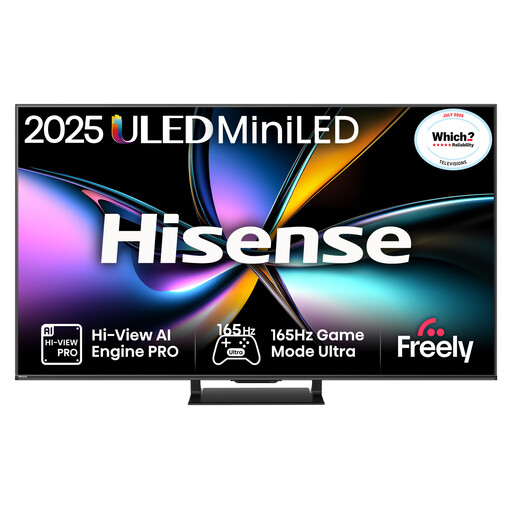
Why This Fits Their Persona: A 55-inch option for console players, PC users and sports viewers who prioritise motion handling, VRR and responsive inputs.
The specification separates its native 165Hz refresh rate from gaming features, and lists HDMI 2.1, VRR and ALLM for compatible devices.
Mini-LED local dimming; 2.1.2-channel audio with Dolby Atmos and a stated 165Hz VRR gaming mode.
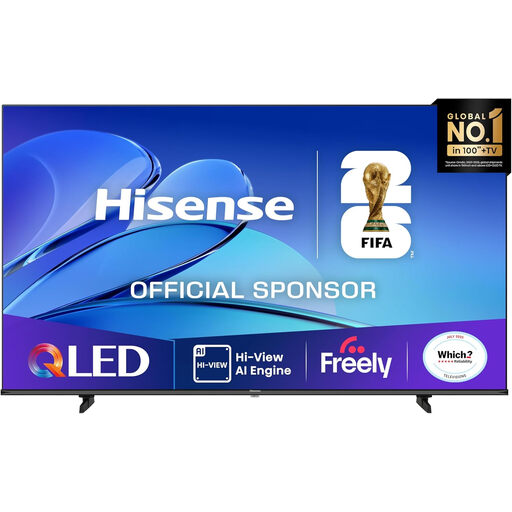
Why This Fits Their Persona: Suited to households wanting an 85-inch screen for films, sport and shared viewing in a spacious room.
Its specification states the screen dimensions, 30W audio output, supported HDR formats and energy class, helping buyers plan space and ongoing use.
85-inch QLED display; Dolby Vision, Dolby Atmos, VRR and ALLM support with VIDAA Smart OS.
We have compiled a complete, real-time list of products that fully satisfy these strict selection criteria and UK safety regulations.
Running costs depend on screen size, brightness settings, usage hours and the model’s energy rating. Larger screens generally use more electricity than compact televisions. Check the product’s energy label and quoted consumption figures, then compare them with your typical daily viewing pattern.
Not always, but HDMI 2.1 can support features such as 4K at 120Hz, VRR and ALLM on compatible equipment. If gaming is a priority, confirm the number of HDMI 2.1 ports and whether the advertised features operate at 4K resolution.
It can be, provided the viewing distance and furniture layout are suitable. Measure the TV with its stand, allow ventilation around the set and check that the screen will not obstruct walking routes or create uncomfortable viewing angles.