
24/7 Customer Support

Free returns

Same-day & Next-day Delivery

Quality Guaranteed

Unlock Your Welcome Offers: FREE Delivery | Up to 80% OFF | Free 30-day JoyPlus trial
Download the APP
Navigating the world of 4K Smart TVs can feel like wading through a swamp of technical jargon and marketing buzzwords. With terms like "Motion Clarity Pro," "Quantum Colour" and "AI Picture Enhancement" thrown around, it's easy to make a purchase you later regret. As a Joybuy Product Recommendation Officer, my role is to help you sidestep the common pitfalls and focus on the features that genuinely improve your viewing experience.
Before you invest in a new centrepiece for your living room, be aware of these frequent traps:
To make a confident choice, focus on these core specifications. They are the true indicators of a television's performance, cutting through the marketing clutter.
The native refresh rate determines how many times per second the image on the screen is updated.
The type of panel technology used has the biggest impact on picture quality.
The operating system (OS) is the brain of your 4K Smart TV. A good OS should be fast, intuitive and have access to all the UK catch-up and streaming apps you need (like BBC iPlayer, Netflix and Disney+). Google TV is a popular platform that integrates content from all your apps onto a single home screen and includes built-in voice control for easy searching.
Based on these practical criteria, we've matched several models to different user needs.
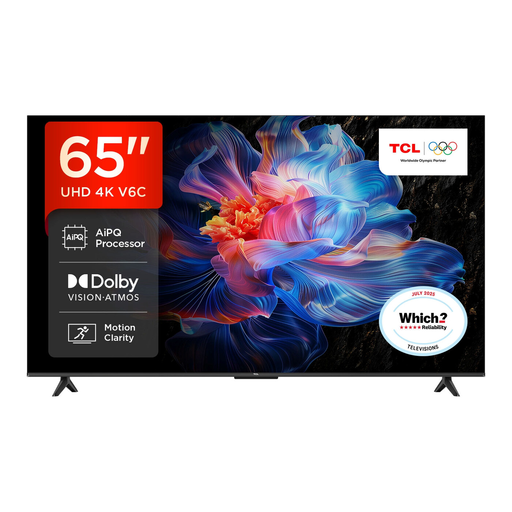
Why This Fits Their Persona: This is a great all-rounder for families who primarily use their TV for streaming shows and movies. The large 65 inch 4K TV screen is immersive, and the Google TV platform provides easy access to all major UK streaming services without needing a separate device.
It avoids the "poor audio" trap by including support for Dolby Atmos, offering a more spacious sound profile than basic TV speakers. Its comprehensive HDR format support (including Dolby Vision) ensures it makes the most of HDR content from services like Netflix.
Excellent value for a large-screen TV with a full-featured smart OS. The bezel-less design gives it a modern look that fits well in any living room.
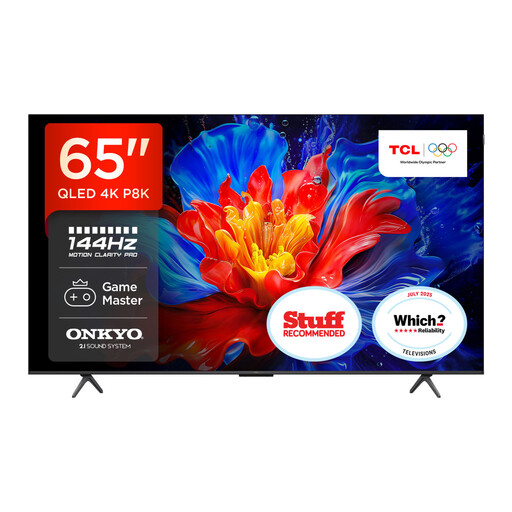
Why This Fits Their Persona: This model is built for gamers. It's an ideal TV for PS5 or PC gamers who demand responsiveness and smoothness above all else. The combination of a high refresh rate and dedicated gaming features provides a tangible advantage in fast-paced games.
It directly counters the "refresh rate illusion" by featuring a true 144Hz native panel, not just software enhancement. The "Game Master" mode and HDMI 2.1 inputs ensure you get low input lag and support for Variable Refresh Rate (VRR).
Features a high-performance QLED TV panel for bright, vivid colours and an integrated ONKYO 2.1 sound system with a subwoofer, providing much better audio than typical built-in speakers.
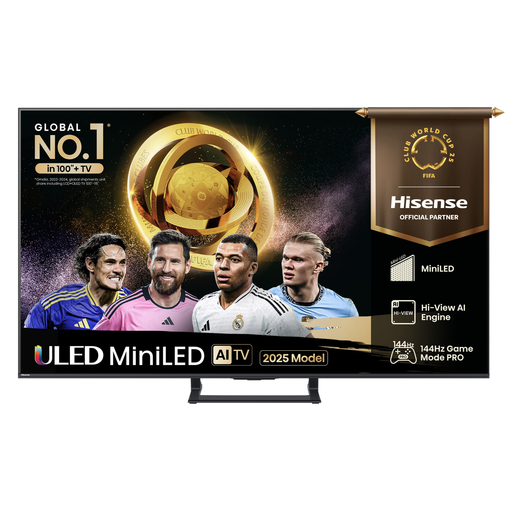
Why This Fits Their Persona: For those seeking a truly cinematic experience at home, screen size and contrast are paramount. This 75-inch Mini LED TV delivers on both fronts, offering an expansive picture with the deep blacks and high brightness needed for impactful movie nights.
It tackles the "paper HDR" problem head-on. The Mini LED backlighting provides the high peak brightness and precise local dimming required for a genuine HDR experience. It also has a built-in subwoofer, avoiding the "neglected audio" trap by delivering more impactful sound straight out of the box.
Offers premium Mini LED technology on a very large screen. The VIDAA OS is fast and responsive, providing quick access to streaming apps.
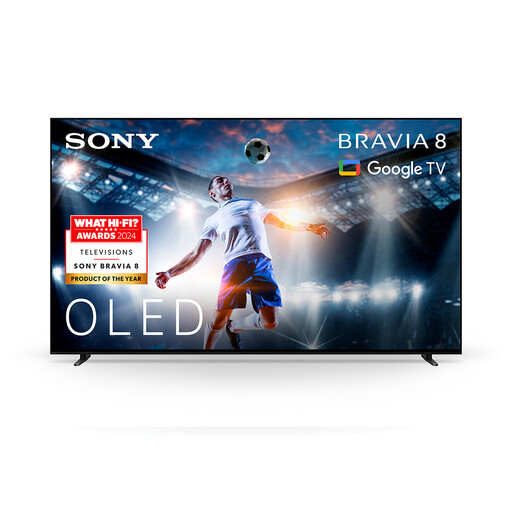
Why This Fits Their Persona: For the buyer who wants outstanding picture quality without compromise, OLED is the technology of choice. This Sony model is aimed at those who appreciate cinematic fidelity, perfect black levels and class-leading image processing for watching films and high-quality series.
OLED technology inherently avoids the pitfalls of lesser panels. Its per-pixel illumination provides perfect contrast, sidestepping the "paper HDR" issue entirely. Sony's Acoustic Surface Audio+ technology turns the entire screen into a speaker, providing direct, clear sound that avoids the "poor audio" trap.
Delivers reference-level picture quality with its OLED panel and advanced XR Processor. It's designated as 'Perfect for PlayStation 5', ensuring it's fully optimised for next-gen gaming.
We have compiled a complete, real-time list of products that fully satisfy these strict selection criteria and UK safety regulations.
A modern 4K Smart TV can be expected to function for around 7-10 years. The display panel itself often lasts longer, but the smart features and processor may feel slow or lose app support after about 5-7 years as technology advances. The actual lifespan depends on usage and brand quality.
Yes, for dedicated gamers it can be. The PlayStation 5 supports gaming at up to 120 frames per second (in compatible games), so a TV with a 120Hz or 144Hz native panel will provide a significantly smoother and more responsive experience than a standard 60Hz screen. A 144Hz model offers extra headroom and is also ideal if you plan to connect a high-end gaming PC.
They are not mutually exclusive. QLED refers to the use of a quantum dot film to enhance colour vibrancy and range. Mini LED refers to the backlight technology, which uses thousands of smaller LEDs for more precise brightness control and higher contrast. Many premium TVs now combine both, using a Mini LED backlight to illuminate a QLED panel, aiming to offer the advantages of both technologies.