
24/7 Customer Support

Free returns

Same-day & Next-day Delivery

Quality Guaranteed

Unlock Your Welcome Offers: FREE Delivery | Up to 80% OFF | Free 30-day JoyPlus trial
Download the APP
Navigating the world of televisions can feel overwhelming. With a sea of technical terms and marketing buzzwords, it is easy to make a purchase you later regret. As your Joybuy Product Recommendation Officer, my role is to help you sidestep the common pitfalls and focus on the features that deliver genuine value for your home in the UK.
Many shoppers are caught out by a few common traps. Understanding them is the first step to making a confident choice.
To avoid these traps, focus on a few core specifications that determine a TV's real-world performance.
The panel is the heart of your television. While standard LED TVs are common, QLED TV models represent a significant step up. They use a layer of "quantum dots" to produce a wider and more accurate range of colours.
For those seeking superior contrast, a Neo QLED 4K TV is the next evolution. These models replace conventional backlights with thousands of tiny Mini-LEDs. This allows for far more precise control over which parts of the screen are lit or dimmed, resulting in deeper blacks, brighter highlights and a dramatic reduction in the "halo" effect around bright objects on a dark background. This technology is particularly effective for creating a compelling home cinema TV experience.
A television's refresh rate, measured in Hertz (Hz), is how many times per second the image on the screen is updated. The standard for many years has been 60Hz. While this is adequate for most films and TV shows, it is a bottleneck for modern gaming and fast-paced sports.
A 120Hz TV (or even 144Hz) can display up to 120 frames per second, resulting in exceptionally smooth and clear motion. For anyone with a next-gen console, a TV for gaming with a high refresh rate, Variable Refresh Rate (VRR) and Auto Low Latency Mode (ALLM) is essential to unlock its full potential.
A responsive smart platform is non-negotiable. The Tizen OS TV platform, used in all Samsung 4K TV models, is known for its clean interface and quick access to all major UK streaming services. However, the operating system is only as good as the processor running it. A capable AI-enhanced processor ensures that 4K upscaling is effective, menus are snappy and apps launch without frustrating delays.
Based on these critical parameters, we have matched a few standout models to different user needs.
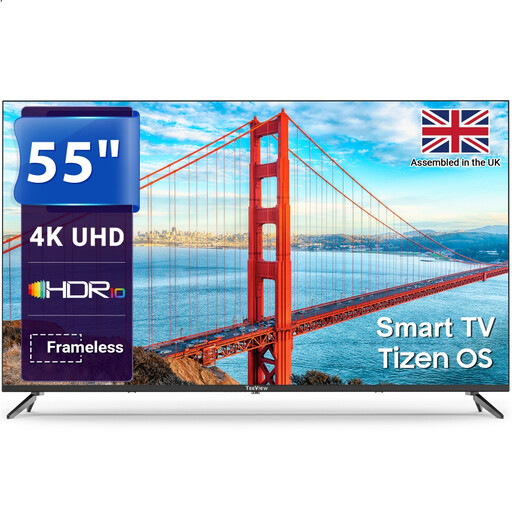
Why This Fits Their Persona: This 55 inch smart TV is an excellent choice for families wanting a great daily viewing experience without a premium price. It provides a sharp 4K picture and, crucially, runs the responsive Tizen OS, giving instant access to all the family's favourite streaming apps.
It sidesteps the "sluggish smart TV" trap by incorporating the well-regarded Tizen OS, ensuring a smooth user experience that is often missing in affordable models.
Offers a full 4K HDR panel and a premium smart TV platform at a very accessible price point. Includes three HDMI ports for connecting a set-top box, soundbar and games console.
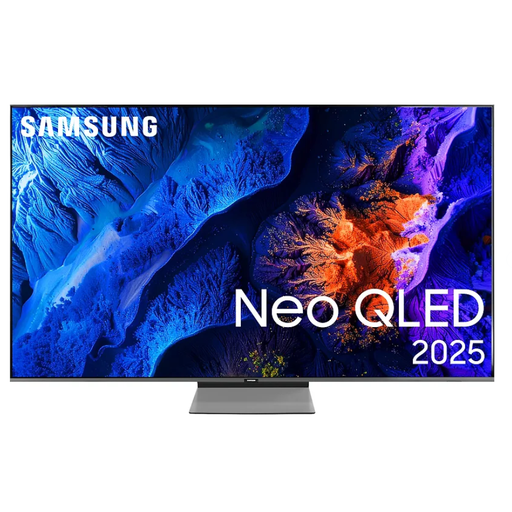
Why This Fits Their Persona: This is a purpose-built TV for gaming. For the UK gamer with a PS5 or Xbox Series X, its 144Hz panel, FreeSync Premium Pro and AI Auto Game Mode provide the ultra-low latency and smooth, tear-free motion needed for a competitive edge.
Directly counters the "gamer's mismatch" by including every key next-gen gaming feature. The Neo QLED panel also provides exceptional HDR performance, avoiding the "HDR illusion" trap.
Features a high-performance 144Hz refresh rate and comprehensive gaming support (VRR, ALLM). The NQ4 AI Gen2 processor ensures the system and Game Bar are fast and responsive.
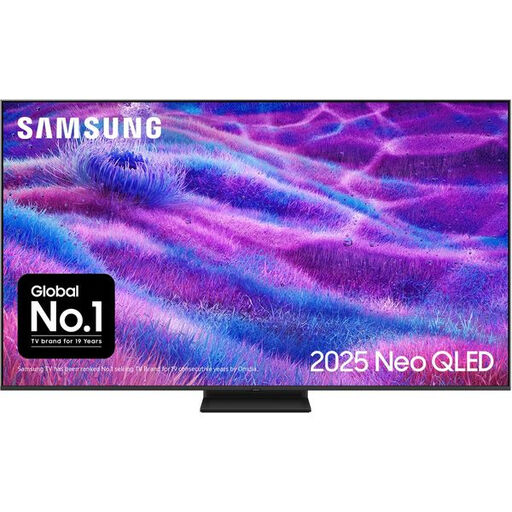
Why This Fits Their Persona: For those seeking a cinematic experience, this 65 inch 4K TV is ideal. Its Neo QLED 4K TV panel with Quantum Matrix Technology delivers the deep blacks and high brightness essential for impactful movie nights. The Dolby Atmos and Object Tracking Sound Lite create an immersive audio-visual package.
This model's Mini-LED backlight provides the high peak brightness and fine-tuned local dimming needed for true HDR, completely avoiding the "HDR illusion" that plagues lesser screens.
Exceptional contrast and brightness thanks to Neo QLED technology. The powerful NQ4 AI Processor provides excellent 4K upscaling and a fast smart interface. It also features a 120Hz panel for smooth motion.
We have compiled a complete, real-time list of products that fully satisfy these strict selection criteria and UK safety regulations.
The key difference is the backlighting technology. A QLED TV uses a conventional LED backlight, while a Neo QLED TV uses thousands of much smaller Mini-LEDs. This allows the Neo QLED to have hundreds, or even thousands, of individual dimming zones. The result is much finer control over contrast, leading to deeper blacks, higher peak brightness and less light bleed or "blooming" around bright objects on a dark screen.
If you want to experience the full capabilities of your PlayStation 5 or Xbox Series X, then yes, a 120Hz panel is highly recommended. Many popular games on these consoles offer a "Performance Mode" that targets 120 frames per second (fps). On a standard 60Hz TV, you are limited to 60fps, meaning you miss out on the smoother, more responsive gameplay that a 120Hz TV can provide.
The lifespan of a modern 4K Smart TV depends on usage, but most are designed to last for many years. The LED or Mini-LED backlights are typically rated for 60,000 to 100,000 hours of use. For an average UK household watching TV for about 5-7 hours a day, this translates to well over a decade of panel life before brightness begins to noticeably degrade. The more pressing concern is often the smart software, which may stop receiving updates for new apps after 5-7 years.